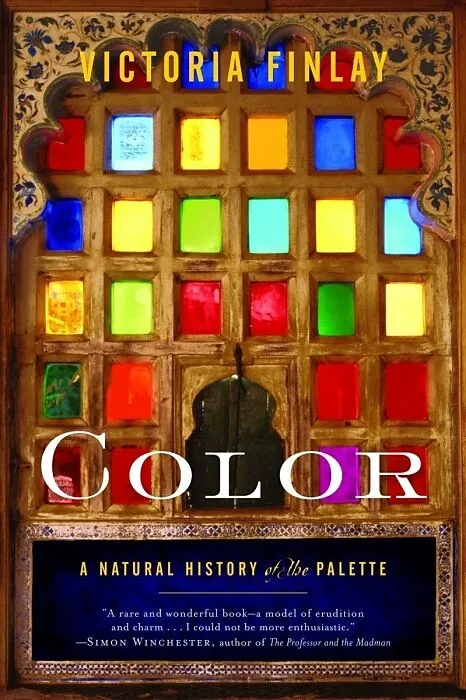
Color
Beschreibung
In this vivid and captivating journey through the colors of an artist’s palette, Victoria Finlay takes us on an enthralling adventure around the world and through the ages, illuminating how the colors we choose to value have determined the history of cul...Format auswählen
- BroschiertCHF 18.70

Wird oft zusammen gekauft
Andere Kunden kauften auch
Beschreibung
In this vivid and captivating journey through the colors of an artist’s palette, Victoria Finlay takes us on an enthralling adventure around the world and through the ages, illuminating how the colors we choose to value have determined the history of culture itself. How did the most precious color blue travel all the way from remote lapis mines in Afghanistan to Michelangelo’s brush? What is the connection between brown paint and ancient Egyptian mummies? Why did Robin Hood wear Lincoln green? In Roman emperors used to wear togas dyed with a purple color that was made from an odorous Lebanese shellfish–which probably meant their scent preceded them. In the eighteenth century, black dye was called logwood and grew along the Spanish Main. Some of the first indigo plantations were started in America, amazingly enough, by a seventeen-year-old girl named Eliza. And the popular van Gogh painting Embark upon a thrilling adventure with this intrepid journalist as she travels on a donkey along ancient silk trade routes; with the Phoenicians sailing the Mediterranean in search of a special purple shell that garners wealth, sustenance, and prestige; with modern Chilean farmers breeding and bleeding insects for their viscous red blood. The colors that craft our world have never looked so bright.
#8220;This is a rare and wonderful book–a model of erudition and charm, the writing elegant and precise, and with at least one new and fascinating revelation on every single page. I could not be more enthusiastic.”
–Simon Winchester, author ofThe Professor and the Madman
“Until I read this book, I was colorblind.”
–Cynthia Rowley
"Color is the essence of landscape, of mood, of our whole perception of the physical world. Victoria Finlay has traveled through Iran, Afghanistan, and other places to investigate the origin of all those tantalizingly sensual ochers and reds and blues. What a creative idea for a book!”
–Robert D. Kaplan, author of The Ends of the Earth and *Eastward to Tartary
*"In this engaging travelogue, a rainbow of hues determined the author’s choice of destinations. . . . By the time you read ‘Violet,’ you will have traversed much of the world, sharing Finlay’s contagious fascination with color.”
–*Condé Nast Traveler
*"Loaded with fascinating tidbits, this portrait of colors and their histories will provide readers with lots of conversation-starters.”
—*Boston Herald
**
Autorentext
A British citizen living in Hong Kong, Victoria Finlay has worked for Reuters and was the arts editor for the South China Morning Post for four and a half years before leaving to write this book. She writes regularly about arts and travel for Hong Kong newspapers and international media.
From the Hardcover edition.
Klappentext
Discover the tantalizing true stories behind your favorite colors.
For example: Cleopatra used saffron--a source of the color yellow--for seduction. Extracted from an Afghan mine, the blue "ultramarine" paint used by Michelangelo was so expensive he couldn't afford to buy it himself. Since ancient times, carmine red--still found in lipsticks and Cherry Coke today--has come from the blood of insects.
Zusammenfassung
Discover the tantalizing true stories behind your favorite colors.
For example: Cleopatra used saffron—a source of the color yellow—for seduction. Extracted from an Afghan mine, the blue “ultramarine” paint used by Michelangelo was so expensive he couldn’t afford to buy it himself. Since ancient times, carmine red—still found in lipsticks and Cherry Coke today—has come from the blood of insects.
Leseprobe
Ochre
"Art . . . must do something more than give pleasure: it
should relate to our own life so as to increase our
energy of spirit."
sir kenneth clark, Looking at Pictures1
In the lakelands of Italy there is a valley with ten thousand ancient rock carvings. These petroglyphs of Valle Camonica are signs that Neolithic people lived there once, telling stories and illustrating them with pictures. Some show strangely antlered beasts, too thin to provide much meat for a feast, and others show stick-people hunting them with stick-weapons. Another rock has a large five-thousand-year-old butterfly carved into it--although my visit coincided with that of a horde of German schoolchildren queuing up to trace it, and sadly I couldn´t see the original through all the paper and wax crayons.
But in a quieter place, far away from the groups, I found a flat dark rock covered with fifty or more designs for two-story houses with pointy roofs. It didn´t feel particularly sacred to me as I stood looking at it. It was more like an ancient real estate office or an architect´s studio, or just a place where people sat and idly carved their domestic dreams. The crude carvings are not colored now, of course: any paints would have disappeared long ago in the Alpine rain. But as I sat there, contemplating the past, I saw what looked like a small stone on the ground. It was a different color from all the other mountain rubble--whatever it was, it didn´t belong.
I picked it up and realized something wonderful. It didn´t look promising: a dirty pale brown stub of claylike earth about the size and shape of a chicken´s heart. On the front it was flat and on the back there were three planes like a slightly rounded three-sided pyramid. But when I placed the thumb and the first two fingers of my right hand over those three small planes, it felt immensely comfortable to hold. And what I realized then was that this piece of clay was in fact ochre, and had come from a very ancient paintbox indeed. I wet the top of it with saliva, and once the mud had come off it was a dark yellow color, the color of a haystack. When, copying the carvings, I drew a picture of a two-story house on the rock, the ochre painted smoothly with no grit: a perfect little piece of paint. It was extraordinary to think that the last person who drew with it--the person whose fingers had formed the grooves--lived and died some five thousand years ago. He or she had probably thrown this piece away after it had become too small for painting. A storm must have uncovered it, and left it for me to find.
Ochre--iron oxide--was the first color paint. It has been used on every inhabited continent since painting began, and it has been around ever since, on the palettes of almost every artist in history. In classical times the best of it came from the Black Sea city of Sinope, in the area that is now Turkey, and was so valuable that the paint was stamped with a special seal and was known as "sealed Sinope": later the words "sinopia" or "sinoper" became general terms for red ochre.2 The first white settlers in North America called the indigenous people "Red Indians" because of the way they painted themselves with ochre (as a shield against evil, symbolizing the good elements of the world,3 or as a protection against the cold in winter and insects in summer4), while in Swaziland´s Bomvu Ridge (Bomvu means "red" in Zulu), archaeologists have discovered mines that were used at least forty thousand years ago to excavate red and yellow pigments for body painting.5 The word "ochre" comes from the Greek meaning "pale yellow," but somewhere along the way the word shifted to suggest something more robust--something redder or browner or earthier. Now it can be used loosely to refer to almost any natural earthy pigment, although it most accurately describes earth that contains a measure of hematite, or iron ore.
There are big ochre mines in the Luberon in southern France and even more famous deposits in Siena in Tuscany…