Beschreibung
This book is a timely addition to the growing body of research on the intersection between sustainability initiatives, climate change, and how these efforts can help transition the world to a greener and more equitable path by 2050. The time for action on sus...
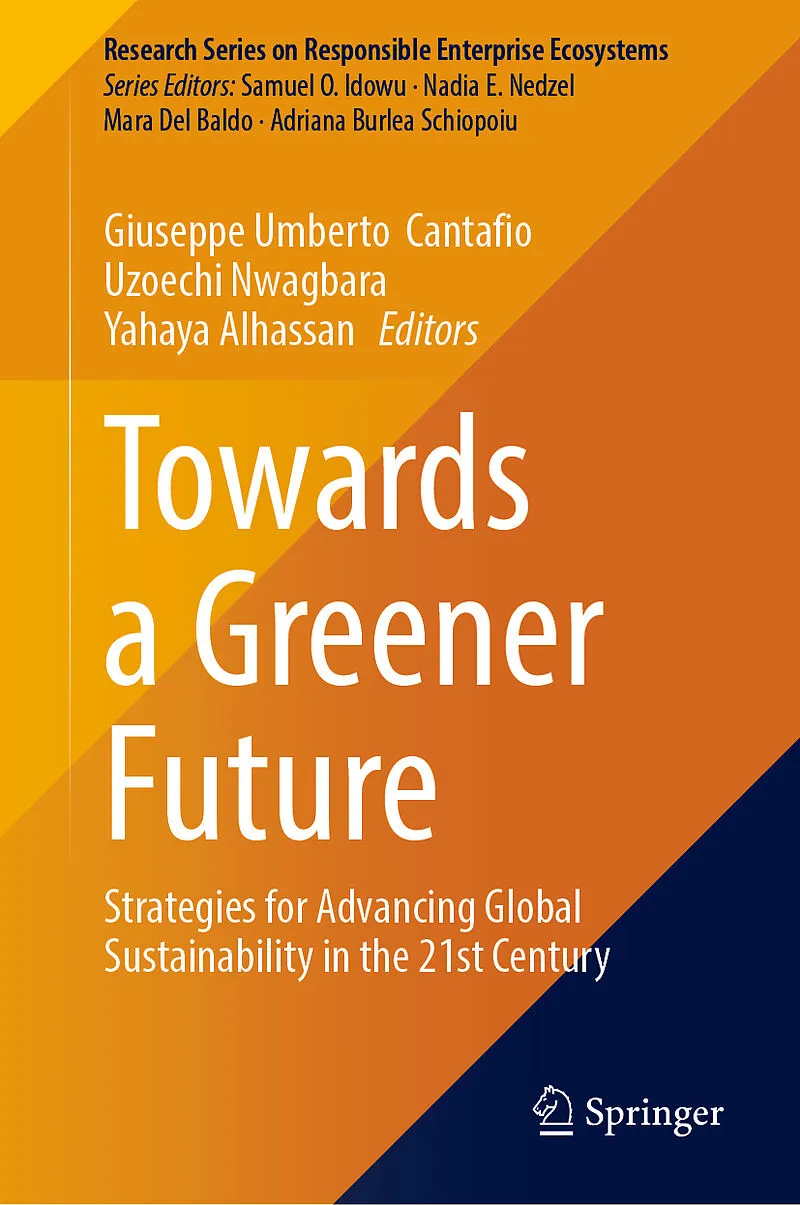
This book is a timely addition to the growing body of research on the intersection between sustainability initiatives, climate change, and how these efforts can help transition the world to a greener and more equitable path by 2050. The time for action on sustainability is now. Global climate change, environmental degradation, and the depletion of natural resources pose existential threats to our planet and humanity. The edited volume charts an ambitious yet achievable course toward a more sustainable future.
The book is organised into five thematic parts that mirror the multifaceted nature of sustainability. The opening section lays the conceptual and analytical foundations for global sustainability transitions, addressing finance, governance, behavioral change, urban resilience, and sustainable tourism. Subsequent sections examine the transformative role of education, research and innovation; the strategic and operational implications of the circular economy; the potential of renewable energy, digitalisation and artificial intelligence to support greener systems; and the social and economic dimensions that underpin equitable and just transitions. Together, these contributions illustrate that sustainability is not the responsibility of a single sector or discipline, but a shared societal endeavour requiring coordinated action across multiple levels.
Presents a comprehensive, three-part framework that connects environmental, social, and economic challenges Outlines a pragmatic pathway for transitioning the global economy to a sustainable, and environmentally sound future Includes case studies and best practices to illustrate the implementation and impact of sustainability initiatives
Autorentext
Dr. Giuseppe Cantafio is Senior Lecturer at the University of Sunderland in London (UK). He is an accomplished academic with an impressive international career. He brings a wealth of expertise in the fields of urban planning, innovation, sustainability, business, management, and education management.
Dr. Uzoechi Nwagbara is Lecturer at the Faculty of Business, Law and Tourism at the University of Sunderland (UK). His research focuses on leadership and organizational change, sustainability in business, and the role of education in driving societal transformation.
Dr Yahaya Alhassan is Principal Lecturer in Finance and Strategic Management at the University of Sunderland in London (UK). He is also the Head of Academic Operations responsible for quality assurance and new programme development. His main research interests are around development finance, microfinance, entrepreneurial finance, ethnic minority entrepreneurship and microbusiness development.
Inhalt
From Risk to Resilience: Rethinking Finance for Sustainability.- Sustainable Finance for Energy Transition: The Role of Green Bonds in Emerging Economies.- Greening Growth Pathways: Interpreting Green Bond Dynamics, Transport Investments, and Carbon Mitigation Efficiency in India.- Psychological Resilience and Behavior Change for Advancing Environmental Sustainability.- Adaptive Governance Models for Climate-Resilient Urban Futures in Southern Africa.- Footprint calculation in sustainable tourism: A review and future directions.- Advancing Sustainability Education in Higher Education through the Affective Domain and Curriculum Innovation.- Evaluating the implementation of Education for Sustainable Development (ESD) at the Technological University of the Shannon (TUS), Ireland: Implications, challenges and recommendations for improvement.- Green-Aware Agile Frameworks in GCC Education: Integrating Sustainability into Computing Curricula.- Education, Research, and Innovation for Sustainability.- Knowledge Ecosystems for Global Sustainability: From Triple to Quintuple Helix.- Integrating Sustainability into Corporate Strategy: UK Evidence from the Triple Bottom Line, Circular Economy, and SDG Frameworks.- Human-Centered Strategic Approaches to Advancing Circular Economy: Integrating Management and Green HRM for Sustainability.- Resource Recovery and Policy Analysis of Circular Economy in India.- Tourism and Creative Economy- Sustainable Business Practices in the Tourism Sector for Entrepreneurs.- Green Algorithms: Harnessing Sustainable AI for Global Digital Transformation.- Tech-Enhanced Mindfulness for Sustainable Consumption: A Digital Transformation Framework for Inner-Driven Environmental Change.- The Role of Artificial Intelligence in Advancing SDG 12: Sustainable Production and Consumption Practices.- Use of Digital Technologies to Enhance Sustainability Practices.- Transition to Renewable Energy for Sustainable Development.- Social and Economic Dimensions of Sustainability: A Critical Analysis of Power, Dependency, and Justice.- The Greed of Gold Extractors compromises Socioeconomic Fabric of Rural Communities in Ghana: Mainstreaming Women as Strategic Partners for a Greener Future.- Sowing Organics, Reaping Sustaining Livelihoods- Farmers' Perception Towards Organic Farming.- Leveraging GIS For Sustainable Urban Planning in the Kura-Araz Lowland: A Multi-Criteria Spatial Analysis Approach.- Greenwashing or Sustainable Transformation: A Bibliometric Review of Corporate Sustainability Discourses in Latin America.
Tief- preis