Beschreibung
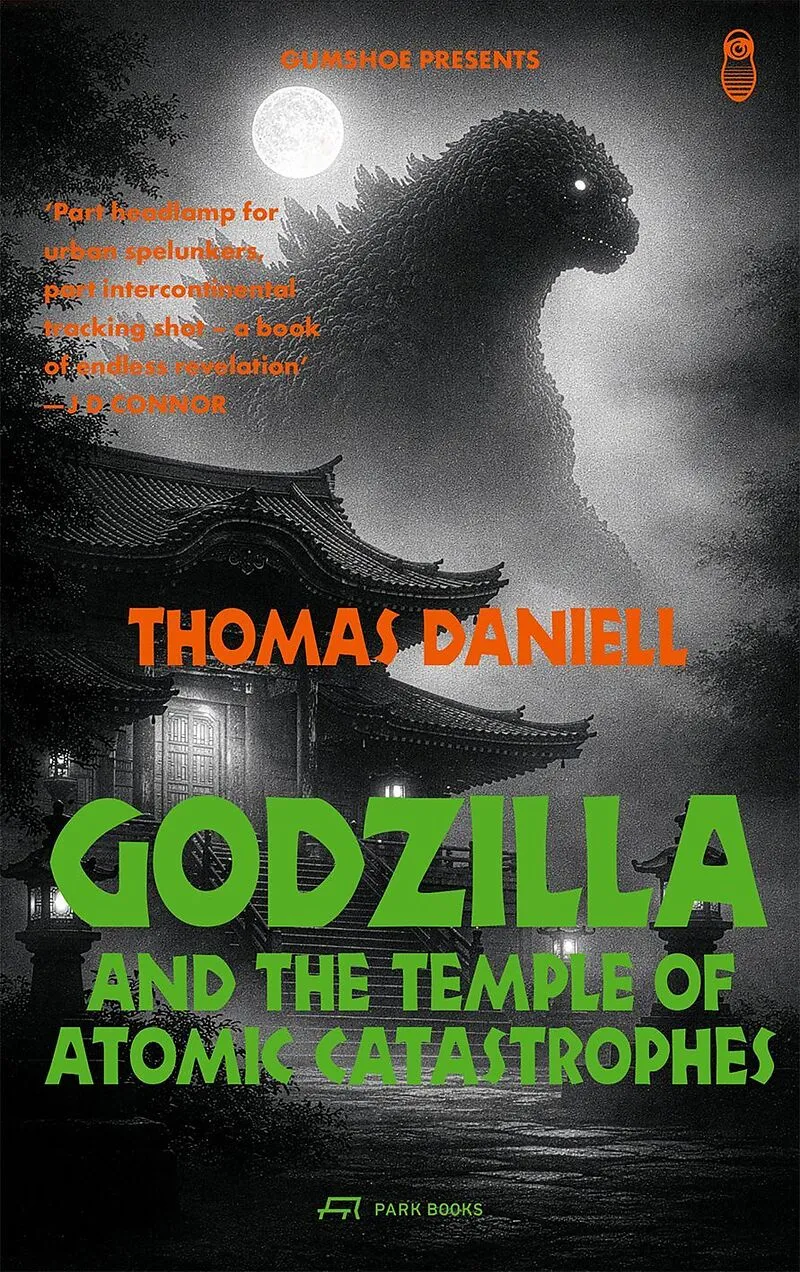
The Secrets of Seiichi Shirai's Temple of Nuclear Disasters, a touchstone in Japanese debates on monuments, tradition, and culture: volume #3 of the popular Gumshoe series of architectural crime stories. In Godzilla and the Temple of Atomic Catastrophes, the t...The Secrets of Seiichi Shirai's Temple of Nuclear Disasters, a touchstone in Japanese debates on monuments, tradition, and culture: volume #3 of the popular Gumshoe series of architectural crime stories.
In Godzilla and the Temple of Atomic Catastrophes, the third volume in the Gumshoe series of architectural detective stories, architectural historian and critic Thomas Daniell investigates the mysteries of the Temple of Atomic Catastrophes, designed in 1955 by Japanese architect Seiichi Shirai (190583). Although never built, the memorial has become a touchstone in debates about monuments, tradition, and culture in Japan's architectural world. Shirai's temple design is one of the few architectural works to address the topic of nuclear power, while Japanese fiction, manga, visual arts, and photography largely avoid it. Shirai and his temple design are little known in the West, yet they represent an important and influential chapter in Japan's architectural history. The 2011 Fukushima disaster once again made him, and the questions it raised, a central aspect of Japanese architectural discourse.
Thomas Daniell examines events and developments in Japan spanning more than a century, from World War I to the triple disaster of 2011the earthquake, tsunami, and nuclear meltdown. He explores Japanese tradition and the relationships between Japanese architecture, art, and critical theory within a broader historical context. Written in the style of a roman noir, his book offers an unconventional and entertaining search for the solution to this architectural mystery.
Autorentext
Thomas Daniell ist Professor für Architekturgeschichte, -theorie und -kritik an der Universität Kyoto und Autor zahlreicher Bücher über Japans Architektur, darunter An Anatomy of Influence (AA Publications, 2018).
Thomas Weaver lebt und arbeitet von London aus als Publizist und Kurator und lehrt als Dozent an der Accademia di architettura der Università della Svizzera italiana in Mendrisio.
Françoise Fromonot lehrt als Professorin für Entwurf, Geschichte und Theorie der Architektur an der ENSA Paris-Belleville.
Klappentext
In Godzilla and the Temple of Atomic Catastrophes, the third volume in the Gumshoe series of "architectural detective stories," architectural historian and critic Thomas Daniell investigates the mysteries of the Temple of Atomic Catastrophes, designed in 1955 by Japanese architect Seiichi Shirai (1905-83). Although never built, the memorial has become a touchstone in debates about monuments, tradition, and culture in Japan's architectural world. Shirai's temple design is one of the few architectural works to address the topic of nuclear power, while Japanese fiction, manga, visual arts, and photography largely avoid it. Shirai and his temple design are little known in the West, yet they represent an important and influential chapter in Japan's architectural history. The 2011 Fukushima disaster once again made him, and the questions it raised, a central aspect of Japanese architectural discourse.
Thomas Daniell examines events and developments in Japan spanning more than a century, from World War I to the triple disaster of 2011-the earthquake, tsunami, and nuclear meltdown. He explores Japanese tradition and the relationships between Japanese architecture, art, and critical theory within a broader historical context. Written in the style of a "roman noir," his book offers an unconventional and entertaining search for the solution to this architectural mystery.