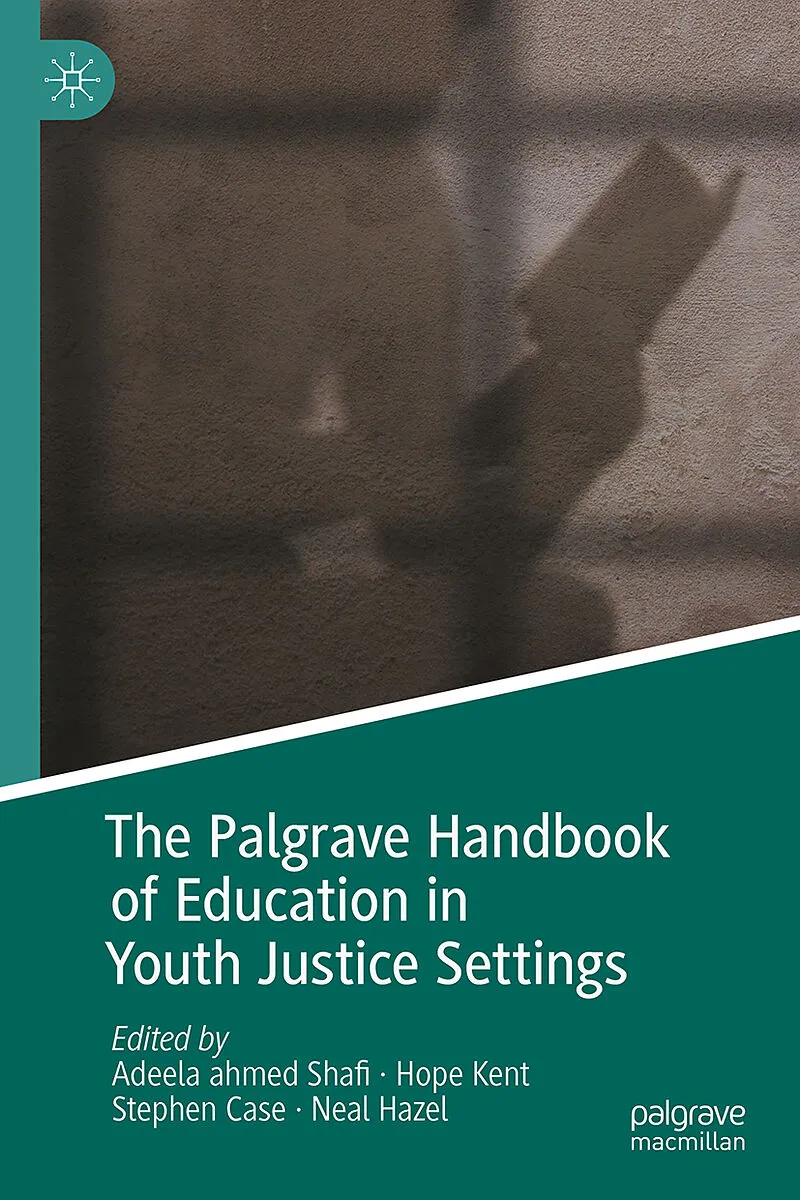
The Palgrave Handbook on the Education of Children in Criminal Justice Settings
Beschreibung
This handbook uniquely brings together international perspectives on education for children and young people who are incarcerated or otherwise come into conflict with the law. Contributions from more than forty authors across twelve countries explore the shar...
Format auswählen
- Fester EinbandCHF 204.40
Wird oft zusammen gekauft
Andere Kunden kauften auch
Beschreibung
This handbook uniquely brings together international perspectives on education for children and young people who are incarcerated or otherwise come into conflict with the law. Contributions from more than forty authors across twelve countries explore the shared educational experiences, inequalities, and complex unmet needs that shape children's lives in youth justice settings. Collectively, the chapters highlight the tensions between welfare, justice, and education, while proposing a new lens encapsulated in the acronym of CHILD-friendly principles. The handbook provides a comprehensive overview of this emerging field, offering evidence-informed recommendations for policymakers, educators, and youth justice systems by calling for education to move from the margins of youth justice to its centre: not as an add-on to punishment, but as a mechanism of dignity, inclusion, and social justice, grounded in the recognition that children in custody remain children first.
The first reference work of its kind to focus on educating youth involved in the justice system as opposed to adults Presents international contributions from Europe, North America, South America, Australasia, and Africa Considers a global lens as well as issues of race and gender across each chapter
Autorentext
Adeela ahmed Shafi is Professor of Education in Youth Justice at the University of Gloucestershire, UK. Her research is focused on the education of children and young people in secure custodial settings.
Hope Kent is a Research Fellow funded by ADR-UK at the University of Exeter, UK. Her research uses population-level data to understand the over-representation of children with neurodisability in the youth justice system.
Stephen Case is Professor of Youth Justice at Loughborough University, UK. His research and scholarship have focused on the promotion of positive, 'children first', rights-based, and anti-risk management approaches to working with children in conflict with the law.
Neal Hazel is Chair of Criminology and Criminal Justice at the University of Salford, UK. He has delivered more than 40 funded research projects, mainly in youth justice and family support.
Inhalt
Chapter 1: Introduction: Aims, Purposes, and Contributions of the Handbook.- Part 1: The Issues.- Chapter 2: The Key Debate: The Child vs. The Offender.- Chapter 3: Historical and Cross-Cultural Concepts of Childhood and Justice.- Chapter 4: Children's Education in Prison: Social Ecological Perspectives.- Chapter 5: Over-Representation of Black or Minority Ethnic Groups in the American Juvenile Justice System and Possible Connections to Educational Opportunities.- Chapter 6: Missing Links in the Abu Dhabi Juvenile Correctional System: Advocacy for Educational Equity.- Chapter 7: Minding the Gap : Young People's Education Transitions from Custody to the Community.- Chapter 8: Juvenile in Detention and the Right to Education in Pakistan.- Chapter 9: Prison Education in Norway for Young Prisoners: The Import Model.- Part 2: Who are the Children that are Incarcerated?- Chapter 10: I Hated School, But LovedEducation.- Chapter 11: "A Day in the Life".- Chapter 12: Neurodisability/Neurodiversity: The New Kid on the Block.- Chapter 13: America's Prison Kids: Who Are They?- Chapter 14: Girls, Education, and Youth Justice.- Part 3: What's Working Well in Education and Where?- Chapter 15: Child First Education in Custody.- Chapter 16: Education as an Integrated Approach and a Preventative Tool for Young People in Conflict with the Law in the Spanish Context.- Chapter 17: Children with Special Educational Needs and Disabilities are Children Too! Looking at 'Child First' as an Equaliser in School Education.- Chapter 18: Global South Youth Education: Moving from the Pedagogy of the Oppressed to the Pedagogy of Hope in Educational Communities in Brazil.- Chapter 19: How Peer Mentoring Can Transform Youth Justice Services.- Chapter 20: Education and Change in the Greek Correctional System.- Chapter 21: Promoting Trauma-Informed Teaching and Learning for Incarcerated Youth through an Action Research Model in New Jersey, USA.- Chapter 22: Restorative Approaches.- Chapter 23: Italian Juvenile Justice Services: Pathways and Opportunities for the Growth of Juveniles and Young Adult Offenders.- Chapter 24: Education of Children Convicts and Detainees in Turkey.- Chapter 25: Technology Innovation in the Children and Young People's Secure Estate.- Chapter 26: Fostering Empathy through Education: Promoting Socio-Emotional Understanding and Wellbeing in Youth Detention in Australasia.- Chapter 27: Conclusion: What Can We Learn By Taking a Global Perspective.