
IHR WARENKORB IST AKTUELL LEER.
Haben Sie noch nichts passendes gefunden? Stöbern Sie durch unser komplettes Sortiment.
Oder melden Sie sich an bzw. registrieren Sie sich.
- Kostenlose Lieferung
- Kauf auf Rechnung
- Ex Libris Tiefpreis
- Filiallieferung und 650+ Abholorte
- Rabatt-Bons als Club-Mitglied
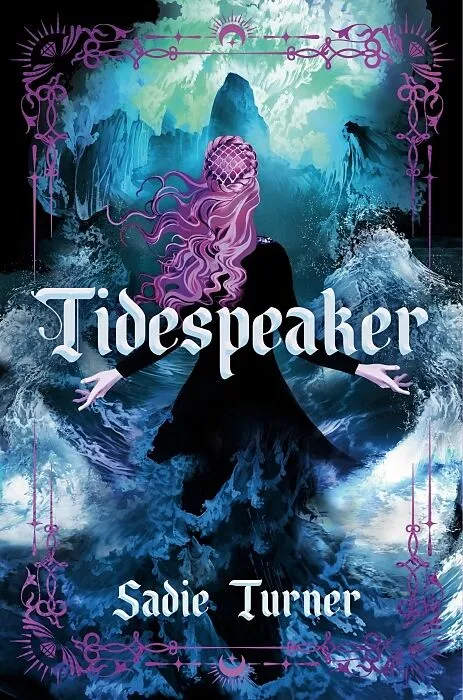

Tidespeaker
Beschreibung
A girl with the power to command the tides has her life changed when she secures a job serving a wealthy noble family--only to learn upon arrival that the last person to fill her post mysteriously died, and her new employers are hiding dark secrets--in this ha...Format auswählen
- Fester EinbandCHF 25.90
Wird oft zusammen gekauft
Andere Kunden kauften auch
Beschreibung
A girl with the power to command the tides has her life changed when she secures a job serving a wealthy noble family--only to learn upon arrival that the last person to fill her post mysteriously died, and her new employers are hiding dark secrets--in this haunting and lush debut fantasy. Corith Fraine is a Floodmouth, gifted with a rare elemental magic which allows her control over water. Like all young mages in her nation, she has spent her life in a greuling magic institution, training to one day achieve the highest possible honor for one of her kind: the chance to serve a powerful noble family.; When news comes that Corith has secured a post working for House Shearwater, a reclusive noble house living on a wave-battered island, she thinks her years of hard work have paid off. Until she discovers that the family''s previous Floodmouth--Corith''s closest friend--mysteriously died in their service. And Corith is her replacement. To learn the truth of her best friend''s passing, Corith must unravel the dark conspiracy at the heart of Bower Island, all while contending with the island''s deadly tides and;her enigmatic new employers--including the family''s brooding youngest son, who she finds herself equally drawn to and repelled by. With her loyalties pushed to the breaking point, these treacherous waters may well pull Corith under…
Autorentext
Sadie Turner grew up in the Welsh Borders and now lives in Hampshire, not far from the former home of one of her biggest inspirations: Jane Austen. She is a copywriter, mother of two, and author of lush, gloomy, neurodiverse YA Fantasy. When she can find the time, she loves reading, cooking, and classic CRPGs, and is rarely seen without a cup of tea on hand. She is the author of the Tidespeaker duology.
Leseprobe
1
The last day of summer, and my eighteenth birthday, found me suspended upside down in a tank of water.
It was hardly the coming-of-age I’d hoped for, but no one celebrated birthdays at Arbenhaw. Here, all days were filled with the same three things: training for our service to the Queendom of Nenamor, history lessons on why that was the only life fit for us, and—far more frequently than seemed fair—practical examinations, testing our control.
Today, I was facing one of the last. The flutters of panic I’d been feeling all morning intensified as I blinked through the water at my classmates. Their blurry figures, weirdly inverted, were lined up along the walls of the hexagonal chamber, and I knew every one of them would be smirking at the tank, hoping to witness my spectacular failure.
I was the only Floodmouth being examined today, and I’d never been tested like this before. This ordeal was reserved for our final year, for the day we turned eighteen and were deemed ready for service—and the pressure of all the eyes fixed on me was almost worse than the pressure of the water. As my heart hammered out the familiar beat that always accompanied anything new or unexpected, I felt the telltale burning in my lungs and knew that in about sixty seconds I’d be drowning.
Perched in the gallery, like a row of roosting vultures, were the Instructors who’d come to oversee my exam. They hadn’t bothered to heat the water, of course, and it chilled my skin as I wriggled in my restraints. I knew they would all be watching closely; better performance at Institutions like Arbenhaw meant better positions out in the Queendom after graduating. I was acutely aware that poor or even mediocre results would mean serving out the rest of my years doing something dangerous, or downright horrible: protecting the harbor builders down south, irrigating flooded farmland, clearing the sewers in the cities out east . . .
It didn’t help that one figure was conspicuously absent from the room, a person whose attendance would have made this much easier.
For a decade, Zennia, my only friend at Arbenhaw, had been a stalwart presence in these echoing chambers, her steady brown gaze—as familiar to me as a sister’s—the anchor I needed to remind me I could do this. But a month ago, my friend, my anchor, had gone, whisked away after her own final exam to serve some noble family on the coast.
I knew the chamber outside the tank would be silent, perhaps only the scuff of a slippered foot breaking the quiet. Squeezing my eyes shut, I tried to feel out the water. After ten years in this place, the water we practiced with, drawn from the mountain springs outside the complex, was nearly as familiar to me as Zennia was. But today it seemed implacable, almost haughty.
Without Zennia, I felt like a shipwrecked sailor. Since she’d left, I’d struggled through our practicals, slogged through our lessons, but this—this was new. My fear was snowballing. And the water, coldly cocooning me, seemed to know it.
There were only two things that could render us Orha useless: laconite stone, and emotions. Strong emotions. I needed to wrest control of mine, or my eager classmates would get what they hoped for.
I knew what my friend would have willed me to do, had she been out there in the line with them, watching. I forced myself to clear my thoughts, to ignore the cold pressure, the unfurling fear, and tried to picture my emotions in my mind.
It was a trick Zennia taught me nearly two years ago, when I’d floundered in one of our eighth-year tests. Since then, it had helped me impress the Instructors—but I wasn’t sure it would save me today.
“What do your feelings look like? As an image?”
Mine always looked chaotic, even frightening. And sure enough, they burst into my mind’s eye like a firework: a shivering, scarlet ball of panic, bolts streaking out into the black like lightning.
“Squeeze it. Shrink it. Smother it to nothing.”
Her words came back to me as I grappled with the ball. The idea was to slowly force it inward, mentally crush it to the size of a pinprick. But all I could see, overlaid upon it, was my friend’s sad smile as she was led away.
Seconds passed. My body shook. The need to breathe was like a hunger, starvation, a burning torch held too close to my skin. I didn’t have long. I needed to control this, but in my head, I could only relive Zennia’s exam. The sight of her hanging, serene, in the tank, black hair scrunched and tied into bunches. The glint of light on the brooch I’d given her for her own eighteenth birthday fastened tight to her blouse.
She’d excelled, of course; flown through it with ease. Since we’d all been thrown together at Arbenhaw, having passed the test that granted us entry—and a route to the best possible service placements after graduation—Zennia had surpassed the rest of us in practical after practical, and many of our classmates disliked her for it. Well, that and the fact that she refused to dislike me, the watchful one on the periphery who could never seem to say the right thing.
But though Zennia had landed her prestigious placement, mine was even now slipping from my grip.
With a heave, a spasm, my mouth jerked open, my lungs now searing, desperate for air. But instead of gulping, dooming me to drown, I spoke instead. Commanded the water.
“Part,” I choked out, bubbles streaming from my mouth. “Give me air. Let me breathe.”
My chest, my body—all was pain. This must be what it felt like to be crushed under a boulder. Ordinarily, when my emotions were in check, the water obeyed me readily. But today . . .
I waited three seconds. Five. My torso shuddered, my limbs twitching wildly. Ten full seconds now since I’d spoken to the water. It wasn’t listening. I’d known …