Beschreibung
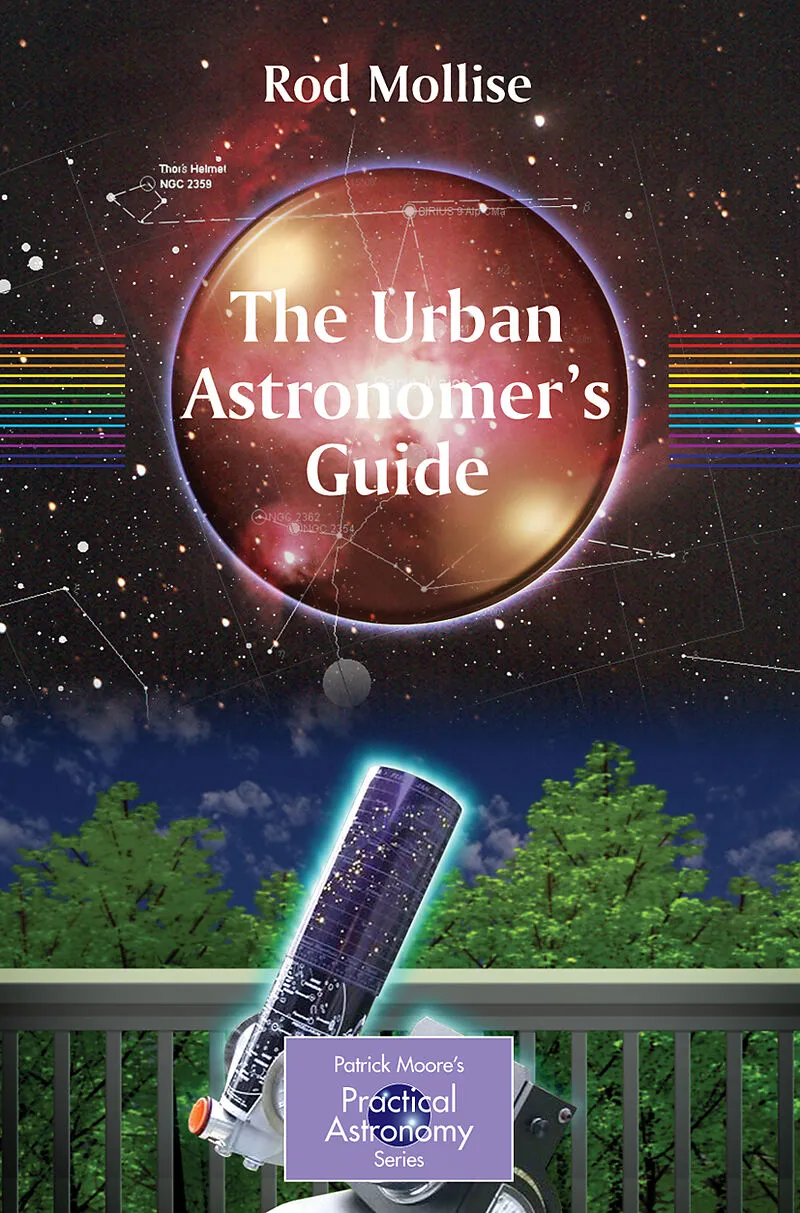
This book covers the "why,""how," and "what" of astronomy under light-polluted skies. It is aimed at urban astronomers and showcases the countless objects - galaxies, nebulae, and star clusters - that can be seen in even in heavil...This book covers the "why,""how," and "what" of astronomy under light-polluted skies. It is aimed at urban astronomers and showcases the countless objects - galaxies, nebulae, and star clusters - that can be seen in even in heavily light polluted urban skies.
This book covers the "why," "how," and "what" of astronomy under light-polluted skies. It is aimed at urban astronomers and showcases the countless objects - galaxies, nebulae, and star clusters - that can be seen in even in heavily light polluted urban skies. About half of the book is devoted to describing "tours" of the sky, with physical and observational descriptions, at-the-eyepiece drawings, and photographs. There are literally hundreds of spectacular objects to be seen from the average urban site. After dealing with equipment, locations and even urban safety, the author invites the reader to join him on his virtual "walking tours" of the night sky..
Showcases the countless objects - galaxies, nebulae, and star clusters - that can be seen in even in heavily "light polluted" urban skies Aimed at the many astronomers who must observe (at least sometimes) from urban areas Describes how to observe the universe in language that is understandable for beginners, but which is also interesting for veteran sky-watchers Contains a wealth of information about the sky and astronomy equipment and accessories Features a comprehensible guide to deep-sky objects that can be observed from less-than-ideal sites
Autorentext
Rod Mollise, a Contributing Editor at Sky and Telescope magazine, is familiar to amateur astronomers as the author of numerous books and magazine articles on every aspect of astronomy, amateur and professional. He is most well known for his books on Schmidt Cassegrain Telescopes, SCTs, and especially his authoritative first edition of Choosing and Using a New CAT (Springer), which has become the standard reference for these instruments.
Klappentext
Many amateur astronomers live in urban and highly developed suburban areas, and many of them believe that they can't observe deep-sky objects from such light-polluted locations.
But it isn't true.
Given the right techniques, urban astronomers can routinely observe deep-sky objects night after night something most of us would never do if it involved driving miles into the country to find a dark site. Rod Mollise has observed the entire Messier list from his urban backyard, without high-tech equipment, using only commercially-made telescopes and simple accessories.
This is a guide to good deep-sky astronomy under bad skies.
There are literally hundreds of spectacular objects to be seen from the average urban site. After dealing with equipment, locations and even urban safety, Rod invites you to join him on his virtual "walking tours" of the night sky, with physical and observational descriptions, at-the-eyepiece drawings, and photographs.
Inhalt
Telescopes and Techniques.- The Whys and Hows of Urban Observing.- Telescopes for Urban Observers.- Accessories for Urban Observers.- Urban Observing Techniques and Projects.- Urban Observing Programs.- A Walking Tour of the Cosmos.- Spring.- Summer.- Autumn.- Winter.