Beschreibung
Modern astronomical telescopes, along with other advances in technology, have brought the deep sky star clusters, nebulae and the galaxies within reach of amateur astronomers. And it isn't even necessary to image many of these deep-sky objects in order to see...
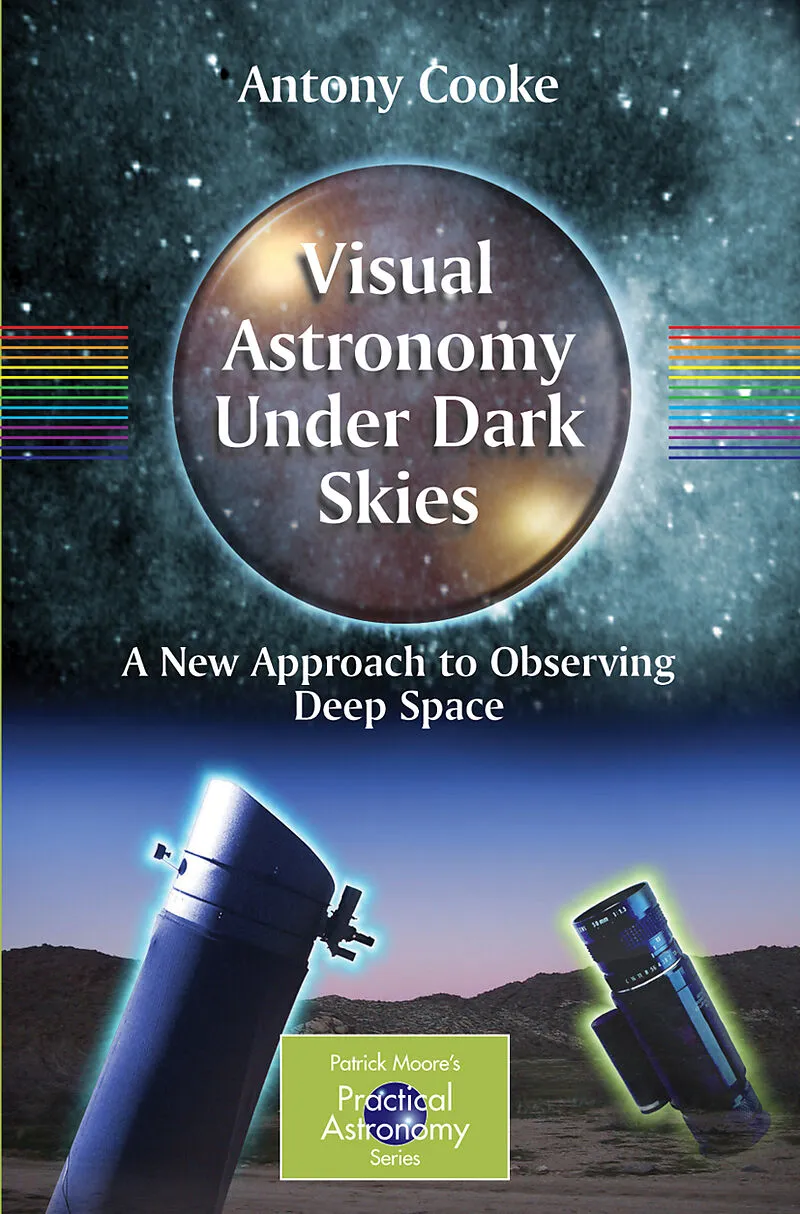
Modern astronomical telescopes, along with other advances in technology, have brought the deep sky star clusters, nebulae and the galaxies within reach of amateur astronomers. And it isn't even necessary to image many of these deep-sky objects in order to see them; they are within reach of visual observers using modern techniques and enhancement technology.
The first requirement is truly dark skies; if you are observing from a light-polluted environment you need Tony Cooke's book, Visual Astronomy in the Suburbs . Given a site with clear, dark night skies everything else follows this book will provide the reader with everything he needs to know about what to observe, and using some of today's state-of-the-art technique and commercial equipment, how to get superb views of faint and distant astronomical objects.
Explains how modern techniques can be used to best effect for visual astronomy Looks at the use of real-time image enhancement systems, such as image intensifiers Features a selective list of deep-sky objects to view from dark sites, and shows what to expect Essential for all amateur astronomers who want to get the most enjoyment from visual deep-sky observing!
Autorentext
Antony Cooke's passion for both astronomy and music was clear from an early age, although it was music that ultimately claimed his career. As solo cellist he has played and recorded worldwide. He was also a professor of music at Northwestern University in Chicago. Presently, he is a prominent Hollywood studio musician, as well as a composer for prime time television. However, it has often been said that science and music go hand in hang. With applied and theoretical astronomy never being far behind, he has pursued it as a serious avocation. As an observer always looking for ways to improve his experience at the eyepiece, Cooke has constructed many telescopes over the years. Increasing apertures were always the hallmark of his often-quirky designs. Finding that the 18-inch aperture of his present telescope was still insufficient to deliver the kind of performance he had in mind, he experimented with newer technologies to bring these elusive goals ever closer. Successful viewing of dark objects requires great contrast. In this respect, some of the newer equipment has proven to be invaluable, enabling dramatic viewing of many dark objects and features in real time and without the need of CCD imaging. As an author of astronomy books, Cooke also has written Visual Astronomy in the Suburbs (Springer, 2003), Visual Astronomy under Dark Skies (Springer, 2005), and Make Time for the Stars (Springer, 2009). With Dark Nebulae, Dark Lanes and Dust Belts, his astronomical writings continue.
Inhalt
Foreword.- Introduction.- New tools.- The Dark Sky Site.- So, what can we expect to see?- Our Neighbourhood in Space: The Milky Way.- The Great Beyond.- Eyes on the Future.- Appendices.- Recommended equipment manufacturers.- Resources.- Real Time visual astronomy using image intensifiers and data modelling.- StellaCam II Highlights and Description.- Index.
Tief- preis