
IHR WARENKORB IST AKTUELL LEER.
Haben Sie noch nichts passendes gefunden? Stöbern Sie durch unser komplettes Sortiment.
Oder melden Sie sich an bzw. registrieren Sie sich.
- Kostenlose Lieferung
- Kauf auf Rechnung
- Ex Libris Tiefpreis
- Filiallieferung und 650+ Abholorte
- Rabatt-Bons als Club-Mitglied
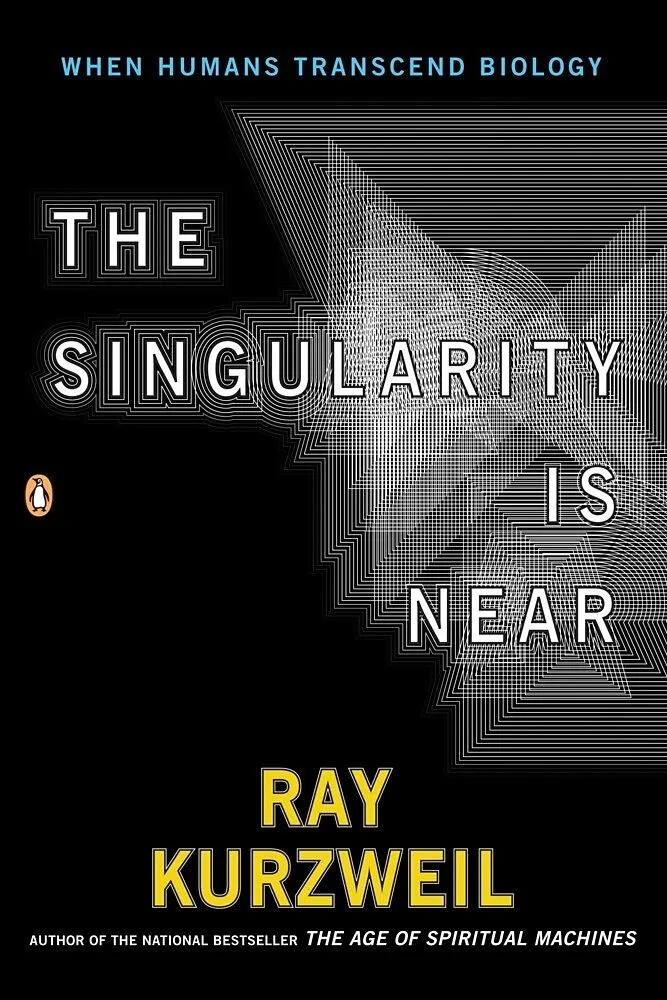
The Singularity Is Near
Beschreibung
A controversial scientific vision by the author of The Age of Spiritual Machines predicts a time in which humans and machines will merge and create a new form of non-biological intelligence, explaining how the occurrence will solve such issues as pollution, hu...Format auswählen
- Kartonierter EinbandCHF 32.30

Wird oft zusammen gekauft
Andere Kunden kauften auch
Beschreibung
A controversial scientific vision by the author of The Age of Spiritual Machines predicts a time in which humans and machines will merge and create a new form of non-biological intelligence, explaining how the occurrence will solve such issues as pollution, hunger, and aging.
Zusatztext 49909330 Informationen zum Autor Ray Kurzweil is a world class inventor, thinker, and futurist, with a thirty-five-year track record of accurate predictions. He has been a leading developer in artificial intelligence for more than six decadeslonger than any other living person. He was the principal inventor of the first CCD flat-bed scanner, omni-font optical character recognition, print-to-speech reading machine for the blind, text-to-speech synthesizer, music synthesizer capable of recreating the grand piano and other orchestral instruments, and commercially marketed large-vocabulary speech recognition software. Ray received a GRAMMY® Award for outstanding achievement in music technology. He is the recipient of the National Medal of Technology and was inducted into the National Inventors Hall of Fame. He has written five books including The Singularity Is Near and How to Create a Mind , both New York Times bestsellers, and Danielle: Chronicles of a Superheroine , winner of multiple young adult fiction awards. He is a Principal Researcher and AI Visionary at Google. Klappentext NEW YORK TIMES BESTSELLER • Celebrated futurist Ray Kurzweil presents an elaborate, smart, and persuasive ( The Boston Globe ) view of the future course of human development. Artfully envisions a breathtakingly better world. Los Angeles Times Startling in scope and bravado.Janet Maslin, The New York Times An important book. The Philadelphia Inquirer At the onset of the twenty-first century, humanity stands on the verge of the most transforming and thrilling period in its history. It will be an era in which the very nature of what it means to be human will be both enriched and challenged as our species breaks the shackles of its genetic legacy and achieves inconceivable heights of intelligence, material progress, and longevity. While the social and philosophical ramifications of these changes will be profound, and the threats they pose considerable, The Singularity Is Near presents a radical and optimistic view of the coming age that is both a dramatic culmination of centuries of technological ingenuity and a genuinely inspiring vision of our ultimate destiny. RAY KURZWEIL The Singularity Is Near WHEN HUMANS TRANSCEND BIOLOGY PENGUIN BOOKS PROLOGUE The Power of Ideas I do not think there is any thrill that can go through the human heart like that felt by the inventor as he sees some creation of the brain unfolding to success. NIKOLA TESLA, 1896, INVENTOR OF ALTERNATING CURRENT At the age of five, I had the idea that I would become an inventor. I had the notion that inventions could change the world. When other kids were wondering aloud what they wanted to be, I already had the conceit that I knew what I was going to be. The rocket ship to the moon that I was then building (almost a decade before President Kennedy's challenge to the nation) did not work out. But at around the time I turned eight, my inventions became a little more realistic, such as a robotic theater with mechanical linkages that could move scenery and characters in and out of view, and virtual baseball games. Having fled the Holocaust, my parents, both artists, wanted a more worldly, less provincial, religious upbringing for me.1 My spiritual education, as a result, took place in a Unitarian church. We would spend six months studying one religiongoing to its services, reading its books, having dialogues with its leadersand then move on to the next. The theme was many paths to the truth. I noticed, of course, many parallels among the world's religious traditions, but even the inconsistencies were illuminating. It became clear to me that the basic truths were profound enough to transcend apparent contrad...
ldquo;Anyone can grasp Mr. Kurzweil’s main idea: that mankind’s technological knowledge has been snowballing, with dizzying prospects for the future. The basics are clearly expressed. But for those more knowledgeable and inquisitive, the author argues his case in fascinating detail . . . . The Singularity Is Near is startling in scope and bravado.”
—Janet Maslin, The New York Times
“Filled with imaginative, scientifically grounded speculation . . . . The Singularity Is Near is worth reading just for its wealth of information, all lucidly presented . . . . [It’s] an important book. Not everything that Kurzweil predicts may come to pass, but a lot of it will, and even if you don’t agree with everything he says, it’s all worth paying attention to.”
—The Philadelphia Inquirer
“[An] exhilarating and terrifyingly deep look at where we are headed as a species . . . . Mr. Kurzweil is a brilliant scientist and futurist, and he makes a compelling and, indeed, a very moving case for his view of the future.”
—The New York Sun
“Compelling.”
—San Jose Mercury News
“Kurzweil links a projected ascendance of artificial intelligence to the future of the evolutionary process itself. The result is both frightening and enlightening . . . . The Singularity Is Near is a kind of encyclopedic map of what Bill Gates once called ‘the road ahead.’”
—The Oregonian
“A clear-eyed, sharply-focused vision of the not-so-distant future.”
—The Baltimore Sun
“This book offers three things that will make it a seminal document. 1) It brokers a new idea, not widely known, 2) The idea is about as big as you can get: the Singularity—all the change in the last million years will be superceded by the change in the next five minutes, and 3) It is an idea that demands informed response. The book’s claims are so footnoted, documented, graphed, argued, and plausible in small detail, that it requires the equal in response. Yet its claims are so outrageous that if true, it would mean . . . well . . . the end of the world as we know it, and the beginning of utopia. Ray Kurzweil has taken all the strands of the Singularity meme circulating in the last decades and has united them into a single tome which he has nailed on our front door. I suspect this will be one of the most cited books of the decade. Like Paul Ehrlich’s upsetting 1972 book Population Bomb, fan or foe, it’s the wave at epicenter you have to start with.”
—Kevin Kelly, founder of Wired
“Really, really out there. Delightfully so.”
—Businessweek.com
“Stunning, utopian vision of the near future when machine intelligence outpaces the biological brain and what things may look like when that happens . . . . Approachable and engaging.”
—the unofficial Microsoft blog
“One of the most important thinkers of our time, Kurzweil has followed up his earlier works . . . with a work of startling breadth and audacious scope.”
—newmediamusings.com
“An attractive picture of a plausible future.”
—Kirkus Reviews
“Kurzweil is a true scientist—a large-minded one at that . . . . What’s arresting isn’t the degree to which Kurzweil’s heady and bracing vision fails to convince—given the scope of his projections, that’s inevitable—but the degree to which it seems downright plausible.”
—Publishers Weekly (starred review)
“[T]hroughout this tour de force of boundless technological optimism, one is impressed by the author’s adamantine intellectual integrity . . . . If you are at all interested in the…