
IHR WARENKORB IST AKTUELL LEER.
Haben Sie noch nichts passendes gefunden? Stöbern Sie durch unser komplettes Sortiment.
Oder melden Sie sich an bzw. registrieren Sie sich.
- Kostenlose Lieferung
- Kauf auf Rechnung
- Ex Libris Tiefpreis
- Filiallieferung und 650+ Abholorte
- Rabatt-Bons als Club-Mitglied
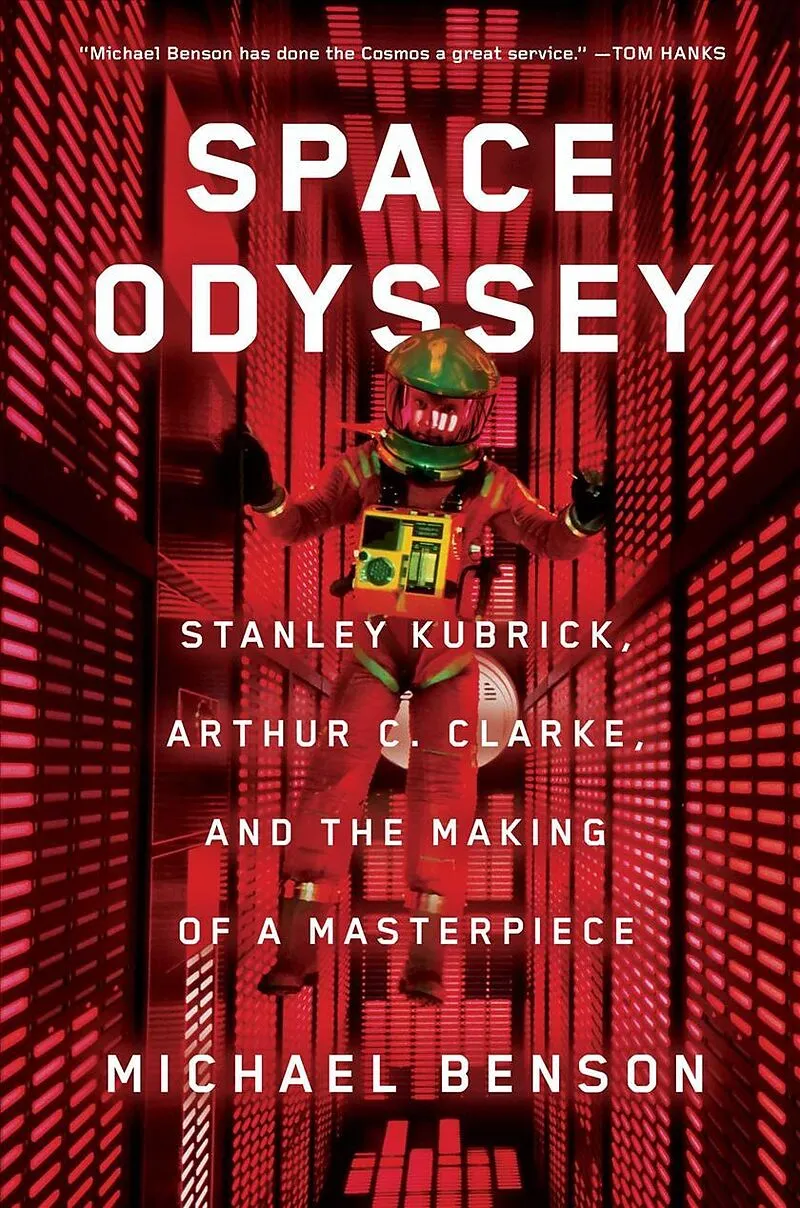
Space Odyssey
Beschreibung
Celebrating the fiftieth anniversary of the film's release, this is the definitive story of the making of 2001: A Space Odyssey, acclaimed today as one of the greatest films ever made, including the inside account of how director Stanley Kubrick and write...Format auswählen
- Livre ReliéCHF 30.10

Wird oft zusammen gekauft
Andere Kunden kauften auch
Beschreibung
Celebrating the fiftieth anniversary of the film's release, this is the definitive story of the making of 2001: A Space Odyssey, acclaimed today as one of the greatest films ever made, including the inside account of how director Stanley Kubrick and writer Arthur C. Clarke created this cinematic masterpiece.
Regarded as a masterpiece today, 2001: A Space Odyssey received mixed reviews on its 1968 release. Despite the success of Dr. Strangelove, director Stanley Kubrick wasn't yet recognized as a great filmmaker, and 2001 was radically innovative, with little dialogue and no strong central character. Although some leading critics slammed the film as incomprehensible and self-indulgent, the public lined up to see it. 2001's resounding commercial success launched the genre of big-budget science fiction spectaculars. Such directors as George Lucas, Steven Spielberg, Ridley Scott, and James Cameron have acknowledged its profound influence.
Author Michael Benson explains how 2001 was made, telling the story primarily through the two people most responsible for the film, Kubrick and science fiction legend Arthur C. Clarke. Benson interviewed Clarke many times, and has also spoken at length with Kubrick's widow, Christiane; with visual effects supervisor Doug Trumbull; with Dan Richter, who played 2001's leading man-ape; and many others.
A colorful nonfiction narrative packed with memorable characters and remarkable incidents, Space Odyssey provides a 360-degree view of this extraordinary work, tracking the film from Kubrick and Clarke's first meeting in New York in 1964 through its UK production from 1965-1968, during which some of the most complex sets ever made were merged with visual effects so innovative that they scarcely seem dated today. A concluding chapter examines the film's legacy as it grew into it current justifiably exalted status.
ldquo;Writer/photographer/filmmaker Benson provides a highly detailed, comprehensive account of the 1968 film. . . . And methodically documents how Kubrick drew inspiration from a range of sources to adapt for the screen. By the end, [he] makes a compelling case that 2001: A Space Odyssey is both uniquely Kubrick's film and utterly original.”
Autorentext
Michael Benson works at the intersection of art and science. An artist, writer, and filmmaker, he’s a Fellow of the NY Institute of the Humanities and a past Visiting Scholar at the MIT Media Lab’s Center for Bits and Atoms. In addition to Space Odyssey he has written such books as Cosmigraphics: Picturing Space Through Time, a finalist for the Science and Technology award at the 2015 Los Angeles Times “Festival of Books.” Benson’s planetary landscape photography exhibitions have been shown internationally. He has contributed to many publications including The New Yorker, The New York Times, The Washington Post, The Atlantic, Smithsonian, and Rolling Stone. Visit Michael-Benson.com.
Klappentext
Celebrating the fiftieth anniversary of the film's release, this is the definitive story of the making of 2001: A Space Odyssey, acclaimed today as one of the greatest films ever made, including the inside account of how director Stanley Kubrick and writer Arthur C. Clarke created this cinematic masterpiece.
Regarded as a masterpiece today, 2001: A Space Odyssey received mixed reviews on its 1968 release. Despite the success of Dr. Strangelove, director Stanley Kubrick wasn't yet recognized as a great filmmaker, and 2001 was radically innovative, with little dialogue and no strong central character. Although some leading critics slammed the film as incomprehensible and self-indulgent, the public lined up to see it. 2001's resounding commercial success launched the genre of big-budget science fiction spectaculars. Such directors as George Lucas, Steven Spielberg, Ridley Scott, and James Cameron have acknowledged its profound influence.
Author Michael Benson explains how 2001 was made, telling the story primarily through the two people most responsible for the film, Kubrick and science fiction legend Arthur C. Clarke. Benson interviewed Clarke many times, and has also spoken at length with Kubrick's widow, Christiane; with visual effects supervisor Doug Trumbull; with Dan Richter, who played 2001's leading man-ape; and many others.
A colorful nonfiction narrative packed with memorable characters and remarkable incidents, Space Odyssey provides a 360-degree view of this extraordinary work, tracking the film from Kubrick and Clarke's first meeting in New York in 1964 through its UK production from 1965-1968, during which some of the most complex sets ever made were merged with visual effects so innovative that they scarcely seem dated today. A concluding chapter examines the film's legacy as it grew into it current justifiably exalted status.
Zusammenfassung
Celebrating the fiftieth anniversary of the film’s release, this is the definitive story of the making of 2001: A Space Odyssey, acclaimed today as one of the greatest films ever made, including the inside account of how director Stanley Kubrick and writer Arthur C. Clarke created this cinematic masterpiece.
Regarded as a masterpiece today, 2001: A Space Odyssey received mixed reviews on its 1968 release. Despite the success of Dr. Strangelove, director Stanley Kubrick wasn’t yet recognized as a great filmmaker, and 2001 was radically innovative, with little dialogue and no strong central character. Although some leading critics slammed the film as incomprehensible and self-indulgent, the public lined up to see it. 2001’s resounding commercial success launched the genre of big-budget science fiction spectaculars. Such directors as George Lucas, Steven Spielberg, Ridley Scott, and James Cameron have acknowledged its profound influence.
Author Michael Benson explains how 2001 was made, telling the story primarily through the two people most responsible for the film, Kubrick and science fiction legend Arthur C. Clarke. Benson interviewed Clarke many times, and has also spoken at length with Kubrick’s widow, Christiane; with visual effects supervisor Doug Trumbull; with Dan Richter, who played 2001’s leading man-ape; and many others.
A colorful nonfiction narrative packed with memorable characters and remarkable incidents, Space Odyssey provides a 360-degree view of this extraordinary work, tracking the film from Kubrick and Clarke’s first meeting in New York in 1964 through its UK production from 1965-1968, during which some of the most complex sets ever made were merged with visual effects so innovative that they scarcely seem dated today. A concluding chapter examines the film’s legacy as it grew into it current justifiably exalted status.
Leseprobe
Space Odyssey CHAPTER ONE
PROLOGUE: THE ODYSSEY
The very meaninglessness of life forces man to create his own meanings.
-STANLEY KUBRICK
The twentieth century produced two great latter-day iterations of Homer's Odyssey. The first was James Joyce's Ulysses, which collapsed Odysseus's decade of wandering down to a single city, Dublin, and a seemingly arbitrary day, June 16, 1904. In Ulysses, the role of Ithaca's wily king was played by a commoner, Leopold Bloom-a peaceable Jewish cuckold with an uncommonly fascinating inner life, one the author effectively allowed us to hear. Serialized from 1918 to 1920, it was published in full in 1922.
The other was Stanley Kubrick and Arthur C. Clarke's 2001: A Space Odyssey, in which the islands of the southeastern Mediterranean became the solar system's planets and moons, and the wine-dark sea the airless void of interplanetary, interstellar, and even intergalactic space.
Shot in large-format panoramic 65-millimeter negative and initial…