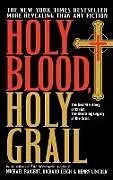
Holy Blood, Holy Grail
Beschreibung
Informationen zum Autor Michael Baigent, Richard Leigh, and Henry Lincoln Klappentext Is the traditional, accepted view of the life of Christ in some way incomplete? • Is it possible Christ did not die on the cross? • Is it possible Jesus was married...Format auswählen
- Kartonierter EinbandCHF 22.70

Wird oft zusammen gekauft
Andere Kunden kauften auch
Beschreibung
Informationen zum Autor Michael Baigent, Richard Leigh, and Henry Lincoln Klappentext Is the traditional, accepted view of the life of Christ in some way incomplete? • Is it possible Christ did not die on the cross? • Is it possible Jesus was married, a father, and that his bloodline still exists? • Is it possible that parchments found in the South of France a century ago reveal one of the best-kept secrets of Christendom? • Is it possible that these parchments contain the very heart of the mystery of the Holy Grail? According to the authors of this extraordinarily provocative, meticulously researched book, not only are these things possible - they are probably true! so revolutionary, so original, so convincing, that the most faithful Christians will be moved; here is the book that has sparked worldwide controversey. "Enough to seriously challenge many traditional Christian beliefs, if not alter them." - Los Angeles Times Book Review "Like Chariots of the Gods?...the plot has all the elements of an international thriller." - NewsweekIntroduction In 1969, en route for a summer holiday in the Cévennes, I made the casual purchase of a paperback. Le Trésor Maudit by Gérard de Sède was a mystery story--a lightweight, entertaining blend of historical fact, genuine mystery, and conjecture. It might have remained consigned to the postholiday oblivion of all such reading had I not stumbled upon a curious and glaring omission in its pages. The "accursed treasure" of the title had apparently been found in the 1890s by a village priest through the decipherment of certain cryptic documents unearthed in his church. Although the purported texts of two of these documents were reproduced, the "secret messages" said to be encoded within them were not. The implication was that the deciphered messages had again been lost. And yet, as I found, a cursory study of the documents reproduced in the book reveals at least one concealed message. Surely the author had found it. In working on his book he must have given the documents more than fleeting attention. He was bound, therefore, to have found what I have found. Moreover, the message was exactly the kind of titillating snippet of "proof" that helps to sell a "pop" paperback. Why had M. de Sède not published it? During the ensuing months the oddity of the story and the possibility of further discoveries drew me back to it from time to time. The appeal was that of a rather more than usually intriguing crossword puzzle--with the added curiosity of de Sède's silence. As I caught tantalizing new glimpses of layers of meaning buried within the text of the documents, I began to wish I could devote more to the mystery of Rennes-le-Château than mere moments snatched from my working life as a writer for television. And so in the late autumn of 1970, I presented the story as a possible documentary subject to the late Paul Johnstone, executive producer of the BBC's historical and archaeological series Chronicle. Paul saw the possibilities and I was sent to France to talk to de Sède and explore the prospects for a short film. During Christmas week of 1970 I met de Sède in Paris. At that first meeting I asked the question that had nagged at me for more than a year: "Why didn't you publish the message hidden in the parchments?" His reply astounded me. "What message?" It seemed inconceivable to me that he was unaware of this elementary message. Why was he fencing with me? Suddenly I found myself reluctant to reveal exactly what I had found. We continued a verbal fencing match for a few minutes and it became apparent that we were both aware of the message. I repeated my question, "Why didn't you publish it?" This time de Sède's answer was calculated. "Because we thought it might interest someone like you to find it for yourself." That reply, as cryptic as the priest's mysterious documents, was the firs...
Autorentext
Michael Baigent, Richard Leigh, and Henry Lincoln
Klappentext
Is the traditional, accepted view of the life of Christ in some way incomplete?
• Is it possible Christ did not die on the cross?
• Is it possible Jesus was married, a father, and that his bloodline still exists?
• Is it possible that parchments found in the South of France a century ago reveal one of the best-kept secrets of Christendom?
• Is it possible that these parchments contain the very heart of the mystery of the Holy Grail?
According to the authors of this extraordinarily provocative, meticulously researched book, not only are these things possible - they are probably true! so revolutionary, so original, so convincing, that the most faithful Christians will be moved; here is the book that has sparked worldwide controversey.
"Enough to seriously challenge many traditional Christian beliefs, if not alter them."
- Los Angeles Times Book Review
"Like Chariots of the Gods?...the plot has all the elements of an international thriller."
- Newsweek
Zusammenfassung
NEW YORK TIMES BESTSELLER • Is the classic, accepted view of the life of Christ in some way incomplete? The authors of The Messianic Legacy present a provocative and meticulously researched look at Christ and the history of Christianity.
“Enough to seriously challenge many traditional beliefs, if not alter them.”—Los Angeles Times Book Review
Explosive, thought-provoking, fiercely compelling, Holy Blood, Holy Grail breaks bold new ground with its shocking conclusions about the lineage of Christ and the legacy of the Holy Grail. Based on decades of research, filled with eye-opening evidence and stunning scholarship, this authoritative work uncovers an alternate history as unsettling as it is believable. Holy Blood, Holy Grail dares to ask:
• Is it possible Christ did not die on the cross?
• Is it possible Jesus was married, a father, and that his bloodline still exists?
• Is it possible that parchments found in the South of France a century ago reveal one of the best-kept secrets of Christendom?
• Is it possible that these parchments contain the very heart of the mystery of the Holy Grail?
According to Michael Baigent, Richard Leigh, and Henry Lincoln, not only are these things possible, they are probably true! So revolutionary, so original, so convincing, the most faithful Christians will be moved; here is the book that has sparked worldwide controversy.
Leseprobe
Introduction
In 1969, en route for a summer holiday in the Cévennes, I made the casual purchase of a paperback. Le Trésor Maudit by Gérard de Sède was a mystery story--a lightweight, entertaining blend of historical fact, genuine mystery, and conjecture. It might have remained consigned to the postholiday oblivion of all such reading had I not stumbled upon a curious and glaring omission in its pages.
The "accursed treasure" of the title had apparently been found in the 1890s by a village priest through the decipherment of certain cryptic documents unearthed in his church. Although the purported texts of two of these documents were reproduced, the "secret messages" said to be encoded within them were not. The implication was that the deciphered messages had again been lost. And yet, as I found, a cursory study of the documents reproduced in the book reveals at least one concealed message. Surely the author had found it. In working on his book he must have given the documents more than fleeting attention. He was bound, therefore, to have found what I have found. Moreover, the message was exactly the kind of titillating snippet of "proof" that helps to sell a "pop" paperback. Why had M. de Sède not published it?
During the ensuing months the oddity of the story and the possibility of further discoveries drew me back to it from time to time. The appeal was that of a rather more than usually intriguing cr…