A Thousand Splendid Suns
Beschreibung
Informationen zum Autor Khaled Hosseini was born in Kabul, Afghanistan, and moved to the United States in 1980. He is the author of the New York Times bestsellers The Kite Runner , A Thousand Splendid Suns , and And the Mountains Echoed . He is A U.S. Goodwill...Format auswählen
- Fester EinbandCHF 37.50

Wird oft zusammen gekauft
Andere Kunden kauften auch
Beschreibung
Informationen zum Autor Khaled Hosseini was born in Kabul, Afghanistan, and moved to the United States in 1980. He is the author of the New York Times bestsellers The Kite Runner , A Thousand Splendid Suns , and And the Mountains Echoed . He is A U.S. Goodwill Envoy to the United Nations Refugee Agency, and the founder of The Khaled Hosseini Foundation, a nonprofit that provides humanitarian assistance to the people of Afghanistan. Klappentext This deluxe illustrated edition of A Thousand Splendid Suns is filled with striking and memorable photographs that bring Khaled Hosseini's compelling story to life. Since its publication in 2007, A Thousand Splendid Suns has shipped more than three million copies. The bestselling adult novel of 2007, it spent fifteen weeks at #1 on the New York Times bestseller list and remained on the list for an impressive forty-nine weeks. Propelled by the same superb instinct for storytelling that made The Kite Runner a beloved classic, A Thousand Splendid Suns is at once an incredible chronicle of thirty years of Afghan history and a deeply moving story of family, friendship, faith, and the salvation to be found in love. Now, in this lavishly designed edition of the novel, the narrative is enhanced by expressive photos that capture the people and culture of the region in vivid detail and reflect the book's powerful themes, so apt for our times: the passionate search for family, home, acceptance, a healthy society, and a promising future-regardless of the obstacles. Together with The Kite Runner: Illustrated Edition , the illustrated A Thousand Splendid Suns creates a beautiful matched set. Leseprobe PART ONE 1. Mariam was five years old the first time she heard the word harami. It happened on a Thursday. It must have, because Mariam remembered that she had been restless and preoccupied that day, the way she was only on Thursdays, the day when Jalil visited her at the kolba. To pass the time until the moment that she would see him at last, crossing the knee-high grass in the clearing and waving, Mariam had climbed a chair and taken down her mother's Chinese tea set. The tea set was the sole relic that Mariam's mother, Nana, had of her own mother, who had died when Nana was two. Nana cherished each blue-and-white porcelain piece, the graceful curve of the pot's spout, the hand-painted finches and chrysanthemums, the dragon on the sugar bowl, meant to ward off evil. It was this last piece that slipped from Mariam's fingers, that fell to the wooden floorboards of the kolba and shattered. When Nana saw the bowl, her face flushed red and her upper lip shivered, and her eyes, both the lazy one and the good, settled on Mariam in a flat, unblinking way. Nana looked so mad that Mariam feared the jinn would enter her mother's body again. But the jinn didn't come, not that time. Instead, Nana grabbed Mariam by the wrists, pulled her close, and, through gritted teeth, said, You are a clumsy little harami. This is my reward for everything I've endured. An heirloom-breaking, clumsy little harami. At the time, Mariam did not understand. She did not know what this word harami-bastardmeant. Nor was she old enough to appreciate the injustice, to see that it is the creators of the harami who are culpable, not the harami,whose only sin is being born. Mariam did surmise, by the way Nana said the word, that it was an ugly, loath-some thing to be a harami, like an insect, like the scurrying cockroaches Nana was always cursing and sweeping out of the kolba. Later, when she was older, Mariam did understand. It was the way Nana uttered the wordnot so much saying it as spitting it at herthat made Mariam feel the full sting of it. She understood then what Nana meant, that a harami was an unwanted thing; that she, Mariam, was an illegitimate person who wo...
Klappentext
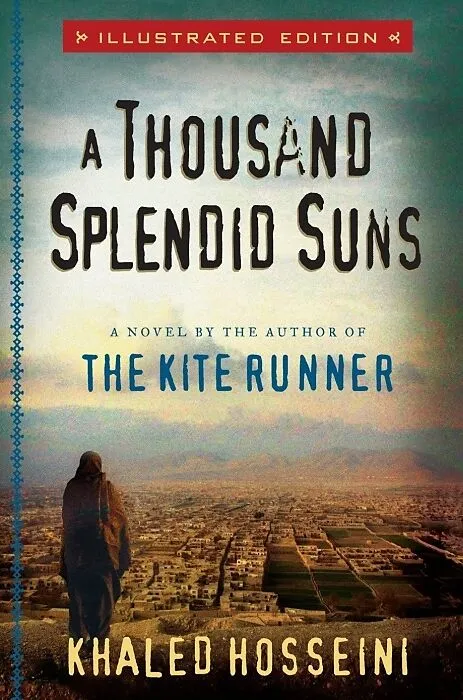
This deluxe illustrated edition of A Thousand Splendid Suns is filled with striking and memorable photographs that bring Khaled Hosseini's compelling story to life. Since its publication in 2007, A Thousand Splendid Suns has shipped more than three million copies. The bestselling adult novel of 2007, it spent fifteen weeks at #1 on the New York Times bestseller list and remained on the list for an impressive forty-nine weeks. Propelled by the same superb instinct for storytelling that made The Kite Runner a beloved classic, A Thousand Splendid Suns is at once an incredible chronicle of thirty years of Afghan history and a deeply moving story of family, friendship, faith, and the salvation to be found in love.
Now, in this lavishly designed edition of the novel, the narrative is enhanced by expressive photos that capture the people and culture of the region in vivid detail and reflect the book's powerful themes, so apt for our times: the passionate search for family, home, acceptance, a healthy society, and a promising future-regardless of the obstacles. Together with The Kite Runner: Illustrated Edition, the illustrated A Thousand Splendid Suns creates a beautiful matched set.
Leseprobe
PART ONE
1.
Mariam was five years old the first time she heard the word harami.
It happened on a Thursday. It must have, because Mariam remembered that she had been restless and preoccupied that day, the way she was only on Thursdays, the day when Jalil visited her at the kolba. To pass the time until the moment that she would see him at last, crossing the knee-high grass in the clearing and waving, Mariam had climbed a chair and taken down her mother’s Chinese tea set. The tea set was the sole relic that Mariam’s mother, Nana, had of her own mother, who had died when Nana was two. Nana cherished each blue-and-white porcelain piece, the graceful curve of the pot’s spout, the hand-painted finches and chrysanthemums, the dragon on the sugar bowl, meant to ward off evil.
It was this last piece that slipped from Mariam’s fingers, that fell to the wooden floorboards of the kolba and shattered.
When Nana saw the bowl, her face flushed red and her upper lip shivered, and her eyes, both the lazy one and the good, settled on Mariam in a flat, unblinking way. Nana looked so mad that Mariam feared the jinn would enter her mother’s body again. But the jinn didn’t come, not that time. Instead, Nana grabbed Mariam by the wrists, pulled her close, and, through gritted teeth, said, “You are a clumsy little harami. This is my reward for everything I’ve endured. An heirloom-breaking, clumsy little harami.”
At the time, Mariam did not understand. She did not know what this word harami-bastard—meant. Nor was she old enough to appreciate the injustice, to see that it is the creators of the harami who are culpable, not the harami,whose only sin is being born. Mariam did surmise, by the way Nana said the word, that it was an ugly, loath-some thing to be a harami, like an insect, like the scurrying cockroaches Nana was always cursing and sweeping out of the kolba.
Later, when she was older, Mariam did understand. It was the way Nana uttered the word—not so much saying it as spitting it at her—that made Mariam feel the full sting of it. She understood then what Nana meant, that a harami was an unwanted thing; that she, Mariam, was an illegitimate person who would never have legitimate claim to the things other people had, things such as love, family, home, acceptance.
Jalil never called Mariam this name. Jalil said she was his little flower. He was fond of sitting her on his lap and telling her stories, like the time he told her that Herat, the city where Mariam was born, in 1959, had once been the cradle of Persian culture, the home of writers, painters, and Sufis.
“You couldn’t stretch a leg here without poking a poet in the ass,” he laughed.
Jalil told her the story of Queen Gauhar Shad, who had raised the famous minarets as her loving ode to Herat back in the fifteenth centu…