Beschreibung
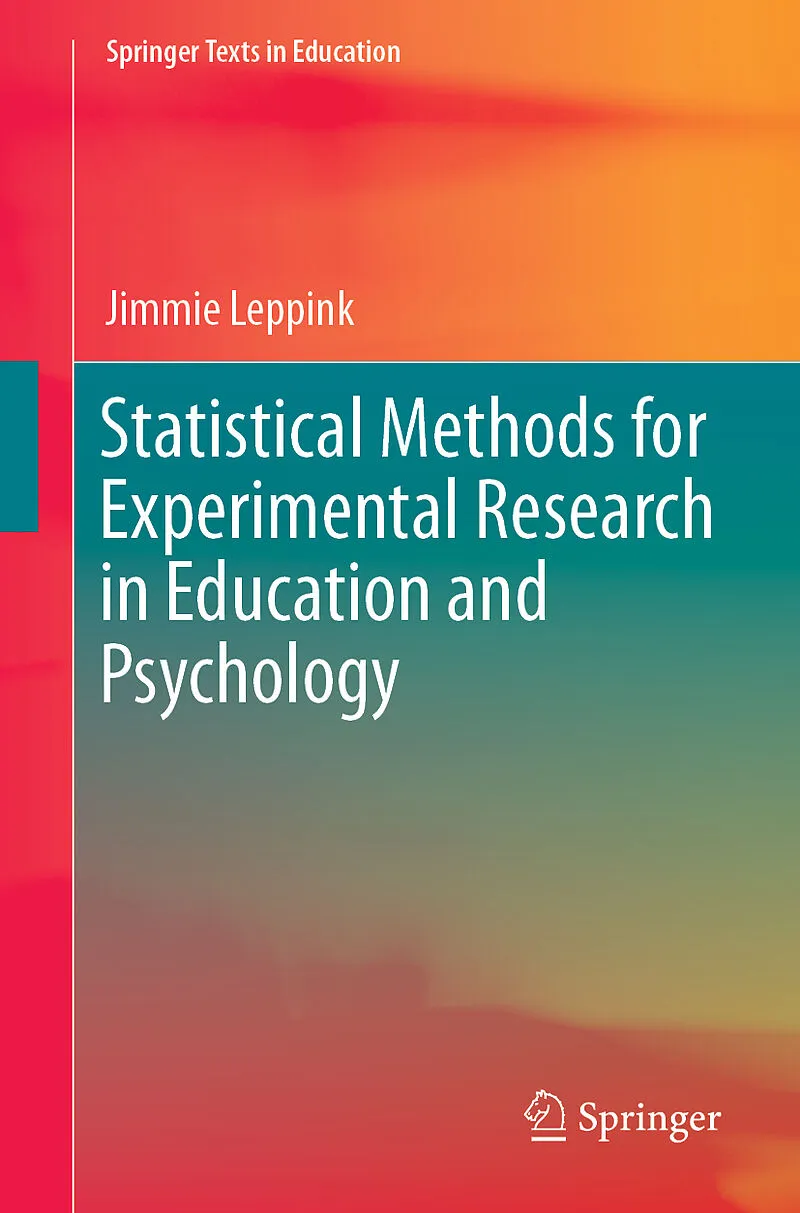
This book focuses on experimental research in two disciplines that have a lot of common ground in terms of theory, experimental designs used, and methods for the analysis of experimental research data: education and psychology. Although the methods covered in...This book focuses on experimental research in two disciplines that have a lot of common ground in terms of theory, experimental designs used, and methods for the analysis of experimental research data: education and psychology. Although the methods covered in this book are also frequently used in many other disciplines, including sociology and medicine, the examples in this book come from contemporary research topics in education and psychology. Various statistical packages, commercial and zero-cost Open Source ones, are used.
The goal of this book is neither to cover all possible statistical methods out there nor to focus on a particular statistical software package. There are many excellent statistics textbooks on the market that present both basic and advanced concepts at an introductory level and/or provide a very detailed overview of options in a particular statistical software programme. This is not yet another book in that genre.
Core theme of this book is a heuristic called the question-design-analysis bridge: there is a bridge connecting research questions and hypotheses, experimental design and sampling procedures, and common statistical methods in that context. Each statistical method is discussed in a concrete context of a set of research question with directed (one-sided) or undirected (two-sided) hypotheses and an experimental setup in line with these questions and hypotheses. Therefore, the titles of the chapters in this book do not include any names of statistical methods such as 'analysis of variance' or 'analysis of covariance'. In a total of seventeen chapters, this book covers a wide range of topics of research questions that call for experimental designs and statistical methods, fairly basic or more advanced.
Focuses on experimental research Uses examples from a wide variety of statistical software, including emerging zero-cost Open Source packages such as JASP and Jamovi Bridges the two disciplines education and psychology in common theory, experimental designs, and statistical methods Provides statistical analysis plans that fit a wide range of experimental research questions and designs Unites traditional and emerging approaches to statistical testing and estimation
Autorentext
Jimmie Leppink (28 April 1983) obtained degrees in Psychology (MSc, September 2005 - July 2006, Cum Laude), Law (LLM, September 2007 - July 2008), and Statistics Education (PhD, September 2008 - March 2012) from Maastricht University, the Netherlands, and obtained a degree in Statistics (MSc, October 2011 - July 2012, Magna Cum Laude) from the Catholic University of Leuven, Belgium. He defended his PhD Thesis in Statistics Education in June of 2012, and was a Postdoc in Education (April 2012 - March 2017) and Assistant Professor of Methodology and Statistics (April 2017 - January 2019) at Maastricht University's School of Health Professions Education. Since January 2019, he has been working as a Senior Lecturer in Medical Education at Hull York Medical School, which is a joint medical school of the University of Hull and the University of York. His research, teaching, and consulting activities revolve around applications of quantitative methods in Education, Psychology, and a broader Social Science context as well as the use of learning analytics for the design of learning environments, instruction, and assessment in Medical Education and the broader Higher Education.
Inhalt
PART I: COMMON QUESTIONS.- Chapter 1: The Question-Design-Analysis Bridge.- Chapter 2: Statistical Testing and Estimation.- Chapter 3: Measurement and Quality Criteria.- Chapter 4: Dealing with Missing Data.- PART II: TYPES OF OUTCOME VARIABLES.- Chapter 5: Dichotomous Outcome Variables.- Chapter 6: Multicategory Nominal Outcome Variables.- Chapter 7: Ordinal Outcome Variables.- Chapter 8: Quantitative Outcome Variables.- PART III: TYPES OF COMPARISONS.- Chapter 9: Common Approaches to Multiple Testing.- Chapter 10: Directed Hypotheses and Planned Comparisons.- Chapter 11: Two-Way and Three-Way Factorial Designs.- Chapter 12: Factor-Covariate Combinations.- PART IV: MULTILEVEL DESIGNS.- Chapter 13: Interaction Between Participants.- Chapter 14: Two or More Raters.- Chapter 15: Group-by-Time Interactions.- Chapter 16: Models for Treatment Order Effects.