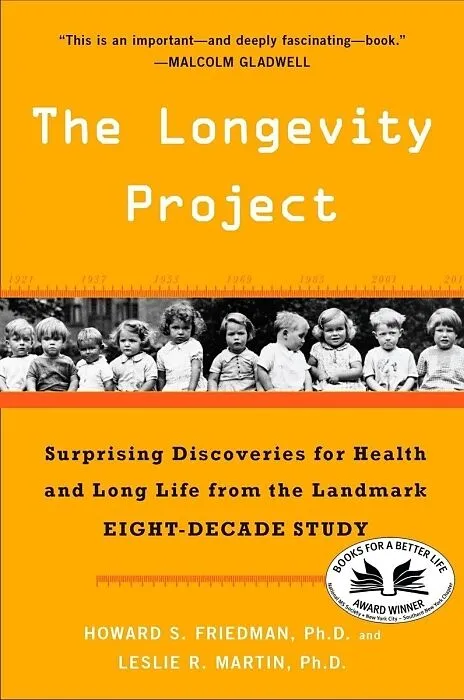
The Longevity Project
Beschreibung
Zusatztext "Provocative. An absorbing and invaluable read." The Wall Street Journal "I recommend you read the book." Katherine Bouton, The New York Times "A remarkable achievement with surprising conclusions." Andrew Weil, M.D. Informationen zum Autor Dr. Howa...Format auswählen
- Kartonierter Einband (Kt)CHF 25.50
- E-Book (epub)CHF 5.00

Wird oft zusammen gekauft
Andere Kunden kauften auch
Beschreibung
Zusatztext "Provocative. An absorbing and invaluable read." The Wall Street Journal "I recommend you read the book." Katherine Bouton, The New York Times "A remarkable achievement with surprising conclusions." Andrew Weil, M.D. Informationen zum Autor Dr. Howard Friedman is Distinguished Professor at the University of California in Riverside. He is the recipient of two major career awards for his health psychology research. In 1999, he received the Outstanding Contributions to Health Psychology Award from the American Psychological Association; and in 2008, he was honored with the James McKeen Cattell Fellow Award from the Association for Psychological Science (APS), an international award and the most prestigious in his field of applied research. Dr. Leslie Martin is Professor of Psychology at La Sierra University, and Research Psychologist at UC Riverside. She graduated summa cum laude from the California State University and received her Ph.D. from the University of California in Riverside. She has received the Distinguished Researcher Award, and the Anderson Award for Excellence in Teaching, both at La Sierra University. Former department chair, Dr. Martin has also received awards for outstanding advising and for service learning. In addition to her research on pathways to health and longevity, she studies physician-patient communication and its relationship to medical outcomes and has lectured widely on these topics. Klappentext A revolutionary look at diet, nutrition, fitness, and longevity praised by Malcolm Gladwell and Oprah Magazine."An extraordinary eighty-year study has led to some unexpected discoveries about long life." -O, The Oprah Magazine For years we have been told to obsessively monitor when we're angry, what we eat, how much we worry, and how often we go to the gym. So why isn't everyone healthy? Drawing from the most extensive study of long life ever conducted, The Longevity Project busts many long- held myths, revealing how: • Many of those who worked the hardest actually lived the longest • Getting married is not a magic ticket to good health • It's not the happy-go-lucky who thrive-it's the prudent and persistentWith self-tests that illuminate your own best paths to longer life, this book changes the conversation about what it really takes to achieve a long, healthy life. Conscientious Adults: Then and Now If our unexpected discovery about childhood conscientiousness and its relevance to long life is not a fluke, then we should also be able to find confirming evidence by studying conscientious adults. Almost two decades after starting, in the summer of 1940, Dr. Terman approached Patricia and the other members of his select study again. He gave them an extensive new series of tests and measures with such questions as Are you thrifty and careful about making loans? and How persistent are you in the accomplishment of your ends? From these results we worked for months to construct and validate a new series of personality scales. At times, we also incorporated similar questions that Terman asked the participants in 1950. Studies of health across the life span face an intriguing dilemma. In order to see whether personality in childhood and young adulthood predicts long life, a result that can't be seen until decades later, we necessarily need to use old data. In our case, information from the early and mid-twentieth century is being used to predict longevity into the twenty-first century. But years later, new, improved measures are in vogue, and the dusty old measures and techniques are likely subject to criticism. As Dale Carnegie put it, Any fool can criticize, condemn and complain, and most fools do. Short of time travel, how can we be sure that the measures we have from the 1920s, 1940s, and 1950s reflect what we unders...
"Provocative. An absorbing and invaluable read." — **The Wall Street Journal **
"I recommend you read the book." — Katherine Bouton, The New York Times
"A remarkable achievement with surprising conclusions." — Andrew Weil, M.D.
Autorentext
Dr. Howard Friedman is Distinguished Professor at the University of California in Riverside. He is the recipient of two major career awards for his health psychology research. In 1999, he received the Outstanding Contributions to Health Psychology Award from the American Psychological Association; and in 2008, he was honored with the James McKeen Cattell Fellow Award from the Association for Psychological Science (APS), an international award and the most prestigious in his field of applied research.
Dr. Leslie Martin is Professor of Psychology at La Sierra University, and Research Psychologist at UC Riverside. She graduated summa cum laude from the California State University and received her Ph.D. from the University of California in Riverside. She has received the Distinguished Researcher Award, and the Anderson Award for Excellence in Teaching, both at La Sierra University. Former department chair, Dr. Martin has also received awards for outstanding advising and for service learning. In addition to her research on pathways to health and longevity, she studies physician-patient communication and its relationship to medical outcomes and has lectured widely on these topics.
Klappentext
A revolutionary look at diet, nutrition, fitness, and longevity praised by Malcolm Gladwell and Oprah Magazine. "An extraordinary eighty-year study has led to some unexpected discoveries about long life." -O, The Oprah MagazineFor years we have been told to obsessively monitor when we're angry, what we eat, how much we worry, and how often we go to the gym. So why isn't everyone healthy? Drawing from the most extensive study of long life ever conducted, The Longevity Project busts many long- held myths, revealing how: • Many of those who worked the hardest actually lived the longest • Getting married is not a magic ticket to good health • It's not the happy-go-lucky who thrive-it's the prudent and persistent With self-tests that illuminate your own best paths to longer life, this book changes the conversation about what it really takes to achieve a long, healthy life.
Leseprobe
Conscientious Adults: Then and Now
If our unexpected discovery about childhood conscientiousness and its relevance to long life is not a fluke, then we should also be able to find confirming evidence by studying conscientious adults.
Almost two decades after starting, in the summer of 1940, Dr. Terman approached Patricia and the other members of his select study again. He gave them an extensive new series of tests and measures with such questions as “Are you thrifty and careful about making loans?” and “How persistent are you in the accomplishment of your ends?” From these results we worked for months to construct and validate a new series of personality scales. At times, we also incorporated similar questions that Terman asked the participants in 1950.
Studies of health across the life span face an intriguing dilemma. In order to see whether personality in childhood and young adulthood predicts long life, a result that can’t be seen until decades later, we necessarily need to use “old” data. In our case, information from the early and mid-twentieth century is being used to predict longevity into the twenty-first century. But years later, new, improved measures are in vogue, and the dusty old measures and techniques are likely subject to criticism. As Dale Carnegie put it, “Any fool can criticize, condemn and complain, and most fools do.”
Short of time travel, how can we be sure that the measures we have from the 1920s, 1940s, and 1950s reflect what we understand about personality today? What at first seemed simple gradually became more and more complex. We decided to administer the Terman que…