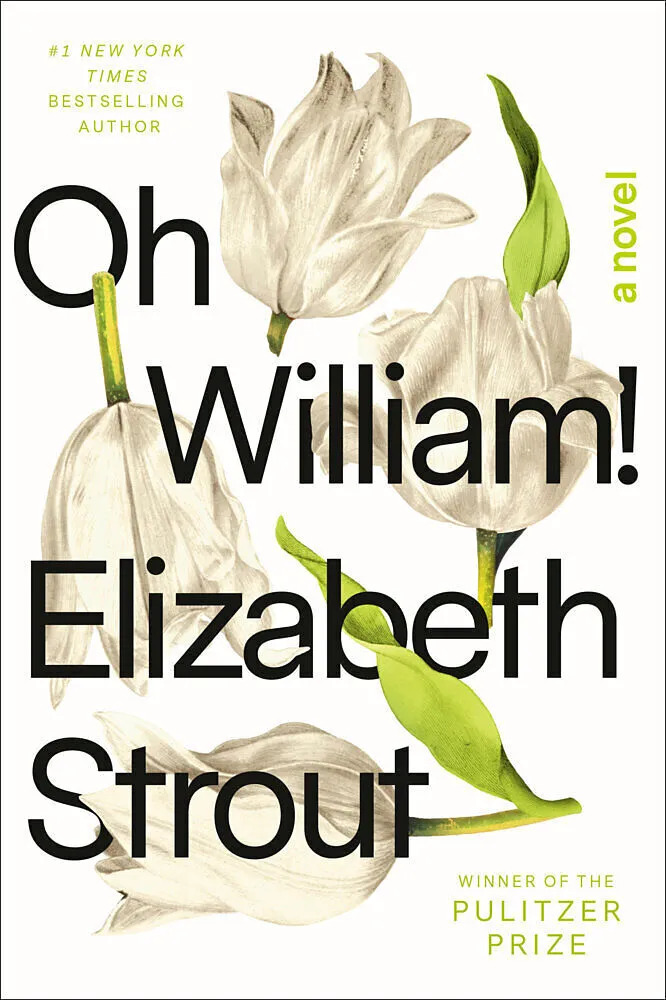
Oh William!
Beschreibung
NEW YORK TIMES BESTSELLER BOOKER PRIZE FINALIST The Pulitzer Prize winning author of Olive Kitteridge and My Name is Lucy Barton explores the mysteries of marriage and the secrets we keep, as a former couple reckons with where they ve come from and what they v...Format auswählen
- Fester EinbandCHF 30.00
- Audio CD (CD/SACD)CHF 49.50

Wird oft zusammen gekauft
Andere Kunden kauften auch
Beschreibung
NEW YORK TIMES BESTSELLER BOOKER PRIZE FINALIST The Pulitzer Prize winning author of Olive Kitteridge and My Name is Lucy Barton explores the mysteries of marriage and the secrets we keep, as a former couple reckons with where they ve come from and what they ve left behind.
ONE OF THE TEN BEST BOOKS OF THE YEAR: Maureen Corrigan, NPR s Fresh Air
**
Elizabeth Strout is one of my very favorite writers, so the fact that Oh William! may well be my favorite of her books is a mathematical equation for joy. The depth, complexity, and love contained in these pages is a miraculous achievement. Ann Patchett, author of The Dutch House**
*I would like to say a few things about my first husband, William.
*
Lucy Barton is a writer, but her ex-husband, William, remains a hard man to read. William, she confesses, has always been a mystery to me. Another mystery is why the two have remained connected after all these years. They just are.
So Lucy is both surprised and not surprised when William asks her to join him on a trip to investigate a recently uncovered family secret one of those secrets that rearrange everything we think we know about the people closest to us. There are fears and insecurities, simple joys and acts of tenderness, and revelations about affairs and other spouses, parents and their children. On every page of this exquisite novel we learn more about the quiet forces that hold us together even after we ve grown apart.
A BEST BOOK OF THE YEAR: The New York Times Book Review, The Washington Post, Time, Vulture, She Reads
“So much intimate, fragile, desperate humanness infuses these pages, it’s breathtaking. Almost every declaration carries the force of revelation.”—The Washington Post
“Being privy to the innermost thoughts of Lucy Barton—and, more to the point, deep inside a book by Strout—makes readers feel safe. We know we’re in good hands.”—NPR
“A poignant master class on aging and vulnerability . . . Oh William! . . . serves as a gentle reminder to be emotionally generous with our loved ones and as physically present as possible each and every day of our lives.”—San Francisco Chronicle
“Loneliness and betrayal, themes to which the Pulitzer Prize–winning Strout has returned throughout her career, are ever present in this illuminating character-driven saga. . . . Strout’s characters teem with angst and emotion, all of which [she] handles with a mastery of restraint and often in spare, true sentences. . . . It’s not for nothing that Strout has been compared to Hemingway. In some ways, she betters him.”—Publishers Weekly (starred review)
Autorentext
Elizabeth Strout
Klappentext
"Strout's iconic heroine Lucy Barton recounts her complex, tender relationship with William, her first husband--and longtime, on-again-off-again friend and confidante"--
Zusammenfassung
NEW YORK TIMES BESTSELLER • BOOKER PRIZE FINALIST • The Pulitzer Prize–winning author of Olive Kitteridge and My Name is Lucy Barton explores the mysteries of marriage and the secrets we keep, as a former couple reckons with where they’ve come from—and what they’ve left behind.
ONE OF THE TEN BEST BOOKS OF THE YEAR: Maureen Corrigan, NPR’s Fresh Air
**
“Elizabeth Strout is one of my very favorite writers, so the fact that Oh William! may well be my favorite of her books is a mathematical equation for joy. The depth, complexity, and love contained in these pages is a miraculous achievement.”—Ann Patchett, author of The Dutch House**
*I would like to say a few things about my first husband, William.
*
Lucy Barton is a writer, but her ex-husband, William, remains a hard man to read. William, she confesses, has always been a mystery to me. Another mystery is why the two have remained connected after all these years. They just are.
So Lucy is both surprised and not surprised when William asks her to join him on a trip to investigate a recently uncovered family secret—one of those secrets that rearrange everything we think we know about the people closest to us. There are fears and insecurities, simple joys and acts of tenderness, and revelations about affairs and other spouses, parents and their children. On every page of this exquisite novel we learn more about the quiet forces that hold us together—even after we’ve grown apart.
A BEST BOOK OF THE YEAR: The New York Times Book Review, The Washington Post, Time, Vulture, She Reads
Leseprobe
I would like to say a few things about my first husband, William.
William has lately been through some very sad events—many of us have—but I would like to mention them, it feels almost a compulsion; he is seventy-one years old now.
My second husband, David, died last year, and in my grief for him I have felt grief for William as well. Grief is such a—oh, it is such a solitary thing; this is the terror of it, I think. It is like sliding down the outside of a really long glass building while nobody sees you.
But it is William I want to speak of here.
His name is William Gerhardt, and when we married I took his last name, even though at the time it was not fashionable to do so. My college roommate said, “Lucy, you’re taking his name? I thought you were a feminist.” And I told her that I did not care about being a feminist; I told her I did not want to be me anymore. At that time I felt that I was tired of being me, I had spent my whole life not wanting to be me—this is what I thought then—and so I took his name and became Lucy Gerhardt for eleven years, but it did not ever feel right to me, and almost immediately after William’s mother died I went to the motor vehicle place to get my own name back on my driver’s license, even though it was more difficult than I had thought it would be; I had to go back and bring in some court documents; but I did.
I became Lucy Barton again.
We were married for almost twenty years before I left him and we have two daughters, and we have been friendly for a long time now—how, I am not sure exactly. There are many terrible stories of divorce, but except for the separation itself ours is not one of them. Sometimes I thought I would die from the pain of our separating, and the pain it caused my girls, but I did not die, and I am here, and so is William.
Because I am a novelist, I have to write this almost like a novel, but it is true—as true as I can make it. And I want to say—oh, it is difficult to know what to say! But when I report something about William it is because he told it to me or because I saw it with my own eyes.
So I will start this story when William was sixty-nine years old, which is less than two years ago now.
A visual:
Recently William’s lab assistant had taken to calling William “Einstein,” and William seemed to get a real kick out of that. I do not think William looks like Einstein at all, but I take the young woman’s point. William has a very full mustache with gray in its whiteness, but it is sort of a trimmed mustache and his hair is full and white. It is cut, but it does stick out from his head. He is a tall man, and he dresses very well. And he does not have that vaguely crazy look that Einstein, to my mind, seemed to have. William’s face is often closed with an unyielding pleasantness, except for once in a very great while when he throws his head back in real laughter; I have not seen him do that for a long time. His eyes are brown and they have stayed large; not everyone’s eyes stay large…