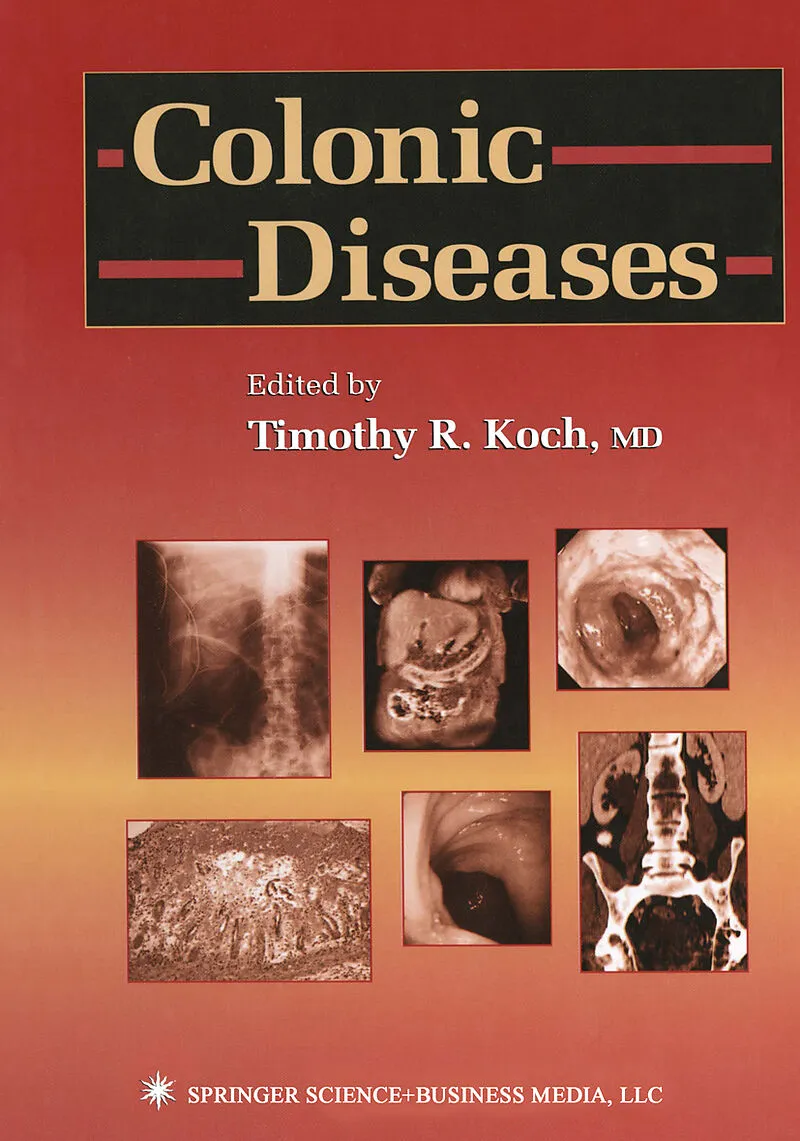
Colonic Diseases
Beschreibung
The Scientification of Gastroenterology During the 20th Century Science contributes to medicine in three ways: It provides a body of relatively secure knowl edge. Some of that knowledge has been applied to develop technologies which have had a major impact upo...Format auswählen
- Kartonierter EinbandCHF 165.20
- Fester EinbandCHF 186.80
- E-Book (pdf)CHF 130.90

Wird oft zusammen gekauft
Andere Kunden kauften auch
Beschreibung
The Scientification of Gastroenterology During the 20th Century * Science contributes to medicine in three ways: It provides a body of relatively secure knowl edge. Some of that knowledge has been applied to develop technologies which have had a major impact upon the practice and effectiveness of medicine. Last, science offers to medicine a way of thinking. - 1. McCormick [(1993) The Contribution of Science to Medicine. Perspect. Bioi. Med. 16,315.] Awareness of the digestive system began with the dawn of civilization, when man, observing the feeding habits of animals in the surrounding environment, experimented with foods, edible and inedible. Identity came with discoveries of the digestive organs during the 16th and 17th centuries. Function was revealed by physiologic studies of digestion, absorp tion and secretion, metabolism, and motility during the 18th and 19th centuries. Diagnostic access improved with the technological advances of the 20th century. Understanding of gas trointestinal (GI) disease followed the growth of the basic sciences and gastroenterology's involvement in scientific research during the latter half of the 20th century. Early in the 20th century, gastroenterology was yet an undefined activity without clinical or scientific guidelines. Diagnostic approach to the digestive tract was minimal. Valid con cepts of disease were lacking. Visceroptosis, sitophobia, and "colonic autointoxication" were common "diagnoses." Therapeutic resources were scarce.
Includes supplementary material: sn.pub/extras
Klappentext
With an aging population prone to colorectal disorders and with the quickening pace of medical discovery, there is a need for an up-to-date survey of the field. In Colonic Diseases, Timothy R. Koch, MD, has assembled a panel of innovative basic researchers, esteemed clinical investigators, and well-known clinicians to bridge the gap between basic and clinical research and the day-to-day care of patients with colonic disorders. As a foundation for better understanding, the authors review what is currently known about normal colonic physiology, explain the mechanisms of disease involved in the development of colonic disorders, and highlight important clues for potential therapies. Their review of the diagnosis and treatment of common colonic disorders covers colorectal neoplasia, inflammatory bowel disease (IBD), ulcerative colitis, diverticular disease, Crohn's disease, and constipation. Here the authors fully discuss potential symptoms, pathological and radiological findings, the differential diagnosis, and presently recommended modes of evaluation and therapy, including the use of probiotics. New areas of potential treatment not presently available for patients with chronic symptoms are also examined, along with the advanced treatment techniques currently in use at the Cleveland Clinic (for ulcerative colitis), The University of Chicago (for Crohn's disease), the Mayo Clinic (for irritable bowel syndrome), and the MD Anderson Cancer Center (for colorectal cancer).
Timely and cutting-edge, Colonic Diseases explains the origins and treatment of common colorectal disorders, blending the molecular mechanisms of disease with new outcomes and epidemiological research to improve our present and future understanding of colonic diseases and their management.
Inhalt
I. Colorectal Physiology.- 1 AbsorptionSecretion and Epithelial Cell Function.- 2 Normal Motility and Smooth Muscle Function.- 3 Neural Regulation of Colonic Motor Function.- 4 Mucin and Goblet Cell Function.- 5 Endocrine Cells of the Colon.- 6 Micronutrients.- 7 Aging.- 8 Immunology of the Gastrointestinal Tract.- 9 Colonic Lymphatics.- 10 Probiotics and the Colon: Therapeutic and Prophylactic Uses.- 11 Physiology and Pathophysiology of Colorectal Sensory Processes.- II. Investigation of Disease Processes.- 12 Oxidative Stress.- 13 Genetic Testing for Colon Cancer.- 14 Inflammation.- 15 Epidemiologic Studies and Outcomes Research in Colonic Diseases.- 16 Colonoscopy.- 17 Interpretation of Colonic Biopsies in Patients with Diarrhea.- 18 Anorectal Manometry.- 19 Endoanal and Endorectal Ultrasound.- 20 Colonic Transit and Motility.- 21 Defecography and Related Radiologic Techniques.- 22 Cross-Sectional Imaging of the Large Bowel.- III. Colorectal Disease.- 23 Hirschsprung's Disease and Neonatal Disorders.- 24 Acute Megacolon, Acquired Megacolon, and Volvulus.- 25 Diverticular Disease.- 26 Current Understanding of Colorectal Neoplasia.- 27 Constipation.- 28 Crohn's Disease.- 29 Ulcerative Colitis.- 30 Irritable Bowel Syndrome.- 31 Ischemic Colitis.- 32 Surgical Treatments for Colonic Diseases.- 33 Anorectal Disorders.