Beschreibung
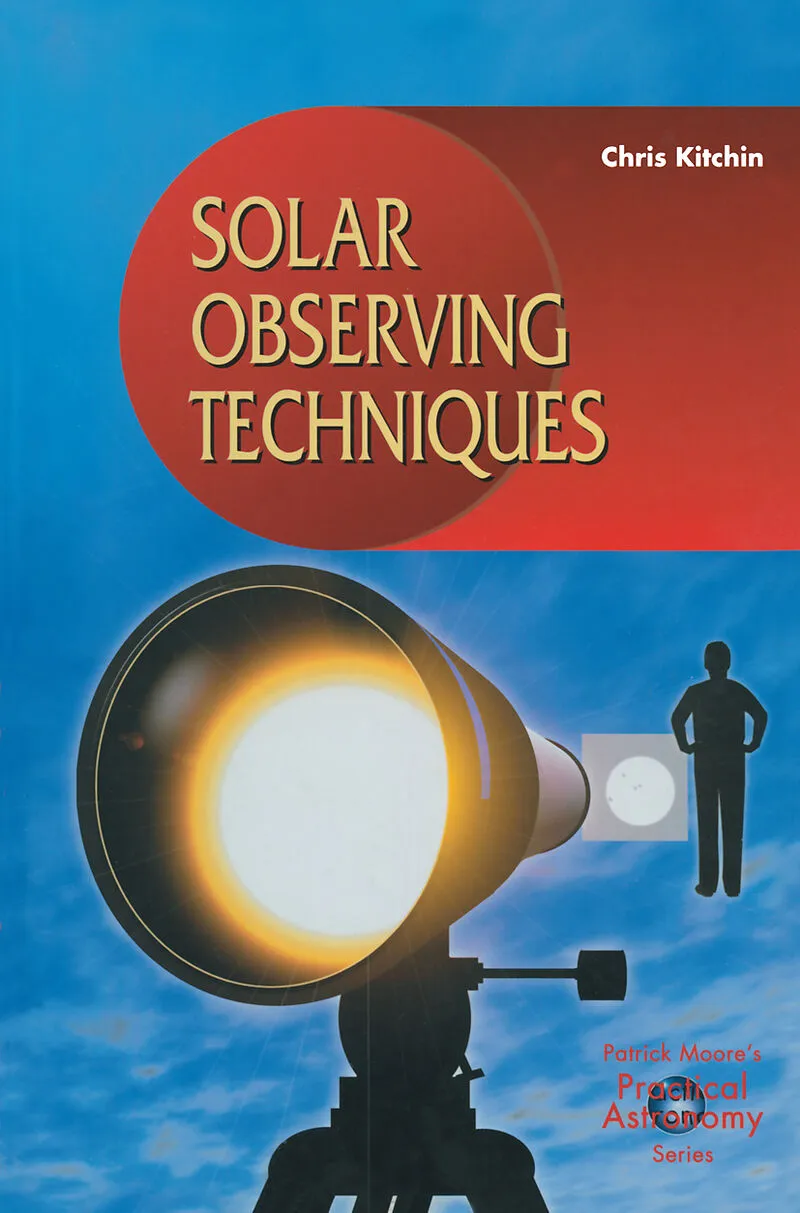
The purpose of this book is to introduce the reader to the numerous safe methods of observing the Sun and solar eclipses, and to suggest objects and features to observe and observing programmes to follow. So much energy comes from the Sun that by failing to ob...The purpose of this book is to introduce the reader to the numerous safe methods of observing the Sun and solar eclipses, and to suggest objects and features to observe and observing programmes to follow. So much energy comes from the Sun that by failing to observe safe working practices it is possible to damage your eyes or equipment. The care that is needed is emphasised throughout the book. Always make sure that you have read the whole of a section or chapter before starting any observational work. However in warning when care is needed in observing, there is a danger of scaring people off observing the Sun altogether. Let me emphasise therefore that observing the Sun can be done in complete safely, providing that the precautions discussed in the book are followed. The Sun then provides one of the most interesting objects in the sky for an astronomer to study at all times, and during a total solar eclipse becomes uniquely fascinat ing to both astronomers and the general public alike. So take heed of the warnings given here but do not let them stop you trying out the safe observing methods. I wish you clear sunny skies and many hours of fun. Chris Kitchin Hertford, 2001 Acknowledgements I would like to thank Dr Ralph Chou for his help in supplying details of filters and of sources of further information on them.
Explains how to observe the Sun safely and effectively Aimed at today's amateur astronomers Comprehensive in its coverage Theoretical background is given - the author is a professional astronomer
Autorentext
Chris Kitchin is currently Professor Emeritus at the University of Hertfordshire and a freelance writer of astrophysics books. From 1987 to 2001, he was director of the university's observatory at Bayfordbury, and from 1996 to 2001, he was also head of the Division of Physics and Astronomy. He took early retirement in 2001 in order to concentrate on his writing, and the seventh edition of his widely used Astrophysical Techniques was published in August 2020. Chris has written fourteen books and contributed to another dozen or so and he has written hundreds of articles ranging from popular astronomy to specialist research. In 1997, he was awarded the title of Professor of the Public Understanding of Astronomy.
Inhalt
1 The Sun What to See and Why.- Beginnings.- Sunspots.- Sunspot Cycle.- Limb Darkening, Granulation and Faculae.- Narrow Band Observations.- Eclipses.- 2 General Telescopic Observing Techniques.- Full Aperture Filters.- Projection.- Other Approaches.- Optimising Your Telescope.- 3 White Light Observing.- Sunspots.- Limb Darkening.- Granulation.- Faculae.- 4 Recording Your Observations.- Drawing.- Photography.- CCD Cameras.- Image Processing.- Video Cameras.- 5 Observing Programmes.- The Sunspot Cycle.- Active Regions.- Solar Rotation.- 6 Unaided Observations.- Projected Images.- Filters.- 7 Eclipses.- Eclipses.- Eclipse Expeditions.- Naked Eye Observing.- Binoculars and Telescopes.- Specialist Instrumentation.- Transits.- 8 Specialist Instruments.- Narrow Band Filters.- Spectroscopy.- Coronagraph.- Solar Telescopes.- 9 Radio Telescopes.- 10 The Limits of Solar Observation.- Magnetic Fields.- Spacecraft.- Solar Oscillations.- Solar Image Gallery.- Appendix 1 Bibliography.- Appendix 2 Equipment Suppliers.- Appendix 3 Web Sites Relating to the Sun.