Beschreibung
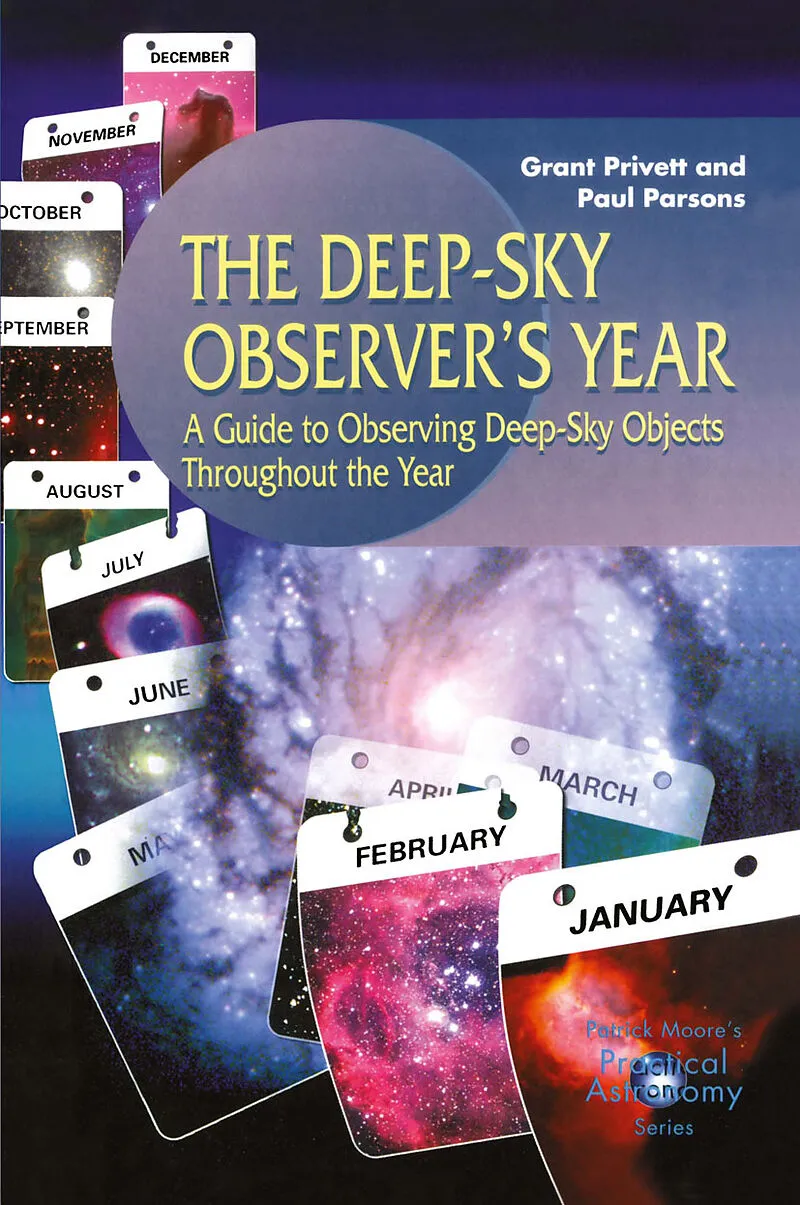
Deep-sky observing - that's looking at the stars, nebulae and galaxies - is easily the most popular field for amateur astronomers. The big problem faced by non-professional observers is what to look at - what's visible at a paticular time of year. The Deep-sky...Deep-sky observing - that's looking at the stars, nebulae and galaxies - is easily the most popular field for amateur astronomers. The big problem faced by non-professional observers is what to look at - what's visible at a paticular time of year. The Deep-sky Observer's Year is a month-by-month guide to the best objects to view. Objects are given a "star rating" according to how difficult they are to observe or image (i.e. photograph) with a particular size of telescope. The book includes many images produced by amateur astronomers, as well as photographs from NASA, ESA and ESO. There is also some background information about the objects that can be seen, along with lots of useful tips, hints, and resources (especially about what's available on the Internet) for deep-sky observers.
A Deep-sky observer's guide organised month-by-month for the year Each object given a "star rating" according to the difficulty of observing it Introductory information about the objects Lots of information about internet resources Spectacular pictures from professional and non-professional observers
Autorentext
Kamran Sedig is an Associate Professor in the Department of Computer Science and the Faculty of Information and Media Studies at Western University, Canada. Before joining Western, he was a Research Staff Member at the IBM T.J. Watson Research Center in New York. He received his Ph.D. in Computer Science (Interactive Visual Games for Learning Math) from The University of British Columbia, where his research was nominated for the Governor General's Gold Medal for best Ph.D. dissertation. His M.Sc. was in Computer Science (Artificial Intelligence) from McGill University. His research interests are in human-information interaction, joint human-computer cognitive systems, visual analytics, interactive reasoning with visualizations, visual interface design, and interaction and task design for complex cognitive activities. Sedig's research uses a human-centered approach with a particular focus on human cognitive needs and activities. He is the director of the Insight Lab (insight.uwo.ca).Paul Parsons is an Assistant Professor in the Department of Computer Graphics Technology at Purdue University. In 2013 he received his Ph.D. in Computer Science from Western University, Canada, with a focus on the design of interactive visualizations and interfaces that support cognitive activities. His research interests are in the areas of information visualization and visual interfaces, human-computer and human-information interaction, cognitive and learning technologies, and human-centered computing and design. He is particularly interested in understanding and supporting cognitive processes and activities of both users and designers
Inhalt
I Preparing for Deep-Sky Observing.- 1 Introduction.- 2 Deep-Sky Observing.- 3 Avoiding Common Mistakes.- 4 The Messier Marathon and Other Pursuits.- 5 What Are We Looking At?.- 6 Atlases and Other Resources.- II The Night Sky Month by Month.- 7 The Star System and Nomenclature.- 8 January 08 Hours RA.- 9 February 10 Hours RA.- 10 March 12 Hours RA.- 11 April 14 Hours RA.- 12 May 16 Hours RA.- 13 June 18 Hours RA.- 14 July 20 Hours RA.- 15 August 22 Hours RA.- 16 September 00/24 Hours RA.- 17 October 02 Hours RA.- 18 November 04 Hours RA.- 19 December 06 Hours RA.- 20 Postscript.- About the Photo Contributors.
Tief- preis