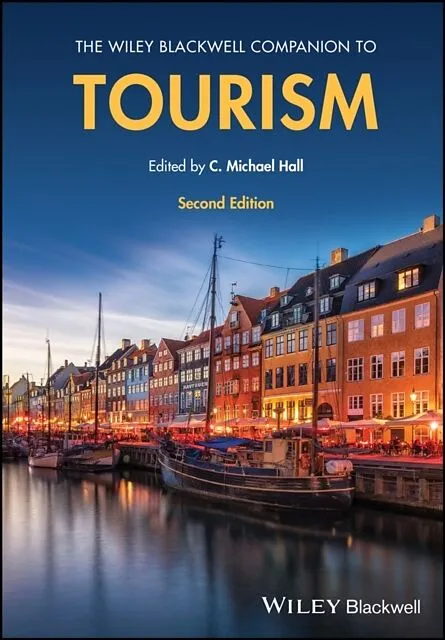
The Wiley Blackwell Companion to Tourism
Beschreibung
Informationen zum Autor C. Michael Hall is Professor of Marketing & Tourism, Department of Management, Marketing & Tourism, University of Canterbury, New Zealand. He is co-editor of Current Issues in Tourism and Field Editor of Frontiers in Sustainable Tourism...Format auswählen
- Kartonierter Einband (Kt)CHF 58.40

Wird oft zusammen gekauft
Andere Kunden kauften auch
Beschreibung
Informationen zum Autor C. Michael Hall is Professor of Marketing & Tourism, Department of Management, Marketing & Tourism, University of Canterbury, New Zealand. He is co-editor of Current Issues in Tourism and Field Editor of Frontiers in Sustainable Tourism . He edits the Contemporary Geographies of Leisure, Tourism and Mobility book series and has written or edited more than 100 books and 400 journal articles. Klappentext A critical overview of the interdisciplinary field of tourism studies, incorporating new developments, diverse theories, and fresh perspectives Now in its second edition, The Wiley Blackwell Companion to Tourism is the first authoritative overview of tourism studies published following the COVID-19 pandemic. Contributions by an international panel of scholars incorporate established theories, cutting-edge developments, and detailed analysis to address a wide range of current and emerging topics, issues, and themes. 50 in-depth chapters cover the full breadth of tourism studies, including its connections to geography, sociology, urban studies, sustainability, and globalization. Throughout this Companion, chapters survey new and emerging approaches, discuss the theoretical foundations and major developments in tourism studies, review significant issues in method and practice, and offer original perspectives on topics such as consumer and business behavior, global and local change, medical tourism, resilience, sustainability, and much more. This edition reflects major developments and diverse theories in the field, featuring new and updated coverage of the impact of the COVID-19 pandemic on tourism and the tourist industry, Chinese outbound tourism, the organization and practice of tourism, resident attitudes towards tourism, empowerment, placemaking, public transport, long-distance walking, and important health, economic, social, and environmental challenges. Setting an agenda for future tourism research, The Wiley Blackwell Companion to Tourism, Second Edition, is essential reading for undergraduate students, postgraduate researchers, lecturers, and academic scholars in tourism studies, tourism management, tourism geography, tourism theory, sociology, urban studies, and globalization, as well as professionals working in tourism and hospitality management worldwide. Inhaltsverzeichnis List of Figures xi List of Tables xiii Notes on Contributors xv Acknowledgements xxv List of Abbreviations xxvi Part 1 Introduction 1 1 Tourism: Conceptualisations, Disciplinarity, Institutions and Issues 3 C. Michael Hall Part 2 Disciplinary And Methodological Perspectives On Tourism 15 Introduction: Disciplinary and Methodological Perspectives on Tourism 17 C. Michael Hall 2 Tourist Flows and Spatial Behaviour 20 Judit Zoltan and Bob McKercher 3 Consumer Behaviour in Tourism 32 Girish Prayag 4 Tourism Motivations and Decision- making 46 Yael Ram 5 Economic Perspectives on Tourism 61 Peter Fieger and David Dyason 6 International Relations and Geo- political Approaches to Tourism 78 Siamak Seyfi and C. Michael Hall 7 Political Economy Approaches in Tourism: From Radical Political Economy via Cultural Political Economy to Political Ecology 92 Jan Mosedale 8 Tourism Mobilities 104 Kevin Hannam and Gareth Butler 9 The State of Qualitative Research Methods in Tourism and Hospitality: Research Design Issues and The Way Forward 120 Sandhiya Goolaup and Robin Nunkoo 10 Historiography, Tourism and Tourism Marketing 130 Kerryn Lyes 11 GPS, Smartphones, and the Future of Tourism Research 145 Noam Shoval, Michal Isaacson, a...
Autorentext
C. Michael Hall is Professor of Marketing & Tourism, Department of Management, Marketing & Tourism, University of Canterbury, New Zealand. He is co-editor of Current Issues in Tourism and Field Editor of Frontiers in Sustainable Tourism. He edits the Contemporary Geographies of Leisure, Tourism and Mobility book series and has written or edited more than 100 books and 400 journal articles.
Klappentext
A critical overview of the interdisciplinary field of tourism studies, incorporating new developments, diverse theories, and fresh perspectives
Now in its second edition, The Wiley Blackwell Companion to Tourism is the first authoritative overview of tourism studies published following the COVID-19 pandemic. Contributions by an international panel of scholars incorporate established theories, cutting-edge developments, and detailed analysis to address a wide range of current and emerging topics, issues, and themes. 50 in-depth chapters cover the full breadth of tourism studies, including its connections to geography, sociology, urban studies, sustainability, and globalization.
Throughout this Companion, chapters survey new and emerging approaches, discuss the theoretical foundations and major developments in tourism studies, review significant issues in method and practice, and offer original perspectives on topics such as consumer and business behavior, global and local change, medical tourism, resilience, sustainability, and much more.
This edition reflects major developments and diverse theories in the field, featuring new and updated coverage of the impact of the COVID-19 pandemic on tourism and the tourist industry, Chinese outbound tourism, the organization and practice of tourism, resident attitudes towards tourism, empowerment, placemaking, public transport, long-distance walking, and important health, economic, social, and environmental challenges.
Setting an agenda for future tourism research, The Wiley Blackwell Companion to Tourism, Second Edition, is essential reading for undergraduate students, postgraduate researchers, lecturers, and academic scholars in tourism studies, tourism management, tourism geography, tourism theory, sociology, urban studies, and globalization, as well as professionals working in tourism and hospitality management worldwide.
Inhalt
List of Figures xi
List of Tables xiii
Notes on Contributors xv
Acknowledgements xxv
List of Abbreviations xxvi
Part 1 Introduction 1
1 Tourism: Conceptualisations, Disciplinarity, Institutions and Issues 3
C. Michael Hall
Part 2 Disciplinary And Methodological Perspectives On Tourism 15
Introduction: Disciplinary and Methodological Perspectives on Tourism 17
C. Michael Hall
2 Tourist Flows and Spatial Behaviour 20
Judit Zoltan and Bob McKercher
3 Consumer Behaviour in Tourism 32
Girish Prayag
4 Tourism Motivations and Decision- making 46
Yael Ram
5 Economic Perspectives on Tourism 61
Peter Fieger and David Dyason
6 International Relations and Geo- political Approaches to Tourism 78
Siamak Seyfi and C. Michael Hall
7 Political Economy Approaches in Tourism: From Radical Political Economy via Cultural Political Economy to Political Ecology 92
Jan Mosedale
8 Tourism Mobilities 104
Kevin Hannam and Gareth Butler
9 The State of Qualitative Research Methods in Tourism and Hospitality: Research Design Issues and The Way Forward 120
Sandhiya Goolaup and Robin Nunkoo
10 Historiography, Tourism and Tourism Marketing 130
Kerryn Lyes
11 GPS, Smartphones, and the Future of Tourism Research 145
Noam Shoval, Michal Isaacson, and Prem Chhetri
Part 3 Theories Of Tourist Practice, Experience, And Encounter 161
Introduction: Theories of Tourist Practice, Experience, and Encounter 163
C. Michael Hall
12 Tourism and Landscape 166
Theano S. Terkenli
13 From Pseudo- Events to Virtual Reality: The Development of Authenticity in Tourism Scholarship 181
Cecilia de Bernardi
14 Place Attachment in Tourism 194
Haywantee Ramkissoon
15 Mindfulness and Tourism 206
Ugljea Stankov, Ulrike Gretzel, and Viachaslau Filimonau
16 When the Process is the Destination: Long- distance Walking as Slow Tourism 219
M. Mau and K.K. Roessler
17 Tourism and Development: Contact, Consumption, and Building T…