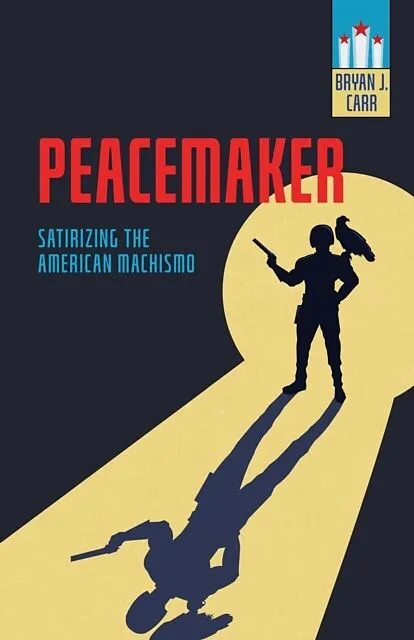
Peacemaker
Beschreibung
Informationen zum Autor Bryan J. Carr is professor in the Communication Department and in the Information Technology and Data Science Department at the University of WisconsinGreen Bay. He is author of The Transmedia Construction of the Black Panther: Long Liv...Format auswählen
- Fester EinbandCHF 113.20

Wird oft zusammen gekauft
Andere Kunden kauften auch
Beschreibung
Informationen zum Autor Bryan J. Carr is professor in the Communication Department and in the Information Technology and Data Science Department at the University of WisconsinGreen Bay. He is author of The Transmedia Construction of the Black Panther: Long Live the King and coeditor of Gendered Defenders: Marvel's Heroines in Transmedia Spaces . His work has also been featured in books such as Parasocial Politics: Audiences, Pop Culture, and Politics ; What Is a Game? Essays on the Nature of Videogames ; and Jack Johnson to LeBron James: Sports, Media, and the Color Line as well as in the Journal of Entertainment and Media Studies and Southwest Mass Communication Journal . Klappentext Exploring how a once-obscure Charlton Comics character evolved into a complex, transmedia figure thanks to filmmaker James Gunn, Peacemaker: Satirizing the American Machismo delivers a sharp, accessible critique of toxic masculinity in American culture. Across five chapters, this book traces Peacemaker's transformation from a one-note Cold War vigilante into a conflicted, satirical symbol of modern manhood. Beginning with the character's origins under creators Joe Gill and Pat Boyette and his later reinvention at DC Comics, it offers both a publication history and an in-universe biography to help readers follow Peacemaker's many forms across comics, television, and film. At its core, the study connects Peacemaker to larger cultural forces: violence, nationalism, gender politics, and the "manosphere." Drawing on comics scholarship, media theory, interviews with creators, and real-world political discourse, it shows how Peacemaker both embodies and subverts the ideals of hypermasculinity. Blending pop-culture analysis with academic insight, this volume argues that Peacemaker has become an unlikely site of resistance, capable of grappling with the toxic scripts he's been handed and searching, sometimes awkwardly, for a different way to be a man. ...
Autorentext
Bryan J. Carr is professor in the Communication Department and in the Information Technology and Data Science Department at the University of Wisconsin–Green Bay. He is author of The Transmedia Construction of the Black Panther: Long Live the King and coeditor of Gendered Defenders: Marvel’s Heroines in Transmedia Spaces. His work has also been featured in books such as Parasocial Politics: Audiences, Pop Culture, and Politics; What Is a Game? Essays on the Nature of Videogames; and Jack Johnson to LeBron James: Sports, Media, and the Color Line as well as in the Journal of Entertainment and Media Studies and Southwest Mass Communication Journal.
Klappentext
Exploring how a once-obscure Charlton Comics character evolved into a complex, transmedia figure thanks to filmmaker James Gunn, Peacemaker: Satirizing the American Machismo delivers a sharp, accessible critique of toxic masculinity in American culture.
Across five chapters, this book traces Peacemaker’s transformation from a one-note Cold War vigilante into a conflicted, satirical symbol of modern manhood. Beginning with the character’s origins under creators Joe Gill and Pat Boyette and his later reinvention at DC Comics, it offers both a publication history and an in-universe biography to help readers follow Peacemaker’s many forms across comics, television, and film.
At its core, the study connects Peacemaker to larger cultural forces: violence, nationalism, gender politics, and the "manosphere." Drawing on comics scholarship, media theory, interviews with creators, and real-world political discourse, it shows how Peacemaker both embodies and subverts the ideals of hypermasculinity.
Blending pop-culture analysis with academic insight, this volume argues that Peacemaker has become an unlikely site of resistance, capable of grappling with the toxic scripts he’s been handed and searching, sometimes awkwardly, for a different way to be a man.