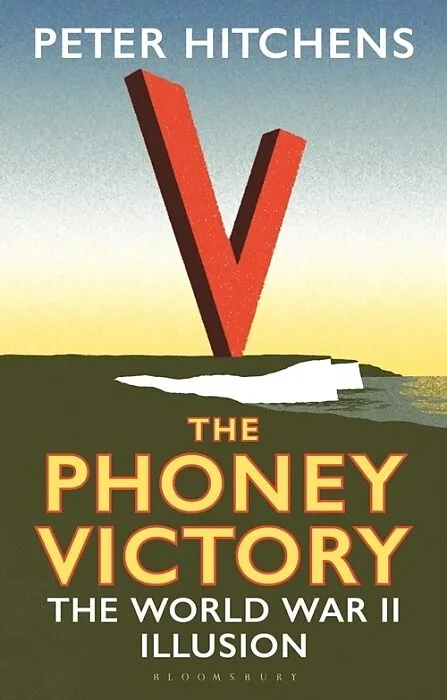
The Phoney Victory
Beschreibung
Zusatztext Hitchens devotes much of his indictment to the war at sea! arguing that the Navy had been starved of resources between the wars and was ill-equipped to fight the all-important Battle of the Atlantic against the Nazi U-boat fleet. He regales the read...Format auswählen
- Kartonierter EinbandCHF 24.80
Wird oft zusammen gekauft
Andere Kunden kauften auch
Beschreibung
Zusatztext Hitchens devotes much of his indictment to the war at sea! arguing that the Navy had been starved of resources between the wars and was ill-equipped to fight the all-important Battle of the Atlantic against the Nazi U-boat fleet. He regales the reader with touching stories from his days at boarding school! when he and his friends built plastic models of warships. Informationen zum Autor Peter Hitchens is a columnist for the Mail on Sunday and a contributor to many other publications. He has published several books, including The Abolition of Britain and The Rage Against God , also published by Bloomsbury Continuum, mainly on aspects of what he regards as a Cultural Revolution which has transformed Britain for the worse in the last half century. He is active on social media, especially Twitter. He has been a journalist for nearly 50 years, has reported from 57 countries and was a resident correspondent in Moscow and Washington. He is a former revolutionary Marxist who now describes himself as a socially conservative Social Democrat. Klappentext Was World War II really the Good War'? In the years since the declaration of peace in 1945 many myths have sprung up around the conflict in the victorious nations. In this book, Peter Hitchens deconstructs the many fables which have become associated with the narrative of the Good War'. Whilst not criticising or doubting the need for war against Nazi Germany at some stage, Hitchens does query whether September 1939 was the right moment, or the independence of Poland the right issue. He points out that in the summer of 1939 Britain and France were wholly unprepared for a major European war and that this quickly became apparent in the conflict that ensued. He also rejects the retroactive claim that Britain went to war in 1939 to save the Jewish population of Europe. On the contrary, the beginning and intensification of war made it easier for Germany to begin the policy of mass murder in secret as well as closing most escape routes. In a provocative, but deeply-researched book, Hitchens questions the most common assumptions surrounding World War II, turning on its head the myth of Britain's role in a Good War'. Zusammenfassung Was World War II really the Good War'? In the years since the declaration of peace in 1945 many myths have sprung up around the conflict in the victorious nations. In this book! Peter Hitchens deconstructs the many fables which have become associated with the narrative of the Good War'. Whilst not criticising or doubting the need for war against Nazi Germany at some stage! Hitchens does query whether September 1939 was the right moment! or the independence of Poland the right issue. He points out that in the summer of 1939 Britain and France were wholly unprepared for a major European war and that this quickly became apparent in the conflict that ensued. He also rejects the retroactive claim that Britain went to war in 1939 to save the Jewish population of Europe. On the contrary! the beginning and intensification of war made it easier for Germany to begin the policy of mass murder in secret as well as closing most escape routes. In a provocative! but deeply-researched book! Hitchens questions the most common assumptions surrounding World War II! turning on its head the myth of Britain's role in a Good War'. Inhaltsverzeichnis AcknowledgementsTimelineIntroduction1. The British Guarantee to Poland of March 19392. Plucky Little Poland3. Appeasement and Pacifism from Fulham to Bridgwater, or 'The Left Has Its Cake and Eats It'4. The War We Couldn't Afford5. America First6. The Invasion that Never Was7. In Peril on the Sea8. Gomorrah9. Orderly and HumaneConclusionNotesSelect BibliographyIndex...
Autorentext
Peter Hitchens is a columnist for the Mail on Sunday and a contributor to many other publications. He has published several books, including The Abolition of Britain and The Rage Against God, also published by Bloomsbury Continuum, mainly on aspects of what he regards as a Cultural Revolution which has transformed Britain for the worse in the last half century. He is active on social media, especially Twitter. He has been a journalist for nearly 50 years, has reported from 57 countries and was a resident correspondent in Moscow and Washington. He is a former revolutionary Marxist who now describes himself as a socially conservative Social Democrat.
Klappentext
Was World War II really the Good War'? In the years since the declaration of peace in 1945 many myths have sprung up around the conflict in the victorious nations. In this book, Peter Hitchens deconstructs the many fables which have become associated with the narrative of the Good War'. Whilst not criticising or doubting the need for war against Nazi Germany at some stage, Hitchens does query whether September 1939 was the right moment, or the independence of Poland the right issue. He points out that in the summer of 1939 Britain and France were wholly unprepared for a major European war and that this quickly became apparent in the conflict that ensued. He also rejects the retroactive claim that Britain went to war in 1939 to save the Jewish population of Europe. On the contrary, the beginning and intensification of war made it easier for Germany to begin the policy of mass murder in secret as well as closing most escape routes. In a provocative, but deeply-researched book, Hitchens questions the most common assumptions surrounding World War II, turning on its head the myth of Britain's role in a `Good War'.
Inhalt
Acknowledgements Timeline Introduction 1. The British Guarantee to Poland of March 1939 2. Plucky Little Poland 3. Appeasement and Pacifism from Fulham to Bridgwater, or 'The Left Has Its Cake and Eats It' 4. The War We Couldn't Afford 5. America First 6. The Invasion that Never Was 7. In Peril on the Sea 8. Gomorrah 9. Orderly and Humane Conclusion Notes Select Bibliography Index