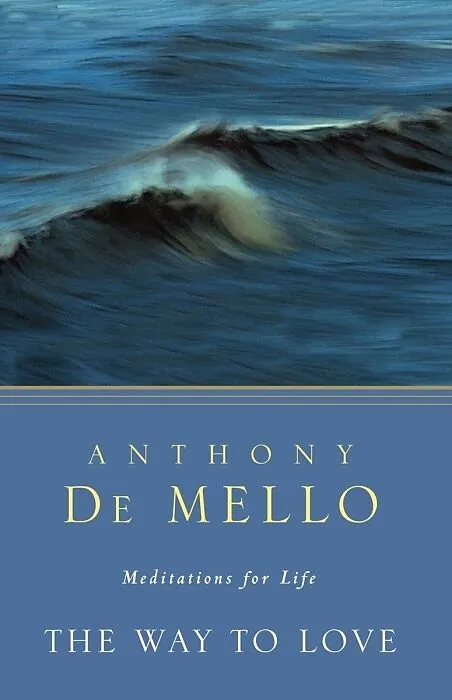
The Way to Love
Beschreibung
Informationen zum Autor Anthony deMello was a Jesuit Priest known throughout the world for his writings and spiritual conferences. He died suddenly in 1987. Among his many books are Sadhana and The Song of the Bird . Klappentext The Way to Love contains some o...Format auswählen
- Poche format BCHF 17.00

Wird oft zusammen gekauft
Andere Kunden kauften auch
Beschreibung
Informationen zum Autor Anthony deMello was a Jesuit Priest known throughout the world for his writings and spiritual conferences. He died suddenly in 1987. Among his many books are Sadhana and The Song of the Bird . Klappentext The Way to Love contains some of the most beloved stories from Anthony de Mello. Here, more than ever before in his bestselling writing, he grapples with the ultimate question of love. In thirty-one meditations, he implores his readers with his usual pithiness to break through illusion, the great obstacle to love. "Love springs from awareness," de Mello insists, saying that it is only when we see the other as he or she really is that we begin to love. The second act of love, he says, is seeing ourselves without illusion-without the coercive nature of our needs, desires, memories, prejudices, and projections. If these steps are taken, then love will steal upon a person or into a relationship. But the task is not easy. "The most painful act the human can perform," de Mello says, "is the act of seeing. It is in that act of seeing that love is born." Introduction Years ago, when I first heard of Tony de Mello, S.J., I didn't believe what I heard. The story I am about to tell has bearing on the book you are about to read. I was told that Tony gave a retreat to sixty fellow Jesuit priests and spoke to them six hours a day for eight days. I remember saying, No Jesuit listens to another Jesuit six hours a day for eight days. When the fact was insisted on, I remember asking, Who made that retreat? The names of some very impressive Jesuits (impressive, at least, to me) were mentioned. It was then, like doubting Thomas in the Scriptures, I said, This I have to see and hear for myself. Thus began the journey with the man who would affect my life so profoundly that, years later, I wouldn't even recognize the person I was those years past. And not I alone, but thousands of others like me. The occasion of my first meeting Tony de Mello now seems rather prosaic. He was asked to give a weekend retreat to a group of lay people. He agreed to do this on his way back to India from Rome. I asked to be put on that retreat just to meet and experience the man. It was an unforgettable weekend up in Saddle River, New Jersey, amid the snows of February. I will never forget the feeling of liberation; the sense he made of spirituality, of prayer, of the meaning of life; his humor; his marvelous storytelling. And it was all done in such a personal style. Years later, when he was speaking by television satellite to more than three thousand college students, he maintained that personal style. About twelve years ago, he remarked, I discovered something that revolutionized my life. He had met a rickshaw driver in Calcutta named Rinsai, who, although he was dying of a painful disease and was so poor that he had to sell his skeleton before he died, still was a man filled with faith and interior joy. I suddenly realized, Tony continued, I was in the presence of a mystic who had rediscovered life. He was alive; I was dead. He was a man who had reincarnated himself during this life. The reason I say that the story of my meeting Tony has bearing on the book you are about to read is because when I came upon this manuscript, although I was very familiar with all that he had written (and spoken), I was amazed at how these small but powerful meditations evoked in me the same feelings I experienced when I first encountered him. Just reading through these pages brought back the wonderful sense of challenge, the spiritual provocation that Tony was such a master at providing. There was a basic honesty in Tony de Mello's character with which he reevaluated everything in his own life. And it was this honesty that he communicated so effectively to all who would listen. His analogies, his stories, his telling criticism o...
Klappentext
The Way to Love contains some of the most beloved stories from Anthony de Mello. Here, more than ever before in his bestselling writing, he grapples with the ultimate question of love. In thirty-one meditations, he implores his readers with his usual pithiness to break through illusion, the great obstacle to love. "Love springs from awareness," de Mello insists, saying that it is only when we see the other as he or she really is that we begin to love.
The second act of love, he says, is seeing ourselves without illusion-without the coercive nature of our needs, desires, memories, prejudices, and projections. If these steps are taken, then love will steal upon a person or into a relationship. But the task is not easy. "The most painful act the human can perform," de Mello says, "is the act of seeing. It is in that act of seeing that love is born."
Zusammenfassung
The Way to Love contains some of the most beloved stories from Anthony de Mello. Here, more than ever before in his bestselling writing, he grapples with the ultimate question of love. In thirty-one meditations, he implores his readers with his usual pithiness to break through illusion, the great obstacle to love. “Love springs from awareness,” de Mello insists, saying that it is only when we see the other as he or she really is that we begin to love.
The second act of love, he says, is seeing ourselves without illusion—without the coercive nature of our needs, desires, memories, prejudices, and projections. If these steps are taken, then love will steal upon a person or into a relationship. But the task is not easy. “The most painful act the human can perform,” de Mello says, “is the act of seeing. It is in that act of seeing that love is born.”
Leseprobe
#160;
**Introduction
**Years ago, when I first heard of Tony de Mello, S.J., I didn’t believe what I heard. The story I am about to tell has bearing on the book you are about to read.
I was told that Tony gave a retreat to sixty fellow Jesuit priests and spoke to them six hours a day for eight days. I remember saying, “No Jesuit listens to another Jesuit six hours a day for eight days.” When the fact was insisted on, I remember asking, “Who made that retreat?” The names of some very impressive Jesuits (impressive, at least, to me) were mentioned. It was then, like doubting Thomas in the Scriptures, I said, “This I have to see and hear for myself.”
Thus began the journey with the man who would affect my life so profoundly that, years later, I wouldn’t even recognize the person I was those years past. And not I alone, but thousands of others like me.
The occasion of my first meeting Tony de Mello now seems rather prosaic. He was asked to give a weekend retreat to a group of lay people. He agreed to do this on his way back to India from Rome. I asked to be put on that retreat just to meet and experience the man. It was an unforgettable weekend up in Saddle River, New Jersey, amid the snows of February.
I will never forget the feeling of liberation; the sense he made of spirituality, of prayer, of the meaning of life; his humor; his marvelous storytelling. And it was all done in such a personal style. Years later, when he was speaking by television satellite to more than three thousand college students, he maintained that personal style. “About twelve years ago,” he remarked, “I discovered something that revolutionized my life.” He had met a rickshaw driver in Calcutta named Rinsai, who, although he was dying of a painful disease and was so poor that he had to sell his skeleton before he died, still was a man filled with faith and interior joy. “I suddenly realized,” Tony continued, “I was in the presence of a mystic who had rediscovered life. He was alive; I was dead. He was a man who had reincarnated himself during this life.”
The reason I say that the story of my meeting…