
IHR WARENKORB IST AKTUELL LEER.
Haben Sie noch nichts passendes gefunden? Stöbern Sie durch unser komplettes Sortiment.
Oder melden Sie sich an bzw. registrieren Sie sich.
- Kostenlose Lieferung
- Kauf auf Rechnung
- Ex Libris Tiefpreis
- Filiallieferung und 650+ Abholorte
- Rabatt-Bons als Club-Mitglied
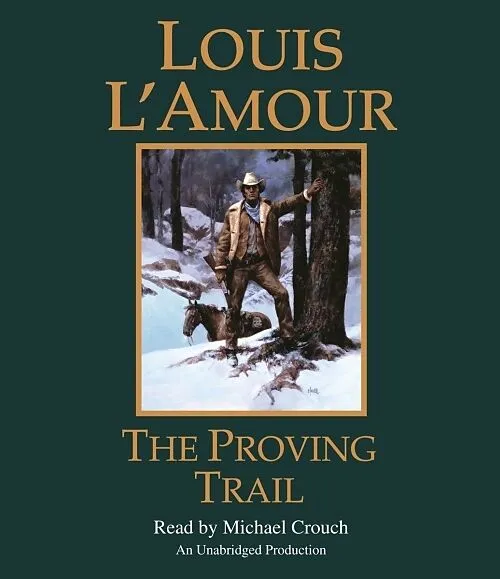
The Proving Trail
Beschreibung
Informationen zum Autor Louis L'Amour is the only American-born novelist in history to receive both the Presidential Medal of Freedom and the Congressional Gold Medal. He published eighty-nine novels, thirty short-story collections, two works of nonfiction, a ...Format auswählen
- Audio CD (CD/SACD)CHF 38.50

Wird oft zusammen gekauft
Andere Kunden kauften auch
Beschreibung
Informationen zum Autor Louis L'Amour is the only American-born novelist in history to receive both the Presidential Medal of Freedom and the Congressional Gold Medal. He published eighty-nine novels, thirty short-story collections, two works of nonfiction, a memoir, Education of a Wandering Man , and a volume of poetry, Smoke from This Altar . There are more than 300 million copies of his books in print. Klappentext They tried to tell him that his father had killed himself, but Kearney McRaven knew better. No matter what life had dealt him, his father would go down fighting. And as he delved deeper into the mystery, he learned that just before his father died, the elder McRaven had experienced a remarkable run of luck: he'd won nearly ten thousand dollars and the deed to a cattle ranch. Not yet eighteen, Kearney was determined enough to track down his father's murderer and claim what was rightfully his. Now, followed every step of the way by a shadowy figure, Kearney must solve the mystery of his father's hidden past-a past that concealed a cold-blooded killer who would stop at nothing to keep a chilling secret. Chapter One All winter long I held them cattle up on the plateau whilst pa collected my wages down to town. Come first grass I taken them cattle down to Dingleberry's and I told old Ding what he could do with them, that I had my fill of playin' nursemaid to a bunch of cows. He made quite a fuss, sayin' as how pa had hired me out to him and I'd no choice, bein' a boy not yet eighteen. So I told him if he figured I'd no choice, just to watch the tail end of my horse because I was fetchin' out of there. I knew pa was down to town gamblin', workin' with my money as his base, but pa was a no-account gambler, generally speakin', and couldn't seem to put a winnin' hand together. Nonetheless he might have enough put by to give me a road stake, and I could make do with five dollars, if he had it. Only when I rode into town pa was dead. He was not only dead, he was buried, and they'd put a marker on his grave. It taken the wind out of me. I just sort of backed off an' set down. Pa, he was no more than forty, seemed like, and a man in fair health for somebody who spent most of his time over a card table. There was a lot of strangers in town, but one man who knowed me and who'd knowed pa, too, he told me, Was I you I'd git straddle of that bronc an' light a shuck. Ain't nothin' around town for you no more, with your pa dead. How'd he die? It don't make no sense him dyin' right off, like that. That's the way folks usually die, son. Everybody knows he's goin' to die sometime, but nobody really expects to. You light out, son. I hear tell they're hirin' men for work in the mines out in the western part of the Territory. How'd he die? I persisted. Well, seems like he killed hisself. I never did see the body, mind. But Judge Blazer, he seen it. He shot hisself. Lost money, I reckon. You know he was always gamblin'. Hell, I said, disgusted, he'd not kill himself for that! He'd done been losin' money all his life! That man could lose more money than you'd ever see. You take my advice, boy, an' you light out. There's some mighty rough folks in this town an' they won't take to no wet-eared boy nosin' around. That couldn't make no sense to me, because I'd been around rough folks all my life. We never had nothin', our family didn't, scrabblin' around for whatever it was we could find after ma died an' Pistol that's my brother taken off. It just left me an' pa, an' we'd gone from one cow camp or minin' camp to another. Now pa was dead an' I was alone. Pa wasn't much account, I guess, as men went, but he was pa, and a kindly man most of the time. We'd never had much to say to one another but hello or good-bye or how much money was I holdin'? Nonetheless,...
Autorentext
Louis L'Amour is the only American-born novelist in history to receive both the Presidential Medal of Freedom and the Congressional Gold Medal. He published eighty-nine novels, thirty short-story collections, two works of nonfiction, a memoir, **Education of a Wandering Man, and a volume of poetry, Smoke from This Altar. There are more than 300 million copies of his books in print.
Klappentext
They tried to tell him that his father had killed himself, but Kearney McRaven knew better. No matter what life had dealt him, his father would go down fighting. And as he delved deeper into the mystery, he learned that just before his father died, the elder McRaven had experienced a remarkable run of luck: he'd won nearly ten thousand dollars and the deed to a cattle ranch.
Not yet eighteen, Kearney was determined enough to track down his father's murderer and claim what was rightfully his. Now, followed every step of the way by a shadowy figure, Kearney must solve the mystery of his father's hidden past-a past that concealed a cold-blooded killer who would stop at nothing to keep a chilling secret.
Leseprobe
*Chapter One
All winter long I held them cattle up on the plateau whilst pa collected my wages down to town. Come first grass I taken them cattle down to Dingleberry’s and I told old Ding what he could do with them, that I had my fill of playin’ nursemaid to a bunch of cows.
He made quite a fuss, sayin’ as how pa had hired me out to him and I’d no choice, bein’ a boy not yet eighteen.
So I told him if he figured I’d no choice, just to watch the tail end of my horse because I was fetchin’ out of there. I knew pa was down to town gamblin’, workin’ with my money as his base, but pa was a no-account gambler, generally speakin’, and couldn’t seem to put a winnin’ hand together.
Nonetheless he might have enough put by to give me a road stake, and I could make do with five dollars, if he had it.
Only when I rode into town pa was dead. He was not only dead, he was buried, and they’d put a marker on his grave.
It taken the wind out of me. I just sort of backed off an’ set down. Pa, he was no more than forty, seemed like, and a man in fair health for somebody who spent most of his time over a card table.
There was a lot of strangers in town, but one man who knowed me and who’d knowed pa, too, he told me, “Was I you I’d git straddle of that bronc an’ light a shuck. Ain’t nothin’ around town for you no more, with your pa dead.”
“How’d he die? It don’t make no sense — him dyin’ right off, like that.”
“That’s the way folks usually die, son. Everybody knows he’s goin’ to die sometime, but nobody really expects to. You light out, son. I hear tell they’re hirin’ men for work in the mines out in the western part of the Territory.”
“How’d he die?” I persisted.
“Well, seems like he killed hisself. I never did see the body, mind. But Judge Blazer, he seen it. He shot hisself. Lost money, I reckon. You know he was always gamblin’.”
“Hell,” I said, disgusted, “he’d not kill himself for that! He’d done been losin’ money all his life! That man could lose more money than you’d ever see.”
“You take my advice, boy, an’ you light out. There’s some mighty rough folks in this town an’ they won’t take to no wet-eared boy nosin’ around.”
That couldn’t make no sense to me, because I’d been around rough folks all my life. We never had nothin’, our family didn’t, scrabblin’ around for whatever it was we could find after ma died an’ Pistol — that’s my brother — taken off. It just left me an’ pa, an’ we’d gone from one cow camp or minin’ camp to another. Now pa was dead an’ I was alone.
Pa wasn’t much acc…