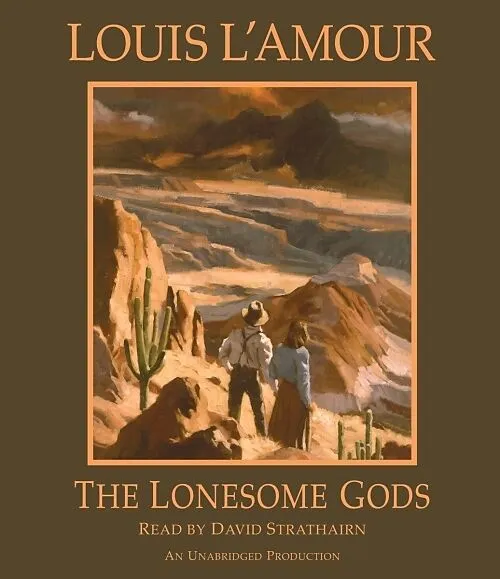
The Lonesome Gods
Beschreibung
Zusatztext "Riveting reading." The New Yorker . "This is L'Amour's finest book." California Magazine Informationen zum Autor Louis L'Amour is the only novelist in history to receive both the Presidential Medal of Freedom and the Congressional Gold Medal. He ha...Format auswählen
- Audio CD (CD/SACD)CHF 38.50

Wird oft zusammen gekauft
Andere Kunden kauften auch
Beschreibung
Zusatztext "Riveting reading." The New Yorker . "This is L'Amour's finest book." California Magazine Informationen zum Autor Louis L'Amour is the only novelist in history to receive both the Presidential Medal of Freedom and the Congressional Gold Medal. He has published ninety novels; twenty-seven short-story collections; two works of nonfiction; a memoir, Education of a Wandering Man; and a volume of poetry, Smoke from This Altar. There are more than 300 million copies of his books in print. Klappentext "I am Johannes Verne, and I am not afraid." This was the boy's mantra as he plodded through the desert alone, left to die by his vengeful grandfather. Johannes Verne was soon to be rescued by outlaws, but no one could save him from the lasting memory of his grandfather's eyes, full of impenetrable hatred. Raised in part by Indians, then befriended by a mysterious woman, Johannes grew up to become a rugged adventurer and an educated man. But even now, strengthened by the love of a golden-haired girl and well on his way to making a fortune in bustling early-day Los Angeles, the past may rise up to threaten his future once more. And this time only the ancient gods of the desert can save him. Chapter One I sat very still, as befitted a small boy among strangers, staring wide-eyed into a world I did not know. I was six years old and my father was dying. Only last year I had lost my mother. She died longing for that far-off, lovely California where she was born, and of which she never tired of talking. "Warm and sunny," people said when speaking of California, but I knew it as a place where fear lived. Now we were going there. We were crossing the desert to face that fear, and I was afraid. My father sat close beside me trying to sleep, but torn occasionally by violent spells of coughing that caused the other passengers to turn their heads, some in pity, some in irritation. Our wagon, drawn by six half-wild mustangs, plunged into the night, rocking and rumbling over a dim track that only the driver seemed to see. Ours was a desperate venture, a lone wagon with two outriders attempting the crossing from Santa Fe to California. Lying awake in the darkness, I remembered what people in Santa Fe had said. "It's a crazy idea! One wagon? Even if they can slip by the Apaches, the Yumas will be waiting at the crossing of the Colorado." "Remember what happened to that last outfit? The Yumas agreed to ferry them across the river, but when they had half of them on the far side, the Yumas just took off with all their goods and stock. Left 'em to die in the desert, with nothing." "Only they didn't die. Not all of them." "I'll say one thing. If anybody could take a wagon through alone, it would be Doug Farley." "Maybe. But he's only one man. As for me, I'll just wait until spring and go through with a wagon train." When I told my father what they had said, he nodded. "We have to go now, son. I cannot wait." He hesitated, then continued. "Some folks would think me wrong to tell you of this, but you must be prepared. "I cannot wait until spring, Johannes. The doctors say I haven't that much time. They say I am going to die. You will have to grow up without me, and growing up is never easy. People only talk about how wonderful youth is when they have forgotten how hard it was." We had gone together to see the wagon. Doug Farley had built it for the purpose, and the planks were not only tightly fitted but caulked so it would float if need be. The side walls were lined with a double thickness of buffalo hide to add more protection from bullets. Eight people could ride in the wagon in some comfort, but on this trip there would be but six, including me, and I wasn't very large. Each man and woman was required to have a rifle in good condition and at least ...
"Riveting reading." —The New Yorker.
"This is L'Amour's finest book." —California Magazine
Autorentext
Louis L'Amour is the only novelist in history to receive both the Presidential Medal of Freedom and the Congressional Gold Medal. He has published ninety novels; twenty-seven short-story collections; two works of nonfiction; a memoir, Education of a Wandering Man; and a volume of poetry, Smoke from This Altar. There are more than 300 million copies of his books in print.
Klappentext
"I am Johannes Verne, and I am not afraid." This was the boy's mantra as he plodded through the desert alone, left to die by his vengeful grandfather. Johannes Verne was soon to be rescued by outlaws, but no one could save him from the lasting memory of his grandfather's eyes, full of impenetrable hatred. Raised in part by Indians, then befriended by a mysterious woman, Johannes grew up to become a rugged adventurer and an educated man. But even now, strengthened by the love of a golden-haired girl and well on his way to making a fortune in bustling early-day Los Angeles, the past may rise up to threaten his future once more. And this time only the ancient gods of the desert can save him.
Zusammenfassung
“I am Johannes Verne, and I am not afraid.”
This was the boy’s mantra as he plodded through the desert alone, left to die by his vengeful grandfather. Johannes Verne was soon to be rescued by outlaws, but no one could save him from the lasting memory of his grandfather’s eyes, full of impenetrable hatred. Raised in part by Indians, then befriended by a mysterious woman, Johannes grew up to become a rugged adventurer and an educated man. But even now, strengthened by the love of a golden-haired girl and well on his way to making a fortune in bustling early-day Los Angeles, the past may rise up to threaten his future once more. And this time only the ancient gods of the desert can save him.
Leseprobe
*Chapter One
*
I sat very still, as befitted a small boy among strangers, staring wide-eyed into a world I did not know.
I was six years old and my father was dying.
Only last year I had lost my mother. She died longing for that far-off, lovely California where she was born, and of which she never tired of talking.
"Warm and sunny," people said when speaking of California, but I knew it as a place where fear lived.
Now we were going there. We were crossing the desert to face that fear, and I was afraid.
My father sat close beside me trying to sleep, but torn occasionally by violent spells of coughing that caused the other passengers to turn their heads, some in pity, some in irritation.
Our wagon, drawn by six half-wild mustangs, plunged into the night, rocking and rumbling over a dim track that only the driver seemed to see. Ours was a desperate venture, a lone wagon with two outriders attempting the crossing from Santa Fe to California.
Lying awake in the darkness, I remembered what people in Santa Fe had said. "It's a crazy idea! One wagon? Even if they can slip by the Apaches, the Yumas will be waiting at the crossing of the Colorado."
"Remember what happened to that last outfit? The Yumas agreed to ferry them across the river, but when they had half of them on the far side, the Yumas just took off with all their goods and stock. Left 'em to die in the desert, with nothing."
"Only they didn't die. Not all of them."
"I'll say one thing. If anybody could take a wagon through alone, it would be Doug Farley."
"Maybe. But he's only one man. As for me, I'll just wait until spring and go through with a wagon train."
When I told my father what they had said, he nodded. "We have to go now, son. I cannot wait." He hesitated, then continued. "Some folks would think me wrong to tell you of this, but you must be prepared.
"I cannot wait until spring, Johannes. The doctors say I haven't that much time. They say I am going to die. You will have to grow up without me, and growing up is never easy. People only talk about how wonderful youth is when they have forgotte…