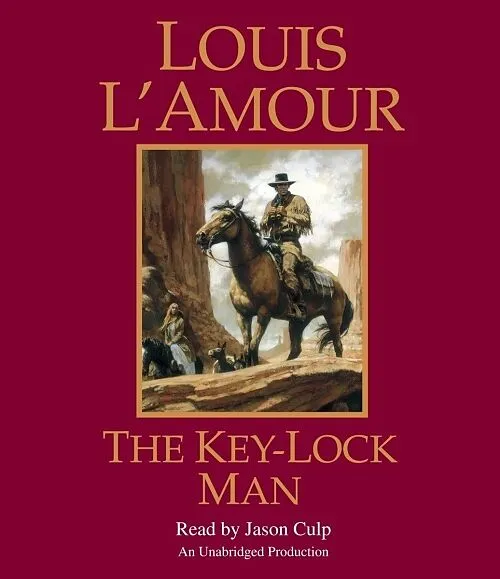
The Key-Lock Man
Beschreibung
Informationen zum Autor Louis L'Amour is the only novelist in history to receive both the Presidential Medal of Freedom and the Congressional Gold Medal. He has published ninety novels; twenty-seven short-story collections; two works of nonfiction; a memoir, E...Format auswählen
- Audio CD (CD/SACD)CHF 27.60

Wird oft zusammen gekauft
Andere Kunden kauften auch
Beschreibung
Informationen zum Autor Louis L'Amour is the only novelist in history to receive both the Presidential Medal of Freedom and the Congressional Gold Medal. He has published ninety novels; twenty-seven short-story collections; two works of nonfiction; a memoir, Education of a Wandering Man ; and a volume of poetry, Smoke from This Altar . There are more than 300 million copies of his books in print. Klappentext He had led the posse for miles through the desert, but now Matt Keelock was growing desperate. He was worried about Kristina. His trip to the town of Freedom for supplies had ended in a shootout. If caught he would hang. Even though Kris could handle a horse and rifle as well as most men, the possibility of Oskar Neerland's finding her made Matt's blood run cold. He knew the violent and obsessive Neerland, publicly embarrassed when Matt had stepped in and stolen Kris away, would try to kill them both if given half a chance. Matt tried to convince himself that Neerland had returned to the East. But Matt was wrong. Miles away in the town of Freedom, Oskar Neerland was accepting a new job. In his first duty as marshal, he would lead the posse that was tracking down Matt Keelock. Leseprobe Chapter One The man called Key-Lock was a man alone, and before him lay wilderness. Behind him were searching men, and each was armed, each carried a rope. Each rope was noosed for hanging, and each man was intent on the purpose of the chase. The solitary rider did not fear his aloneness, for he had the companionship of the mind. He had strength also, patience beyond that of most men, and some knowledge of the wild lands into which he rode. If the men who pursued knew nothing of him, he at least knew their kind, and was stronger because of this. They were men shaped and tempered to the harsh ways of a harsh land, strong in their sense of justice, ruthless in their demand for punishment, relentless in pursuit. In the desert and the wilderness they had built their homes, and from the desert and the wilderness they drew their courage and their code. And the desert knows no mercy, the wilderness shows no kindness. Before the man called Key-Lock lay a land fragmented and torn, a magnificent land, gnarled and ancient. It was a land of shattered battlements, broken towers, and the headless figures of vast and shapeless gods. An empty land, yet crowded with epics in stone, harried by wind and thunderstorm, ripped by flash floods, blistered by summer's heat, frozen by winter's cold. He rode now in Arizona, but beyond the horizon to the north lay Utah, and between himself and the border, a desert. Between himself and escapeif he chose to escapelay an almost waterless waste in which he must trust to his ingenuity to keep him free. The border lay ahead, but the border was merely a line on a map, and did not exist in the minds of the men who pursued him. If they knew of this border, it would have no place in their thinking, for to them he had already crossed another border, a border between the law and the lawless, between the right and the wrong, between what was done and what was not done. To kill a man who faced you with a gun was in their minds no crime, nor was it a crime in the customs of their period. In the East and in Europe men settled affairs of honor with pistols, but according to plan and ritual. In the West, in what was a new world, where men were often strangers to each other, the settling of such an affair was immediate, and without ritual. To shoot a man in the back, however, was a crime, and this they believed he had done, and for this he must be hung. But it was not enough for the man called Key-Lock to understand the philosophy of the hunters; the important thing for him was to escape them. Though he knew none of the men back there personally, he knew there must b...
Autorentext
Louis L’Amour is the only novelist in history to receive both the Presidential Medal of Freedom and the Congressional Gold Medal. He has published ninety novels; twenty-seven short-story collections; two works of nonfiction; a memoir, Education of a Wandering Man; and a volume of poetry, Smoke from This Altar. There are more than 300 million copies of his books in print.
Klappentext
He had led the posse for miles through the desert, but now Matt Keelock was growing desperate. He was worried about Kristina. His trip to the town of Freedom for supplies had ended in a shootout. If caught he would hang. Even though Kris could handle a horse and rifle as well as most men, the possibility of Oskar Neerland's finding her made Matt's blood run cold. He knew the violent and obsessive Neerland, publicly embarrassed when Matt had stepped in and stolen Kris away, would try to kill them both if given half a chance. Matt tried to convince himself that Neerland had returned to the East. But Matt was wrong. Miles away in the town of Freedom, Oskar Neerland was accepting a new job. In his first duty as marshal, he would lead the posse that was tracking down Matt Keelock.
Leseprobe
*Chapter One
The man called Key-Lock was a man alone, and before him lay wilderness. Behind him were searching men, and each was armed, each carried a rope. Each rope was noosed for hanging, and each man was intent on the purpose of the chase.
The solitary rider did not fear his aloneness, for he had the companionship of the mind. He had strength also, patience beyond that of most men, and some knowledge of the wild lands into which he rode. If the men who pursued knew nothing of him, he at least knew their kind, and was stronger because of this.
They were men shaped and tempered to the harsh ways of a harsh land, strong in their sense of justice, ruthless in their demand for punishment, relentless in pursuit. In the desert and the wilderness they had built their homes, and from the desert and the wilderness they drew their courage and their code. And the desert knows no mercy, the wilderness shows no kindness.
Before the man called Key-Lock lay a land fragmented and torn, a magnificent land, gnarled and ancient. It was a land of shattered battlements, broken towers, and the headless figures of vast and shapeless gods. An empty land, yet crowded with epics in stone, harried by wind and thunderstorm, ripped by flash floods, blistered by summer's heat, frozen by winter's cold.
He rode now in Arizona, but beyond the horizon to the north lay Utah, and between himself and the border, a desert. Between himself and escape—if he chose to escape—lay an almost waterless waste in which he must trust to his ingenuity to keep him free.
The border lay ahead, but the border was merely a line on a map, and did not exist in the minds of the men who pursued him. If they knew of this border, it would have no place in their thinking, for to them he had already crossed another border, a border between the law and the lawless, between the right and the wrong, between what was done and what was not done.
To kill a man who faced you with a gun was in their minds no crime, nor was it a crime in the customs of their period. In the East and in Europe men settled affairs of honor with pistols, but according to plan and ritual. In the West, in what was a new world, where men were often strangers to each other, the settling of such an affair was immediate, and without ritual.
To shoot a man in the back, however, was a crime, and this they believed he had done, and for this he must be hung.
But it was not enough for the man called Key-Lock to understand the philosophy of the hunters; the important thing for him was to escape them.
Though he knew none of the men back there personally, he knew there must be good men among them, and on a different occasion he might have been riding as one of them, the pursuer instead of the pursued. For he had worked beside such men, fought beside them, and he knew that they were hardworking men, …