
IHR WARENKORB IST AKTUELL LEER.
Haben Sie noch nichts passendes gefunden? Stöbern Sie durch unser komplettes Sortiment.
Oder melden Sie sich an bzw. registrieren Sie sich.
- Kostenlose Lieferung
- Kauf auf Rechnung
- Ex Libris Tiefpreis
- Filiallieferung und 650+ Abholorte
- Rabatt-Bons als Club-Mitglied
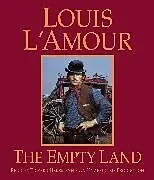
The Empty Land
Beschreibung
Informationen zum Autor Louis L'Amour , truly America's favorite storyteller, was the first fiction writer ever to receive the Congressional Gold Medal from the United States Congress in honor of his life's work, and was also awarded the Medal of Freedom. Ther...Format auswählen
- Audio CD (CD/SACD)CHF 25.90
- E-Book (epub)CHF 4.90
Wird oft zusammen gekauft
Andere Kunden kauften auch
Beschreibung
Informationen zum Autor Louis L'Amour , truly America's favorite storyteller, was the first fiction writer ever to receive the Congressional Gold Medal from the United States Congress in honor of his life's work, and was also awarded the Medal of Freedom. There are more than 265 million copies of his books in print worldwide. Klappentext For thousands of years the lonely canyon knew only wind and rain, wild animals, and an occasional native hunter. Then a trapper found a chunk of gold, and everything changed overnight. In six days a town called Confusion appeared . . . and on the seventh it could disappear, consumed by the flames of lawlessness and violence. On one side are those who understand only brute force. On the other are men who want law and order but are ready to use a noose to achieve their ends. Between them stand Matt Coburn and Dick Felton: one a hardened realist, the other an idealist trying to dig a fortune from the muddy hillside. Outnumbered and outgunned, Felton and Coburn can't afford to be outmaneuvered. For as the two unlikely allies confront corruption, betrayal, and murder in an attempt to tame a town where the discovery of gold can mean either the fortune of a lifetime or a sentence of death, they realize that any move could be their last. Chapter One In Europe, Pope Gregory the Great had died, in Ireland the Golden Age of scholarship was at its height, and on the Continent the Merovingian kings ruled much of what is now Germany and France. In Southeast Asia the little kingdom of Champa, now called South Vietnam, was locked in a life-and-death struggle for its independence, with China and what is now North Vietnam. It was the seventh century, and the great T'ang dynasty was rising in China, while across the Asian continent a relatively unknown young man named Mohammed sat meditating in Mecca, conceiving the religious teachings that were to dominate civilization for the next seven hundred years. In what was someday to be known as western Utah, a hungry coyote trotted across a barren slope. The coyote had no awareness of history beyond the memory of where his food had been obtained in the past, nor had he any realization of the sequence of events he was soon to start in motion, a sequence that was to enrich several men and at least one woman, and was to bring sudden and violent death by bullet or blade to at least forty men. All of that lay more than eleven hundred years in the future, but it was the coyote that began it. The desert slope across which the coyote trotted was no different to the eye from a thousand other such slopes, falling steeply away to a boulder-strewn wash that remained dry except after the infrequent rains, when it might run six to eight feet deep with rushing water, only to dwindle away to nothing in an hour or so. The slope itself was a litter of sand, broken rock, low-growing brush and an occasional juniper. There was nothing to draw the attention, even less to hold it. There was only the deep green of the junipers against the sand-colored slope, broken here and there by the broken teeth of exposed ledges or outcroppings. Over the centuries the slope had remained relatively unchanged. A rock rolled here, a cedar sprang up over yonder, a bush died, a passing animal left droppings. The sun and the wind moved over the slope. The coyote remembered a chipmunk that lived somewhere near the crest. It was a very wily chipmunk, but the coyote was passing his way and might prove luckier than in the past. Wise in the ways of coyotes, the chipmunk was alert to his coming and, not averse to a little game of tease and tag, waited until the coyote charged, then flipped his tail and ducked into a hole. Whining with eagerness, the coyote dug at the hole, scattering sand and gravel behind him. Then his claws scraped on rock, uncovering a narrow crack,...
Klappentext
For thousands of years the lonely canyon knew only wind and rain, wild animals, and an occasional native hunter. Then a trapper found a chunk of gold, and everything changed overnight.
In six days a town called Confusion appeared . . . and on the seventh it could disappear, consumed by the flames of lawlessness and violence. On one side are those who understand only brute force. On the other are men who want law and order but are ready to use a noose to achieve their ends. Between them stand Matt Coburn and Dick Felton: one a hardened realist, the other an idealist trying to dig a fortune from the muddy hillside. Outnumbered and outgunned, Felton and Coburn can't afford to be outmaneuvered. For as the two unlikely allies confront corruption, betrayal, and murder in an attempt to tame a town where the discovery of gold can mean either the fortune of a lifetime or a sentence of death, they realize that any move could be their last.
Leseprobe
*Chapter One
*
In Europe, Pope Gregory the Great had died, in Ireland the Golden Age of scholarship was at its height, and on the Continent the Merovingian kings ruled much of what is now Germany and France.
In Southeast Asia the little kingdom of Champa, now called South Vietnam, was locked in a life-and-death struggle for its independence, with China and what is now North Vietnam.
It was the seventh century, and the great T'ang dynasty was rising in China, while across the Asian continent a relatively unknown young man named Mohammed sat meditating in Mecca, conceiving the religious teachings that were to dominate civilization for the next seven hundred years.
In what was someday to be known as western Utah, a hungry coyote trotted across a barren slope.
The coyote had no awareness of history beyond the memory of where his food had been obtained in the past, nor had he any realization of the sequence of events he was soon to start in motion, a sequence that was to enrich several men and at least one woman, and was to bring sudden and violent death by bullet or blade to at least forty men.
All of that lay more than eleven hundred years in the future, but it was the coyote that began it.
The desert slope across which the coyote trotted was no different to the eye from a thousand other such slopes, falling steeply away to a boulder-strewn wash that remained dry except after the infrequent rains, when it might run six to eight feet deep with rushing water, only to dwindle away to nothing in an hour or so.
The slope itself was a litter of sand, broken rock, low-growing brush and an occasional juniper.
There was nothing to draw the attention, even less to hold it. There was only the deep green of the junipers against the sand-colored slope, broken here and there by the broken teeth of exposed ledges or outcroppings.
Over the centuries the slope had remained relatively unchanged. A rock rolled here, a cedar sprang up over yonder, a bush died, a passing animal left droppings. The sun and the wind moved over the slope.
The coyote remembered a chipmunk that lived somewhere near the crest. It was a very wily chipmunk, but the coyote was passing his way and might prove luckier than in the past.
Wise in the ways of coyotes, the chipmunk was alert to his coming and, not averse to a little game of tease and tag, waited until the coyote charged, then flipped his tail and ducked into a hole.
Whining with eagerness, the coyote dug at the hole, scattering sand and gravel behind him. Then his claws scraped on rock, uncovering a narrow crack, much too small for a coyote, but perfect for a chipmunk.
Frustrated and furious, the coyote gnawed at the edges of rock, breaking off a few brittle flakes; after that he trotted around behind, searching for another approach, but there was none.
Finally, after much restless pacing and some useless digging, the coyote gave up, deciding the small bite the chipmunk offered was unworthy of so much effort, and he trotted off, pausing only occasionally for a backward glance.
Two months later, it rain…