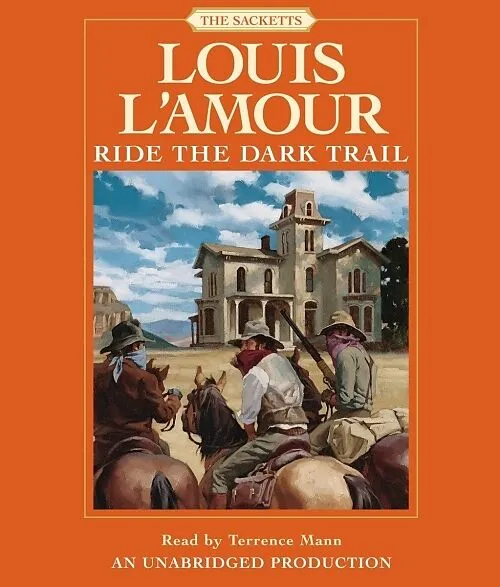
Ride the Dark Trail: The Sacketts
Beschreibung
Informationen zum Autor Louis L'Amour , truly America's favorite storyteller, was the first fiction writer ever to receive the Congressional Gold Medal from the United States Congress in honor of his life's work, and was also awarded the Medal of Freedom. Ther...Format auswählen
- Audio CD (CD/SACD)CHF 33.50

Wird oft zusammen gekauft
Andere Kunden kauften auch
Beschreibung
Informationen zum Autor Louis L'Amour , truly America's favorite storyteller, was the first fiction writer ever to receive the Congressional Gold Medal from the United States Congress in honor of his life's work, and was also awarded the Medal of Freedom. There are more than 265 million copies of his books in print worldwide. Klappentext In Ride the Dark Trail, Louis L'Amour tells the story of Logan Sackett, a cynical drifter who changes his ways to help a widow keep her land. Logan Sackett is wild and rootless, riding west in search of easy living. Then he meets Emily Talon, a fiery old widow who is even wilder than he is. Tall and lean, Em is determined to defend herself against the jealous locals who are trying to take her home. Logan doesn't want to get involved-until he finds out that Em was born a Sackett. Em is bucking overwhelming odds, but Logan won't let her stand alone. For even the rebellious drifter knows that part of being a Sackett is backing up your family when they need you. Leseprobe Chapter One The old house stood on the crest of a knoll and it was three hundred yards to the main gate. No shrubbery or trees obscured the view, nor was there any cover for a half mile beyond. The house was old, weather-beaten, wind-harried, and long unpainted. By night no light shone from any window, and by day no movement could be seen, but the watchers from the hill a half mile away were not fooled. "She's there, all right. You lay a hand on that gate and you'll damned soon know she's there. She's setting up there in that old house and she can shoot." Behind the house, the mountains lifted abruptly, steep, ragged slopes broken by ledges and dikes, covered with rough growth and dead-fall timber. Directly behind the house, only the top spread of its walls visible, lay the mouth of a canyon opening into the mountains beyond. "Old Man Talon built that house to last, and when he built it, it was the finest house between New Orleans and Frisco. He had thirty tough hands then . . . a reg'lar army." "How many's she got now?" Matthew asked. "Not more'n two or three. The best of her land and the sources of all her water lie back of the house, and there's no way to get at it except right through the ranch yard. And that ol' devil ain't about to let anybody get by." "She's got to sleep, ain't she?" Brewer asked. "She sleeps, I suppose, but nobody ain't figured out when. Lay a finger on that gate and she'll part your brisket with a fifty-caliber bullet. "The way folks tell it Old Man Talon figured someday they'd have to stand siege so he laid by enough ammunition and grub, too, to supply an army." The three men eyed the house, irritation mixed with admiration, then turned to the coffeepot on their small fire. "Flanner's right. The on'y way is to keep at her, every hour of every day and night. Sooner or later she's got to sleep, and then we'll get in. Behind that house in those canyons there's some of the finest land anywhere, watered by mountain streams and walled by mountains. No ol' woman's got the right to keep that land to herself, to say nothin' of the hundred thousand acres out here on the plains that they lay claim to." "How come they got so much?" "Talon was the first white man to settle in this country. When he and his partner came out here there was nothing but Indians and wild game. His partner was after fur, but not Talon. He seen this place and latched onto it, knowing that a hundred thousand acres out here was no good without water from the mountains. "Talon and his partner built a cabin and wintered here, the partner taking all the fur, Talon keeping house and land. Come spring, the partner pulled his stakes, but Talon stayed on, fit Injuns, hunted buffalo, trapped a mite, and caught himself some wild horses. "A few years passed by and the wagon train...
Klappentext
In Ride the Dark Trail, Louis L'Amour tells the story of Logan Sackett, a cynical drifter who changes his ways to help a widow keep her land.
Logan Sackett is wild and rootless, riding west in search of easy living. Then he meets Emily Talon, a fiery old widow who is even wilder than he is. Tall and lean, Em is determined to defend herself against the jealous locals who are trying to take her home. Logan doesn't want to get involved-until he finds out that Em was born a Sackett. Em is bucking overwhelming odds, but Logan won't let her stand alone. For even the rebellious drifter knows that part of being a Sackett is backing up your family when they need you.
Zusammenfassung
In Ride the Dark Trail, Louis L’Amour tells the story of Logan Sackett, a cynical drifter who changes his ways to help a widow keep her land.
Logan Sackett is wild and rootless, riding west in search of easy living. Then he meets Emily Talon, a fiery old widow who is even wilder than he is. Tall and lean, Em is determined to defend herself against the jealous locals who are trying to take her home. Logan doesn’t want to get involved—until he finds out that Em was born a Sackett. Em is bucking overwhelming odds, but Logan won’t let her stand alone. For even the rebellious drifter knows that part of being a Sackett is backing up your family when they need you.
Leseprobe
*Chapter One
*
The old house stood on the crest of a knoll and it was three hundred yards to the main gate. No shrubbery or trees obscured the view, nor was there any cover for a half mile beyond.
The house was old, weather-beaten, wind-harried, and long unpainted. By night no light shone from any window, and by day no movement could be seen, but the watchers from the hill a half mile away were not fooled.
"She's there, all right. You lay a hand on that gate and you'll damned soon know she's there. She's setting up there in that old house and she can shoot."
Behind the house, the mountains lifted abruptly, steep, ragged slopes broken by ledges and dikes, covered with rough growth and dead-fall timber. Directly behind the house, only the top spread of its walls visible, lay the mouth of a canyon opening into the mountains beyond.
"Old Man Talon built that house to last, and when he built it, it was the finest house between New Orleans and Frisco. He had thirty tough hands then . . . a reg'lar army."
"How many's she got now?" Matthew asked.
"Not more'n two or three. The best of her land and the sources of all her water lie back of the house, and there's no way to get at it except right through the ranch yard. And that ol' devil ain't about to let anybody get by."
"She's got to sleep, ain't she?" Brewer asked.
"She sleeps, I suppose, but nobody ain't figured out when. Lay a finger on that gate and she'll part your brisket with a fifty-caliber bullet.
"The way folks tell it Old Man Talon figured someday they'd have to stand siege so he laid by enough ammunition and grub, too, to supply an army."
The three men eyed the house, irritation mixed with admiration, then turned to the coffeepot on their small fire.
"Flanner's right. The on'y way is to keep at her, every hour of every day and night. Sooner or later she's got to sleep, and then we'll get in. Behind that house in those canyons there's some of the finest land anywhere, watered by mountain streams and walled by mountains. No ol' woman's got the right to keep that land to herself, to say nothin' of the hundred thousand acres out here on the plains that they lay claim to."
"How come they got so much?"
"Talon was the first white man to settle in this country. When he and his partner came out here there was nothing but Indians and wild game. His partner was after fur, but not Talon. He seen this place and latched onto it, knowing that a hundred thousand acres out here was no good without water from the mountains.
"Talon and his partner built a cabin and wintered here, the partner taking all the fur, Talon keeping house and land. Come spring, the partner …