
IHR WARENKORB IST AKTUELL LEER.
Haben Sie noch nichts passendes gefunden? Stöbern Sie durch unser komplettes Sortiment.
Oder melden Sie sich an bzw. registrieren Sie sich.
- Kostenlose Lieferung
- Kauf auf Rechnung
- Ex Libris Tiefpreis
- Filiallieferung und 650+ Abholorte
- Rabatt-Bons als Club-Mitglied
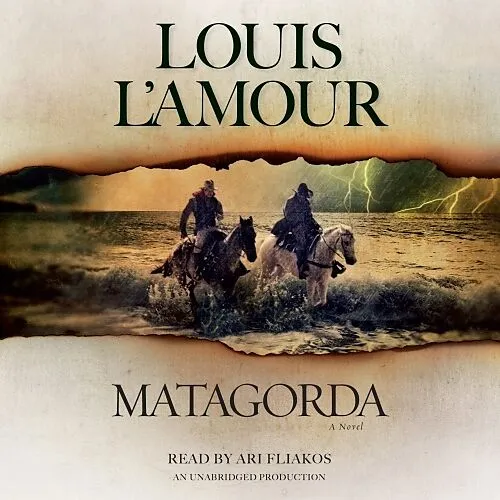
Matagorda
Beschreibung
Informationen zum Autor Our foremost storyteller of the American West, Louis L'Amour has thrilled a nation by chronicling the adventures of the brave men and woman who settled the frontier. There are more than three hundred million copies of his books in print...Format auswählen
- Audio CD (CD/SACD)CHF 38.50

Wird oft zusammen gekauft
Andere Kunden kauften auch
Beschreibung
Informationen zum Autor Our foremost storyteller of the American West, Louis L'Amour has thrilled a nation by chronicling the adventures of the brave men and woman who settled the frontier. There are more than three hundred million copies of his books in print around the world. Klappentext Tap Duvarney lost his innocence in the War Between the States and then put his skills to the test as a soldier in the frontier army. Now, leaving behind a devoted fiancée, he is trying to make his fortune on the Texas coast, working a ranch as the partner of his old friend Tom Kittery-and finding himself in the middle of a feud between Kittery and the neighboring Munson family. Around Matagorda Island, most people are either backing the Munsons or remaining silent. But the danger from outside Kittery's camp is nothing compared to the threat within, as Tap begins to suspect that Kittery's woman, a Texas-born beauty who misses the glitz and glamour of city life, isn't everything she appears to be. Tap is quickly discovering that he must go to war again. But will it be with the Munsons-or with his closest friend? Chapter One Major Tappan Duvarney rested his hands on the rail and stared toward the low sandy shore. It was not what he had expected of Texas, but whatever lay ahead represented his last chance. He had to make it here or nowhere. He listened to the rhythmic pound and splash of the paddle wheels and looked bleakly into the future. Behind him lay the War Between the States and several years of Indian fighting with the frontier army; before him only the lonely years at some sun-baked, wind-swept frontier post, with nothing to look forward to but retirement. When the war had broken out he was a young man with an assured future. Aside from the family plantation in Virginia, his father owned a shipping line trading to the West Indies and Gulf ports--four schooners and a barkentine, and good vessels all. Tap Duvarney had made two trips before the mast on the barkentine, had taken examinations for his ticket, and had made two trips as third mate, one aboard a schooner, the other on the barkentine. His father wanted him to know the sea and its business from every aspect, and Tap liked the sea. He had taken to the rough and rowdy life in Caribbean ports as if born to it. The war changed all that. His sympathies and those of his family were with the Union. He had gone north and joined up. Renegades had burned the plantation buildings and run off the stock; one schooner had been lost in a hurricane off this very coast, two others had been confiscated by the Confederacy and sunk by Union gunboats. The barkentine had disappeared into that mysterious triangle south of Bermuda and left nothing behind but the memory. The last schooner, beat and bedraggled, had burned alongside the dock when the war came to Charleston. Tap Duvarney returned from the war saddled with debts, his father dead, his home destroyed. There seemed only one thing to do, and he did it. He went back to the army and a series of frontier posts. During the nine years following the war he fought Indians from the Dakotas to Arizona. He managed to keep his hair, but picked up three scars, one from a knife, two from bullet wounds. Finally, his father´s estate had been settled and he emerged from the shambles with a bit more than seven thousand dollars. It was then he heard from Tom Kittery. Captain Wilkes stopped beside him now on his way to the pilot house. Duvarney knew that Wilkes was worried about him, and genuinely wished to help. The captain was a good man who had served on one of his father´s ships. "You´ll find Texas a fast country, Major. Do you have friends here?" "One . . . so far as I know. I met him during the war." "You haven´t seen him since? That´s quite a while, Major. Is that the man you´ve gone into partnership with?" Duvarney thought he det...
Autorentext
Our foremost storyteller of the American West, Louis L’Amour has thrilled a nation by chronicling the adventures of the brave men and woman who settled the frontier. There are more than three hundred million copies of his books in print around the world.
Klappentext
Tap Duvarney lost his innocence in the War Between the States and then put his skills to the test as a soldier in the frontier army. Now, leaving behind a devoted fiancée, he is trying to make his fortune on the Texas coast, working a ranch as the partner of his old friend Tom Kittery-and finding himself in the middle of a feud between Kittery and the neighboring Munson family. Around Matagorda Island, most people are either backing the Munsons or remaining silent. But the danger from outside Kittery's camp is nothing compared to the threat within, as Tap begins to suspect that Kittery's woman, a Texas-born beauty who misses the glitz and glamour of city life, isn't everything she appears to be. Tap is quickly discovering that he must go to war again. But will it be with the Munsons-or with his closest friend?
Leseprobe
*Chapter One
Major Tappan Duvarney rested his hands on the rail and stared toward the low sandy shore. It was not what he had expected of Texas, but whatever lay ahead represented his last chance. He had to make it here or nowhere.
He listened to the rhythmic pound and splash of the paddle wheels and looked bleakly into the future. Behind him lay the War Between the States and several years of Indian fighting with the frontier army; before him only the lonely years at some sun-baked, wind-swept frontier post, with nothing to look forward to but retirement.
When the war had broken out he was a young man with an assured future. Aside from the family plantation in Virginia, his father owned a shipping line trading to the West Indies and Gulf ports--four schooners and a barkentine, and good vessels all.
Tap Duvarney had made two trips before the mast on the barkentine, had taken examinations for his ticket, and had made two trips as third mate, one aboard a schooner, the other on the barkentine. His father wanted him to know the sea and its business from every aspect, and Tap liked the sea. He had taken to the rough and rowdy life in Caribbean ports as if born to it.
The war changed all that. His sympathies and those of his family were with the Union. He had gone north and joined up. Renegades had burned the plantation buildings and run off the stock; one schooner had been lost in a hurricane off this very coast, two others had been confiscated by the Confederacy and sunk by Union gunboats. The barkentine had disappeared into that mysterious triangle south of Bermuda and left nothing behind but the memory. The last schooner, beat and bedraggled, had burned alongside the dock when the war came to Charleston. Tap Duvarney returned from the war saddled with debts, his father dead, his home destroyed.
There seemed only one thing to do, and he did it. He went back to the army and a series of frontier posts. During the nine years following the war he fought Indians from the Dakotas to Arizona. He managed to keep his hair, but picked up three scars, one from a knife, two from bullet wounds.
Finally, his father's estate had been settled and he emerged from the shambles with a bit more than seven thousand dollars.
It was then he heard from Tom Kittery.
Captain Wilkes stopped beside him now on his way to the pilot house. Duvarney knew that Wilkes was worried about him, and genuinely wished to help. The captain was a good man who had served on one of his father's ships.
"You'll find Texas a fast country, Major. Do you have friends here?"
"One . . . so far as I know. I met him during the war."
"You haven't seen him since? That's quite a while, Major. Is that the man you've gone into partnership with?"
Duvarney thought he detected a doubtful note in Wilkes's voice, and he was not surprised. He was a bit doubtful himself from time to time.
"I know the man, Capt…