
IHR WARENKORB IST AKTUELL LEER.
Haben Sie noch nichts passendes gefunden? Stöbern Sie durch unser komplettes Sortiment.
Oder melden Sie sich an bzw. registrieren Sie sich.
- Kostenlose Lieferung
- Kauf auf Rechnung
- Ex Libris Tiefpreis
- Filiallieferung und 650+ Abholorte
- Rabatt-Bons als Club-Mitglied
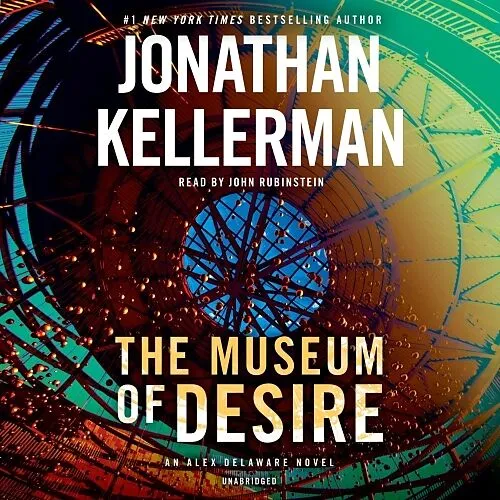
The Museum of Desire
Beschreibung
Psychologist Alex Delaware and detective Milo Sturgis struggle to make sense of a seemingly inexplicable massacre in this electrifying psychological thriller from the #1 New York Times bestselling master of suspense. LAPD Lieutenant Milo Sturgis has solved a l...Format auswählen
- Audio CD (CD/SACD)CHF 53.50
Wird oft zusammen gekauft
Andere Kunden kauften auch
Beschreibung
Psychologist Alex Delaware and detective Milo Sturgis struggle to make sense of a seemingly inexplicable massacre in this electrifying psychological thriller from the #1 New York Times bestselling master of suspense. LAPD Lieutenant Milo Sturgis has solved a lot of murder cases. On many of them--the ones he calls “different”--he taps the brain of brilliant psychologist Dr. Alex Delaware. But neither Alex nor Milo are prepared for what they find on an early morning call to a deserted mansion in Bel Air. This one’s beyond different. This is predation, premeditation, and cruelty on a whole new level. Four people have been slaughtered and left displayed bizarrely and horrifically in a stretch limousine. Confounding the investigation, none of the victims seems to have any connection to any other, and a variety of methods have been used to dispatch them. As Alex and Milo make their way through blind alleys and mazes baited with misdirection, they encounter a crime so vicious that it stretches the definitions of evil. The Museum of Desire is classic Kellerman at his psychopathological best.
Autorentext
Jonathan Kellerman is the #1 New York Times bestselling author of more than forty crime novels, including the Alex Delaware series, The Butcher's Theater, Billy Straight, The Conspiracy Club, Twisted, True Detectives, and The Murderer's Daughter. With his wife, bestselling novelist Faye Kellerman, he co-authored Double Homicide and Capital Crimes. With his son, bestselling novelist Jesse Kellerman, he co-authored A Measure of Darkness, Crime Scene, The Golem of Hollywood, and The Golem of Paris. He is also the author of two children's books and numerous nonfiction works, including Savage Spawn: Reflections on Violent Children and With Strings Attached: The Art and Beauty of Vintage Guitars. He has won the Goldwyn, Edgar, and Anthony awards and the Lifetime Achievement Award from the American Psychological Association, and has been nominated for a Shamus Award. Jonathan and Faye Kellerman live in California, New Mexico, and New York.
Zusammenfassung
**NEW YORK TIMES BESTSELLER • Psychologist Alex Delaware and detective Milo Sturgis struggle to make sense of a seemingly inexplicable massacre in this electrifying psychological thriller from the #1 New York Times bestselling master of suspense.
**
LAPD Lieutenant Milo Sturgis has solved a lot of murder cases. On many of them—the ones he calls “different”—he taps the brain of brilliant psychologist Dr. Alex Delaware. But neither Alex nor Milo are prepared for what they find on an early morning call to a deserted mansion in Bel Air. This one’s beyond different. This is predation, premeditation, and cruelty on a whole new level.
Four people have been slaughtered and left displayed bizarrely and horrifically in a stretch limousine. Confounding the investigation, none of the victims seems to have any connection to any other, and a variety of methods have been used to dispatch them. As Alex and Milo make their way through blind alleys and mazes baited with misdirection, they encounter a crime so vicious that it stretches the definitions of evil.
Leseprobe
When it comes to murder, nighttime’s the right time. So when Milo calls me, I often find myself driving to crime scenes on dark L.A. streets.
This time, the phone rang just after nine a.m. Lovely Sunday in May. Robin and I and Blanche, our little French bulldog, had taken a leisurely two-mile walk followed by a pancake breakfast.
Robin was washing, I was drying, Blanche’s sausage body was prone on the kitchen floor as she snored and let out periodic dream squeaks. My phone, on vibrate, bounced on the kitchen counter. Milo’s number on the screen.
I said, “What’s up, Big Guy?”
Detective II Moses Reed said, “Actually it’s me, Doc. He asked me to phone you.”
“Busy, huh?”
“We’re all busy. This is utterly horrible.”
Reed’s a terse young man; it takes a lot to get him using adverbs.
I sat down and listened as he explained, images tumbling into my brain. Robin turned from the sink, pretty eyebrows arching. I shook my head and mouthed Sorry, and said, “Where, Moe?”
“Private road called Ascot Lane, off Benedict Canyon. Easy to miss, kind of like your street, but this one’s more like a big driveway, only goes to one house.”
He sighed. “Half mile north of the Beverly Hills border.” But for a couple thousand feet, someone else’s problem. I said, “Give me half an hour.”
“Whenever you get here, Doc. No one’s leaving for a while.”
In the movies when detectives encounter terrible things they frequently banter and tell tasteless jokes. That may be because screenwriters or the people who pay them are emotionally shallow. Or the scribes haven’t taken the time to hang out with real detectives.
I’ve found that the men and women who work homicide tend to be thoughtful, analytic, and sensitive. Despite a certain gruffness, that certainly applies to Milo.
My best friend has closed over three hundred fifty murders and he’s never lost his empathy or his sense of outrage. Notifying families still rips at him. He eats too much, sleeps poorly, and often neglects himself while working two, three days in a row.
Once you stop caring, you’re useless.
Milo leads by example so the same approach is taken by the three younger D’s who work with him when he can pry them away from other assignments.
When he can’t, it’s just him. And sometimes me. Rules are often bent. Milo was a gay soldier when gay soldiers didn’t exist, a gay cop when LAPD was still raiding gay bars. Things have changed but he continues to disdain stupid regulations and often overlooks social niceties in a paramilitary organization that prizes conformity.
Murder solve rates have dropped but his rate remains the highest in the department so the brass looks the other way.
This morning the sense of anxious gloom I’ve seen so many times at murders—stiff posture, tight faces, sharp but defeated eyes—extended to the two halfback-sized uniformed officers blocking the entrance to Ascot Lane from Benedict Canyon.
They’d been given my personal info and the Seville’s tags but checked my I.D. anyway, before the bigger one said, “Go on in, Doctor,” in a defeated voice.
To get to them, I’d nosed past half a dozen journalists stationed on Benedict as they tried to rush the Seville before being shooed by another pair of cops.
Different emotional climate for members of the press: a heightened energy bordering on ebullience. Misfortune is the mother’s milk of journalism but with the exception of war correspondents, those who suckle the teats of tragedy are rarely forced to confront evil directly.
I’d kept the Seville’s windows open and as I climbed the road, a bee-swarm of words followed me.
“Who’s he?”
“Vintage Caddy?”
“Are you the owner?”
“Sir! Sir! Do you rent out your house for parties? How much do you get? In view of this, was it worth it? He the owner, Officers? Yes? No? Aw, c’mon, the public has a right to know—if he’s not the owner, how come he gets in?”
If I’d said anything it would’ve been, “I get in because it’s bad and strange.”
I drove through a wrought-iron gate propped open by two bricks and began to climb. Halfway up, another cop waved me on. The road ended at a flat acre or so of brown dirt crowded with vehicles. Four white coroner’s vans,…