Beschreibung
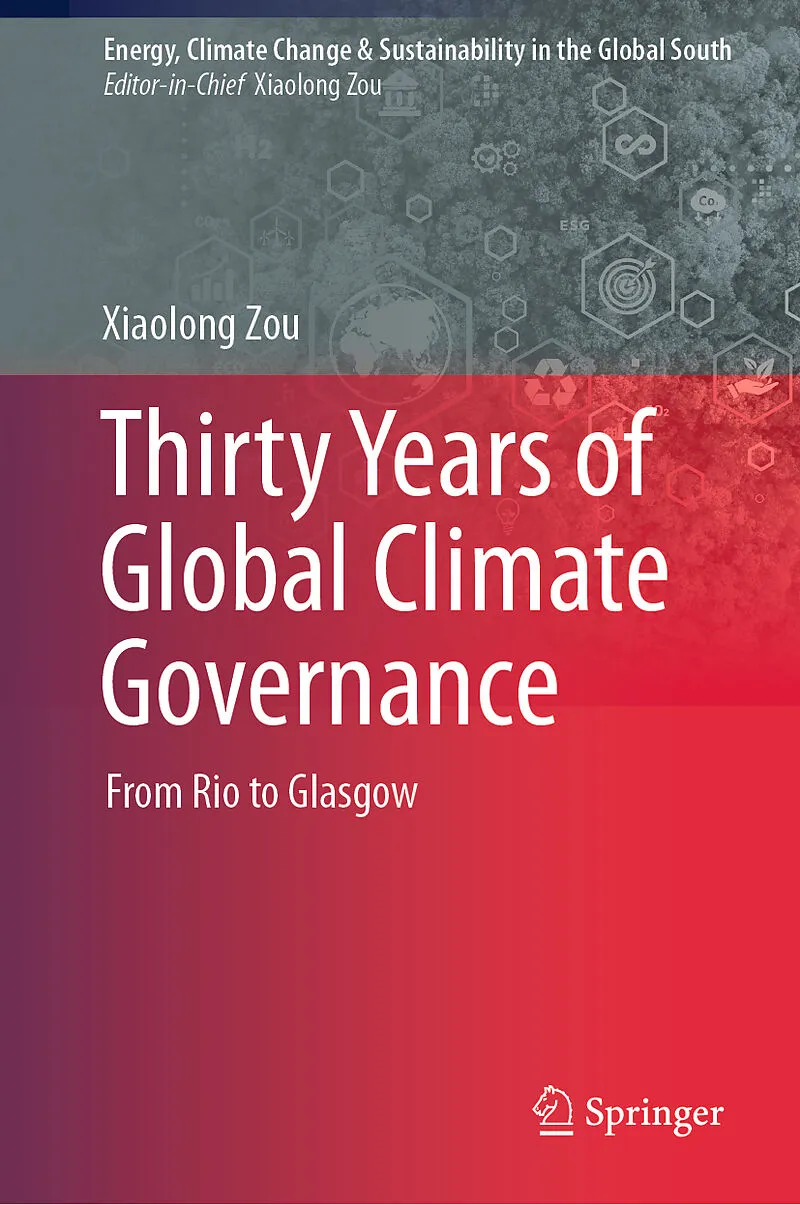
Taking Robert O. Keohanes neoliberal institutionalism as its theoretical keynote, this book aims to delve deep into the theoretical, policy, and practical aspects of global climate governance over these thirty years, providing readers with a comprehensive and...
Taking Robert O. Keohanes neoliberal institutionalism as its theoretical keynote, this book aims to delve deep into the theoretical, policy, and practical aspects of global climate governance over these thirty years, providing readers with a comprehensive and systematic overview from the perspective of sustainable human development. Climate change and its associated crises represent one of the most critical challenges facing the world today. Since the establishment of the United Nations Framework Convention on Climate Change in 1992, the international community has dedicated three decades to relentless efforts in formulating and implementing climate policies and objectives.
By adopting the research methods of combining literature research and field research, combining quantitative research and qualitative research, combining case analysis and universal promotion, and by conducting in-depth interviews with experts and scholars in related fields, to conduct an in-depth analysis of the global climate governance process and representative cases over this time period, this book seeks to offer policymakers, scholars, and the public a clear picture to better understand the evolution and changes in global climate governance, and how to address this global challenge within the framework of sustainable development.
Presents recap of thirty years of global climate governance history and development Provides most important events and cases of global climate governance for the international communities Covers synopsis of both theoretical and practical knowledge in the climate governance domain
Autorentext
Dr. Zou Xiaolong is an Associate Professor and Ph.D. Supervisor at the School of International and Public Affairs (SIPA) at Jilin University, China. He is also the Head of the Department of Global Governance & International Organization at SIPA. With over a decade of teaching and research experience, Dr. Zou has become an active voice in the field of global climate governance and international environmental policy. Dr. Zou holds a Ph.D. in Asia Pacific Studies from Ritsumeikan Asia Pacific University in Japan, and has worked extensively on global energy and climate governance, focusing on climate diplomacy, sustainable development, and the political dynamics of the Global South. He has published widely in prestigious academic journals indexed by SSCI, A&HCI, and SCI, including Transport Policy, Journal of Contemporary Asia, South East Asia Research, and Energy. His research has secured funding for over ten provincial and ministerial-level projects, and he has contributed to shaping climate policy through his work as an expert reviewer for the China Scholarship Council (CSC) and as a Board Member of the China United Nations Association.
Inhalt
Chapter 1. The Role of International Organizations in Shaping Global Climate Governance.- Chapter 2. The United Kingdom: from Europe's Polluter to a Global Climate Leader.- Chapter 3. The European Union and Climate Governance: Evolution of Leaderships the Systems.- Chapter 4. The United States A Pendulum of Power in Global Climate Governance.- Chapter 5. China in Global Climate Governance: Three Decades of Evolution from Participant to Leader.- Chapter 6. Japan: Ambition, Innovation and the Search for Balance.- Chapter 7. India's Climate Path: Balancing Development Rights with Environmental Accountability.- Chapter 8. Brazil: Bridging Environmental Stewardship and Economic Growth.- Chapter 8. Climate Governance in Africa: a Continent's Responses to Global Challengs.- Chapter 10. Asean's Role in Climate Governance: Review Challenges, and Future Prospects.- Chapter 11. Coalitions of Change: State Alliances and Shaping of Global Climate Politics.- Chapter 12. Non-State Actors: Pushing for Change from the Ground Up.- Chapter 13. The Who and Health: Integrating Climate and Public Health Governance.