Beschreibung
History demonstrates that women's ascent to or absence from leadership positions is contingent on the various political, cultural, social, and professional contexts they are situated in. But we do not fully understand why structural changes alone do not lead ...
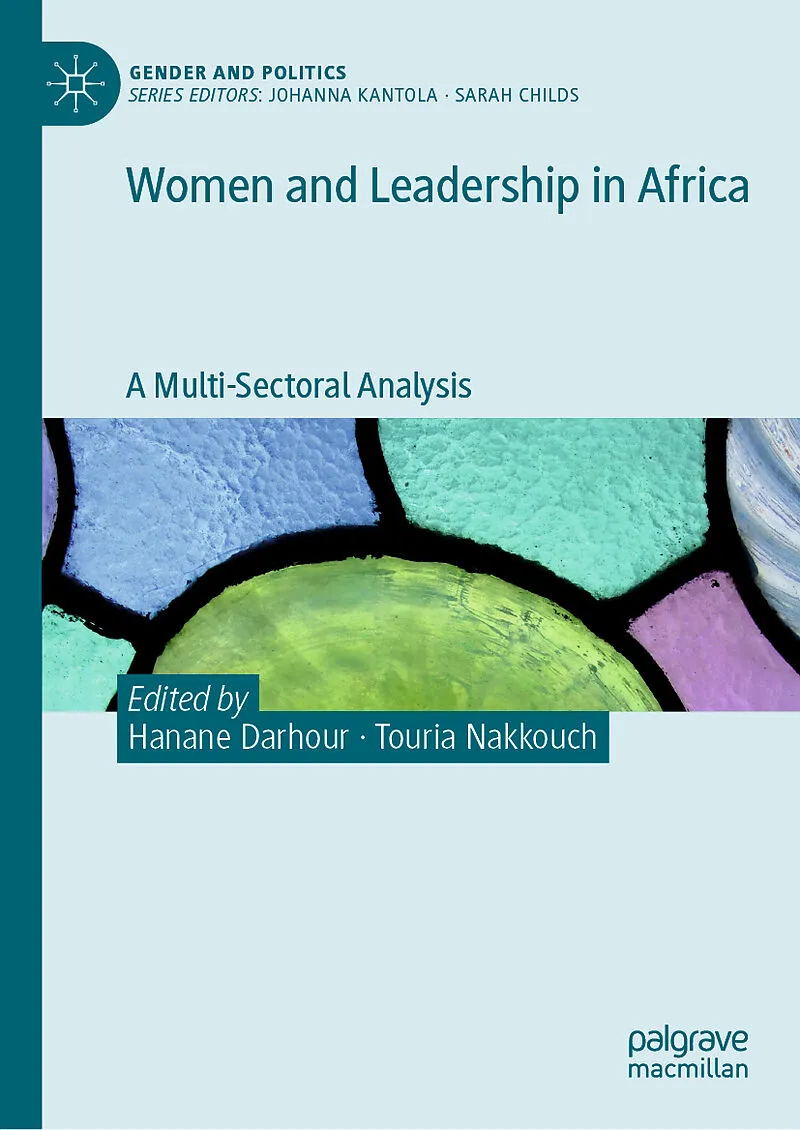
History demonstrates that women's ascent to or absence from leadership positions is contingent on the various political, cultural, social, and professional contexts they are situated in. But we do not fully understand why structural changes alone do not lead to a genuine recognition of women's leadership capabilities. This edited collection on women and leadership is a contribution in this regard. Drawing on case studies and examples covering African countries, it aims to re-conceptualize women's leadership by providing an analysis of a wide range of contexts and power dynamics that either enable or restrain African women's potential. The collection includes chapters that address more specifically structural and agency factors affecting women's engagement with leadership roles in diverse selective, elective, conventional and non-conventional forms of leadership in Africa. As such, it contributes to the advancement of new avenues of thought on issues related to women's leadership as a whole.
Includes chapters on women's leadership in politics, education, religious institutions, and economy Focuses mainly on Moroccan and Nigerian women Comprises well-known and younger scholars in the field of gender studies, political sciences, and cultural studies
Autorentext
Hanane Darhour is Professor of English Studies, Gender and Politics at Ibn Zohr University, Morocco.
Touria Nakkouch is Professor of English and Comparative Literature at Ibn Zohr University, Morocco.
Klappentext
History demonstrates that women’s ascent to or absence from leadership positions is contingent on the various political, cultural, social, and professional contexts they are situated in. But we do not fully understand why structural changes alone do not lead to a genuine recognition of women’s leadership capabilities. This edited collection on women and leadership is a contribution in this regard. Drawing on case studies and examples covering African countries, it aims to re-conceptualize women’s leadership by providing an analysis of a wide range of contexts and power dynamics that either enable or restrain African women’s potential. The collection includes chapters that address more specifically structural and agency factors affecting women’s engagement with leadership roles in diverse selective, elective, conventional and non-conventional forms of leadership in Africa. As such, it contributes to the advancement of new avenues of thought on issues related to women’s leadership as a whole.
Inhalt
Introduction: Female Leadership and the (Un)Leashed Potential.- Chapter 1:Breaking Male Dominance in Political Institutions: Historical Dilemmas.- Chapter 2: Intrinsic Challenges to Women's Leadership: Exploring Obstacles and Barriers.- Chapter 3: Do African Women Have a Place in the AFCFTA? Lessons for Nigeria and the Republic of Niger.- Chapter 4: Hybridized Feminism in Morocco: Investigating the Hermeneutical Insights of Asma Lamrabet.- Chapter 5: Exploring Female Leadership Dynamics in Morocco: The Case of Morocco.- Chapter 6: A Legitimation Analysis of News Framing and Audience Construction of Female Political Leadership in Nigeria's 2023 Elections on Social Media.- Chapter 7: Glass Ceiling: A Perception or a Cultural Load in Moroccan Companies?.- Chapter 8: Shari'ah and Women's Rights in Nigeria.- Chapter 9: Gender Diversity and Corporate Social Responsibility in Selected Quoted Companies in Nigeria.- Chapter 10: Women as Leaders of Social Movements: Opportunities, Claims and Outcomes Of Masaktach Movement as a Case Study.- Chapter 11: United Nations Resolution 1325 and Gender Dimension to the Strategic Posting of Officers for Peace Keeping Operations by the Nigerian Military.