
IHR WARENKORB IST AKTUELL LEER.
Haben Sie noch nichts passendes gefunden? Stöbern Sie durch unser komplettes Sortiment.
Oder melden Sie sich an bzw. registrieren Sie sich.
- Kostenlose Lieferung
- Kauf auf Rechnung
- Ex Libris Tiefpreis
- Filiallieferung und 650+ Abholorte
- Rabatt-Bons als Club-Mitglied
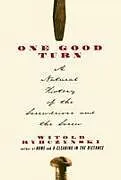
One Good Turn
Beschreibung
Paul Challen The Toronto Star One Good Turn is a good, short read in the classic Rybczynksi mode -- an ordinary thing, explained extraordinarily. Autorentext Witold Rybczynski has written about architecture and urbanism for The New York Times, Time, The Atlant...Format auswählen
- Kartonierter EinbandCHF 19.50
Wird oft zusammen gekauft
Andere Kunden kauften auch
Beschreibung
Paul Challen The Toronto Star One Good Turn is a good, short read in the classic Rybczynksi mode -- an ordinary thing, explained extraordinarily.
Autorentext
Witold Rybczynski has written about architecture and urbanism for The New York Times, Time, The Atlantic, and The New Yorker. He is the author of the critically acclaimed book Home and the award-winning A Clearing in the Distance, as well as T**he Biography of a Building, T**he Mysteries of the Mall, and Now I Sit Me Down. The recipient of the National Building Museum’s 2007 Vincent Scully Prize, he lives with his wife in Philadelphia, where he is emeritus professor of architecture at the University of Pennsylvania.
Klappentext
The Best Tool of the Millennium The seeds of Rybczynski's elegant and illuminating new book were sown by "The New York Times, whose editors asked him to write an essay identifying "the best tool of the millennium." An award-winning author who once built a house using only hand tools, Rybczynski has intimate knowledge of the toolbox -- both its contents and its history -- which serves him beautifully on his quest. "One Good Turn is a story starring Archimedes, who invented the water screw and introduced the helix, and Leonardo, who sketched a machine for carving wood screws. It is a story of mechanical discovery and genius that takes readers from ancient Greece to car design in the age of American industry. Rybczynski writes an ode to the screw, without which there would be no telescope, no microscope -- in short, no enlightenment science. One of our finest cultural and architectural historians, Rybczynski renders a graceful, original, and engaging portrait of the tool that changed the course of civilization.
Zusammenfassung
The Best Tool of the Millennium
The seeds of Rybczynski's elegant and illuminating new book were sown by The New York Times, whose editors asked him to write an essay identifying "the best tool of the millennium." The award-winning author of Home, A Clearing in the Distance, and Now I Sit Me Down, Rybczynski once built a house using only hand tools. His intimate knowledge of the toolbox -- both its contents and its history -- serves him beautifully on his quest.
One Good Turn is a story starring Archimedes, who invented the water screw and introduced the helix, and Leonardo, who sketched a machine for carving wood screws. It is a story of mechanical discovery and genius that takes readers from ancient Greece to car design in the age of American industry. Rybczynski writes an ode to the screw, without which there would be no telescope, no microscope -- in short, no enlightenment science. One of our finest cultural and architectural historians, Rybczynski renders a graceful, original, and engaging portrait of the tool that changed the course of civilization.
Leseprobe
Chapter 1
The Carpenter´s Toolbox
This all starts with a telephone call from David Shipley, an editor at the New York Times. Would I write an article for a special millennium issue of the Sunday magazine? he asks. The end of the millennium is on many magazine editors´ minds, and I have had a number of such requests. Shipley explains that the theme of the issue is The Best of the Millennium. That sounds interesting. "What do you want me to write about?" I ask.
"We´re hoping that you can write a short essay about the best tool," he answers.
I am a bit let down. The best tool is hardly as weighty a subject as the best architect or the best city, topics I could really sink my teeth into. still, I have been working on a long biography and would welcome a break. Writing about the best tool of the millennium might even be fun.
While David Shipley is speaking, I compose the essay in my head. There is so much to choose from: paper clips, fountain pens, eyeglasses. I have recently seen a portrait in the Pennsylvania Academy of the Fine Arts of Benjamin Franklin wearing round spectacles, a reminder that Franklin was the inventor of the bifocal. Yet eyeglasses are much older than the eighteenth century. The first reference to eyeglasses is in a sermon given by a Dominican friar in Florence in 1306. He mentions that eyeglasses were invented twenty years earlier, and that he has even spoken with the inventor, although he neglects to give his name. Medieval eyeglasses were only for farsighted people and were used for reading and writing. They were the first practical application of the new science of optics, paving the way for such far-reaching inventions as the telescope and the microscope. A key influence on literacy, astronomy, and biology, eyeglasses surely qualify as "the best tool of the millennium." This is going to be easy.
However, when I mention my idea to David, it becomes clear that he has something else in mind. He means tool in the literal sense -- a handsaw or a hammer. So, not eyeglasses. He must hear the disappointment in my voice, and he points out that I once wrote a book about building my own house. That might make a good starting point, he suggests helpfully. All right, I say, I´ll think about it.
In my case, "building my own house" meant actually building it. My wife and I, with the occasional help of friends, mixed concrete, sawed wood, plastered walls, and installed plumbing. We did everything ourselves except the electrical wiring. Ever since my boyhood experiences with recalcitrant train sets, I have been thwarted by electricity. Despite my father´s patient explanations -- he was an electrical engineer -- and a college physics course, I never grasped the relationship between voltage, current, and resistance. Electricity, in fact, was a problem in our house-building project -- there was none. We were building on a rural site about eight hundred feet from the road, and although we planned to bring in power, initially we could not afford the cost of a temporary line. Renting a gas-powered generator would be expensive, too -- and noisy. I decided to build the framing and exterior of the house by hand. Once the basic structure was finished, which promised to take a year or two, we would bring in a line and hire a professional to install the electrical wiring.
Does one of my carpenter´s tools qualify as the millennium´s best? I discount power tools. I had used a portable circular saw, a drill, and a sander for finishing and cabinetwork, but these are chiefly loborsaving devices. Not that productivity isn´t important. Ken Kern, the author of The Owner-Built Home, estimates that cutting all the two-by-fours for the frame of a small house would take seven full days using a handsaw, and only thirty minutes using a power saw. I appreciate the ease of cutting wood with power tools, but the result, while more quickly arrived at, is no different than if I use a handsaw. In any case, I enjoy working with my hands. One of the rewards of building something yourself -- a house or a bookshelf -- is the pleasure of using tools. Hand tools are true extensions of the human body, for they have evolved over centuries of trial and error. Power tools are more convenient, of course, but they lack precisely that sense of refinement. No doubt, if I spent my life hammering nails, I would feel differently about the, virtues of a nail gun, say. Yet increasing the productivity of carpenters does not seem to me in the same category as the invention of entirely new devices such as eyeglasses.
That leaves my box of hand tools. The tools required for the construction of a small wood-frame house fall roughly into four categories: measurement, cutting and shaping, hammering, and drilling. My measuring tools include a try square, a bevel, a chalk line, a plumb bob, a spirit level, and a tape measure. A little reading informs me that almost all these tools predate our millennium; indeed, most predate the first millennium of the Christian age. A Rom…