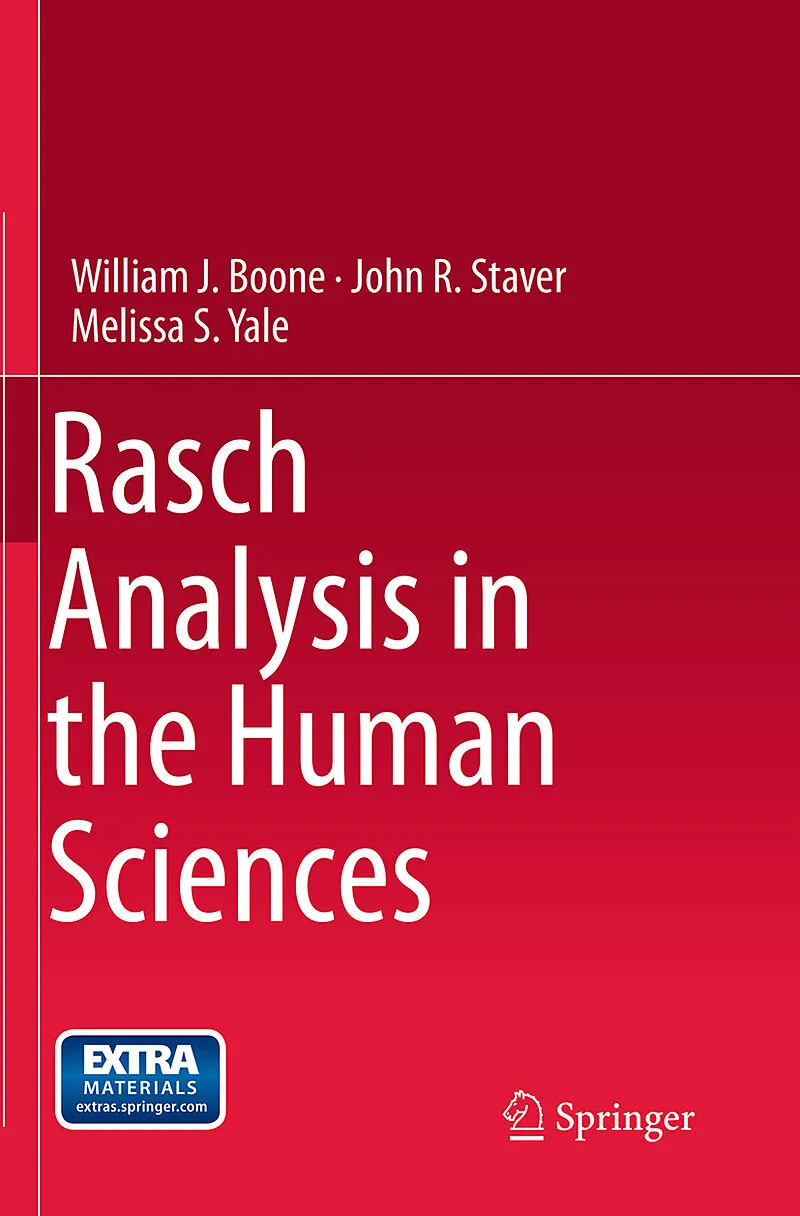
Rasch Analysis in the Human Sciences
Beschreibung
This book offers an introduction to Rasch measurement. Each chapter walks the reader through a key topic that can be used for the analysis of science education data, for the authoring of publications, for presentations, and for the development of grants. Rasch...Format auswählen
- Kartonierter EinbandCHF 173.20
- Fester EinbandCHF 173.20
- E-Book (pdf)CHF 189.00

Wird oft zusammen gekauft
Andere Kunden kauften auch
Beschreibung
This book offers an introduction to Rasch measurement. Each chapter walks the reader through a key topic that can be used for the analysis of science education data, for the authoring of publications, for presentations, and for the development of grants.
Rasch Analysis in the Human Sciences helps individuals, both students and researchers, master the key concepts and resources needed to use Rasch techniques for analyzing data from assessments to measure variables such as abilities, attitudes, and personality traits. Upon completion of the text, readers will be able to confidently evaluate the strengths and weakness of existing instrumentation, compute linear person measures and item measures, interpret Wright Maps, utilize Rasch software, and understand what it means to measure in the Human Sciences.
Each of the 24 chapters presents a key concept using a mix of theory and application of user-friendly Rasch software. Chapters also include a beginning and ending dialogue between two typical researchers learning Rasch, "Formative Assessment Check Points," sample data files, an extensive set of application activities with answers, a one paragraph sample research article text integrating the chapter topic, quick-tips,and suggested readings.
Rasch Analysis in the Human Sciences will be an essential resource for anyone wishing to begin, or expand, their learning of Rasch measurement techniques, be it in the Health Sciences, Market Research, Education, or Psychology.
Offers step-by-step instruction on how-to use Rasch analysis Features a combination of Rasch conversations, Rasch data analyses, Rasch theory, and formative assessments Written for a broad audience as an introductory text: light on the mathematics, heavy on the practical aspects, and clear on the concepts and theory All activities and tables utilize user-friendly (and free) Ministeps Rasch software that prepares readers to confidently utilize Rasch Winsteps software
Klappentext
Rasch Analysis in the Human Sciences helps individuals, both students and teachers, master the key concepts and resources needed to use Rasch techniques for analyzing data from assessments to measure variables such as abilities, attitudes, and personality traits. Upon completion of the text, readers will be able to confidently evaluate the strengths and weaknesses of existing instrumentation, compute linear person measures and item measures, interpret Wright Maps, utilize Rasch software, and understand what it means to measure in the Human Sciences.
Each of the 24 chapters presents a key concept using a mix of theory and application of user-friendly Rasch software. Chapters also include a beginning and ending dialogue between two typical researchers learning Rasch, formative assessment check points, sample data fi les, an extensive set of application activities with answers, a one paragraph sample research article text integrating the chapter topic, quick-tips,and suggested readings.
**
Rasch Analysis in the Human Sciences will be an essential resource for anyone wishing to begin or expand their learning of Rasch measurement techniques, be it in the Health Sciences, Market Research, Education, or Cognitive Sciences.
Rasch Analysis in the Human Sciences represents a much needed, practical, and approachable guide to the use of Rasch methods and models within the field of education in general and in STEM fields most particularly. With a future ever more guided by data-driven decision-making, it is essential that our educators become more familiar with fundamental measurement concepts. Dr. Boone's new text provides readers with a powerful set of new skills, set within an accessible, easy to read framework.
Gregory Ethan Stone , Professor of Educational Foundations and Leadership, University
of Toledo, Ohio, USA
Bill Boone's book leads educators as well as doctoral students to using Rasch as a model for measurement and profound interpretation of data and provides a profound and understandable introduction into a difficult topic.
Hans E. Fischer , Professor of Physics Education, University of Duisburg-Essen, Germany
This book will be invaluable to those in the social sciences who want to improve the quality of our science through improved measurement.
Cynthia W. Kelly , Professor of Nursing, The University of Alabama, Tuscaloosa, Alabama, USA
Inhalt
What is Rasch Measurement & How Can Rasch Measurement Help Me?.- Rating Scale Surveys, A Rasch Rating Scale Analysis (Step I)-Reading Data and Running an Analysis.- Understanding Person Measures.- Item Measures.- Wright Maps - First Steps.- Wright Maps - Second Steps Fit.- How Well Does That Rating Scale Work? How Do You Know, Too?.- Person Reliability, Item Reliability and More.- What is an Ogive? How do I Use It?.- Some Wright Map Nuance, How To Set the Probability of Success at 65% (or whichever percentage you wish to choose).- Differential Item Functioning.- Linking Surveys and Tests.- Setting Pass/Fail Points and Competency Levels.- Expressing Competency Levels.- Quality of Measurement and Sample Size.- Missing Data: What should I do?.- Combining Scales.- Multifaceted Rasch Measurement.- The Rasch Model and Item Response Theory Models: Identical, Similar, or Unique?.- What Tables to Use?.- Key Resources for Continued Expansion of Your Understanding of Rasch Measurement.- Where Have We Been & What's Next?.