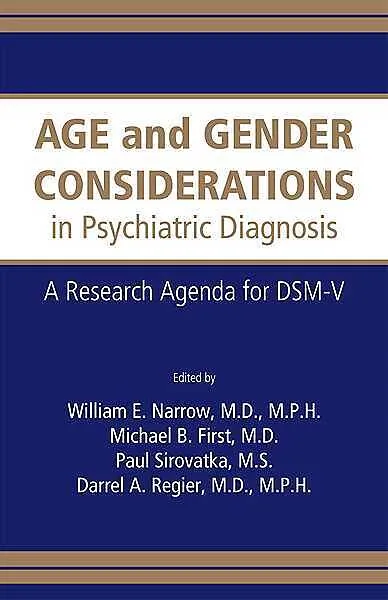
Age and Gender Considerations in Psychiatric Diagnosis
Beschreibung
Informationen zum Autor William E. Narrow, M.D., M.P.H., is Deputy Director of the American Psychiatric Institute for Research and Education and the Division of Research of the American Psychiatric Association in Arlington, Virginia. Michael B. First, M.D., is...Format auswählen
- Kartonierter EinbandCHF 76.80
Wird oft zusammen gekauft
Andere Kunden kauften auch
Beschreibung
Informationen zum Autor William E. Narrow, M.D., M.P.H., is Deputy Director of the American Psychiatric Institute for Research and Education and the Division of Research of the American Psychiatric Association in Arlington, Virginia. Michael B. First, M.D., is Research Psychiatrist at New York State Psychiatric Institute and Associate Professor of Clinical Psychiatry at Columbia University College of Physicians & Surgeons in New York, New York. Darrel A. Regier, M.D., M.P.H., is Executive Director of the American Psychiatric Institute for Research and Education and Director of the Division of Research at the American Psychiatric Association in Arlington, Virginia. Paul J. Sirovatka, M.S., is Associate Director for Research Policy Analysis, Division of Research/American Psychiatric Institute for Research and Education, Arlington, Virginia. Klappentext Written to help identify major gaps in our knowledge of how gender and age affect psychiatric diagnoses and to stimulate much-needed research to fill these gaps, Age and Gender Considerations in Psychiatric Diagnosis serves as both a valuable short-term source for the DSM-V Task Force and its disorder-specific workgroups, and a long-term guide for future studies that will contribute to revised psychiatric classifications in these areas. Here, 47 experts present findings in three previously neglected areas of psychiatric research: significant gender differences in prevalence, symptom profiles, and risk factors for mental disorders, including neurodevelopmental, neurophysiological, and environmental factors that cut across diagnostic categories; mental disorders in infancy and early childhood, including psychopathology, PTSD, reactive attachment disorder, autism, and mood, anxiety, sleep, feeding, and behavior disorders; and mental disorders in the elderly (e.g., dementia and depression) once considered normal consequences of aging, but today understood as mental disorders and thus worthy of further investigation. Written for clinicians and researchers alike, this thought-provoking compendium contributes critical information that helps enhance our understanding of the causes of mental disorders, develop effective preventive and treatment interventions, and inform future editions of DSM and the ICD. Zusammenfassung Written to help identify major gaps in our knowledge of how gender and age affect psychiatric diagnoses and to stimulate much-needed research! this book serves as both a valuable short-term source for the DSM-V Task Force! and a long-term guide for future studies that will contribute to revised psychiatric classifications in these areas. ...
Klappentext
Written to help identify major gaps in our knowledge of how gender and age affect psychiatric diagnoses and to stimulate much-needed research to fill these gaps, Age and Gender Considerations in Psychiatric Diagnosis serves as both a valuable short-term source for the DSM-V Task Force and its disorder-specific workgroups, and a long-term guide for future studies that will contribute to revised psychiatric classifications in these areas.
Here, 47 experts present findings in three previously neglected areas of psychiatric research: significant gender differences in prevalence, symptom profiles, and risk factors for mental disorders, including neurodevelopmental, neurophysiological, and environmental factors that cut across diagnostic categories; mental disorders in infancy and early childhood, including psychopathology, PTSD, reactive attachment disorder, autism, and mood, anxiety, sleep, feeding, and behavior disorders; and mental disorders in the elderly (e.g., dementia and depression) once considered normal consequences of aging, but today understood as mental disorders and thus worthy of further investigation.
Written for clinicians and researchers alike, this thought-provoking compendium contributes critical information that helps enhance our understanding of the causes of mental disorders, develop effective preventive and treatment interventions, and inform future editions of DSM and the ICD.
Inhalt
Contributors. Acknowledgments. Introduction. Section 1: Sex/Gender. Introduction: age and gender considerations for psychiatric diagnosis. Why gender matters. DSM's approach to gender: history and controversies. Gender and the prevalence of psychiatric disorders. Neurobiology and sex/gender. Sociocultural factors and gender. A developmental perspective, with a focus on childhood trauma. The longitudinal laboratory of women's reproductive health. Clinical validators of diagnoses: symptom expression, course, and treatment. Gender and diagnostic criteria. Concluding thoughts. Section 2: Early Childhood. Diagnosis of psychopathology in infants, toddlers, and preschoolers. A research agenda for posttraumatic stress disorder in infants, toddlers, and preschool children. Reactive attachment disorder. Measurement of psychopathology in children under the age of six. Nosology of mood disorders in preschool children: state of knowledge and future directions. Diagnosis of anxiety disorders in infants, toddlers, and preschool children. Classifying sleep disorders in infants and toddlers. A classification of feeding disorders of infancy and early childhood. Disruptive behavior disorders and attention-deficit/hyperactivity disorder in preschool children: characterizing heterotypic continuities for a developmentally informed nosology for DSM-V. Diagnosis of autism and related disorders in infants and very young children: setting a research agenda for DSM-V. Section 3: The Elderly. Aging-related diagnostic variations: need for diagnostic criteria appropriate for elderly psychiatric patients. Late-life depression: a model for medical classification. Challenges of diagnosing psychiatric disorders in medically ill patients. Use of biomarkers in the elderly: current and future challenges. Impact of psychosocial factors on late-life depression. Index.