
IHR WARENKORB IST AKTUELL LEER.
Haben Sie noch nichts passendes gefunden? Stöbern Sie durch unser komplettes Sortiment.
Oder melden Sie sich an bzw. registrieren Sie sich.
- Kostenlose Lieferung
- Kauf auf Rechnung
- Ex Libris Tiefpreis
- Filiallieferung und 650+ Abholorte
- Rabatt-Bons als Club-Mitglied
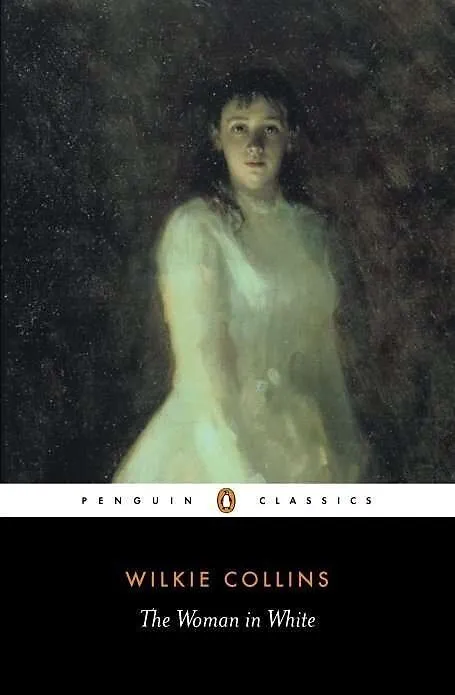
The Woman In White
Beschreibung
Zusatztext Collins was a master craftsman! whom many modern mystery-mongers might imitate to their profit. Dorothy L. Sayers Informationen zum Autor Wilkie Collins Klappentext Pursuing questions of identity and insanity along the paths and corridors of English...Format auswählen
- Poche format BCHF 15.30

Wird oft zusammen gekauft
Andere Kunden kauften auch
Beschreibung
Zusatztext Collins was a master craftsman! whom many modern mystery-mongers might imitate to their profit. Dorothy L. Sayers Informationen zum Autor Wilkie Collins Klappentext Pursuing questions of identity and insanity along the paths and corridors of English country houses and the madhouse, The Woman in White is the first and most influential of the Victorian genre that combined Gothic horror with psychological realism. The Woman in White famously opens with Walter Hartright's eerie encounter on a moonlit London road. Engaged as a drawing master to the beautiful Laura Fairlie, Walter is drawn into the sinister intrigues of Sir Percival Glyde and his "charming" friend Count Fosco, who has a taste for white mice, vanilla bonbons and poison. For more than seventy years, Penguin has been the leading publisher of classic literature in the English-speaking world. With more than 1,700 titles, Penguin Classics represents a global bookshelf of the best works throughout history and across genres and disciplines. Readers trust the series to provide authoritative texts enhanced by introductions and notes by distinguished scholars and contemporary authors, as well as up-to-date translations by award-winning translators. Chapter One The Narrative of Walter Hartright, of Clemant´s Inn, London IT WAS the last day of July. The long hot summer was drawing to a close; and we, the weary pilgrims of the London pavement, were beginning to think of the cloud-shadows on the corn-fields, and the autumn breezes on the sea-shore. For my own poor part, the fading summer left me out of health, out of spirits, and, if the truth must be told, out of money as well. During the past year, I had not managed my professional resources as carefully as usual; and my extravagance now limited me to the prospect of spending the autumn economically between my mother´s cottage at Hampstead, and my own chambers in town. The evening, I remember, was still and cloudy; the London air was at its heaviest; the distant hum of the street-traffic was at its faintest; the small pulse of the life within me and the great heart of the city around me seemed to be sinking in unison, languidly and more languidly, with the sinking sun. I roused myself from the book which I was dreaming over rather than reading, and left my chambers to meet the cool night air in the suburbs. It was one of the two evenings in every week which I was accustomed to spend with my mother and my sister. So I turned my steps northward, in the direction of Hampstead. Events which I have yet to relate, make it necessary to mention in this place that my father had been dead some years at the period of which I am now writing; and that my sister Sarah, and I, were the sole survivors of a family of five children. My father was a drawing-master before me. His exertions had made him highly successful in his profession; and his affectionate anxiety to provide for the future of those who were dependent on his labours, had impelled him, from the time of his marriage, to devote to the insuring of his life a much larger portion of his income than most men consider it necessary to set aside for that purpose. Thanks to his admirable prudence and self-denial, my mother and sister were left, after his death, as independent of the world as they had been during his lifetime. I succeeded to his connexion, and had every reason to feel grateful for the prospect that awaited me at my starting in life. The quiet twilight was still trembling on the topmost ridges of the heath; and the view of London below me had sunk into a black gulf in the shadow of the cloudy night, when I stood before the gate of my mother´s cottage. I had hardly rung the bell, before the house-door was opened violently; my worthy Italian friend, Professor Pesca, appeared in the servant´s place; and darted out joy...
#8220;Collins was a master craftsman, whom many modern mystery-mongers might imitate to their profit.” —Dorothy L. Sayers
Autorentext
Wilkie Collins
Klappentext
Pursuing questions of identity and insanity along the paths and corridors of English country houses and the madhouse, The Woman in White is the first and most influential of the Victorian genre that combined Gothic horror with psychological realism.*
The Woman in White* famously opens with Walter Hartright's eerie encounter on a moonlit London road. Engaged as a drawing master to the beautiful Laura Fairlie, Walter is drawn into the sinister intrigues of Sir Percival Glyde and his "charming" friend Count Fosco, who has a taste for white mice, vanilla bonbons and poison.
For more than seventy years, Penguin has been the leading publisher of classic literature in the English-speaking world. With more than 1,700 titles, Penguin Classics represents a global bookshelf of the best works throughout history and across genres and disciplines. Readers trust the series to provide authoritative texts enhanced by introductions and notes by distinguished scholars and contemporary authors, as well as up-to-date translations by award-winning translators.
Zusammenfassung
Opens with Walter Hartright's eerie encounter on a moonlit London road. Engaged as a drawing master to the beautiful Laura Fairlie, Walter is drawn into the sinister intrigues of Sir Percival Glyde and his 'charming' friend Count Fosco, the 'Napoleon of crime', who has a taste for white mice, vanilla bonbons and poison.
Leseprobe
*Chapter One
*
*
The Narrative of Walter Hartright, of Clemant's Inn, London
*
IT WAS the last day of July. The long hot summer was drawing to a close; and we, the weary pilgrims of the London pavement, were beginning to think of the cloud-shadows on the corn-fields, and the autumn breezes on the sea-shore.
For my own poor part, the fading summer left me out of health, out of spirits, and, if the truth must be told, out of money as well. During the past year, I had not managed my professional resources as carefully as usual; and my extravagance now limited me to the prospect of spending the autumn economically between my mother's cottage at Hampstead, and my own chambers in town.
The evening, I remember, was still and cloudy; the London air was at its heaviest; the distant hum of the street-traffic was at its faintest; the small pulse of the life within me and the great heart of the city around me seemed to be sinking in unison, languidly and more languidly, with the sinking sun. I roused myself from the book which I was dreaming over rather than reading, and left my chambers to meet the cool night air in the suburbs. It was one of the two evenings in every week which I was accustomed to spend with my mother and my sister. So I turned my steps northward, in the direction of Hampstead.
Events which I have yet to relate, make it necessary to mention in this place that my father had been dead some years at the period of which I am now writing; and that my sister Sarah, and I, were the sole survivors of a family of five children. My father was a drawing-master before me. His exertions had made him highly successful in his profession; and his affectionate anxiety to provide for the future of those who were dependent on his labours, had impelled him, from the time of his marriage, to devote to the insuring of his life a much larger portion of his income than most men consider it necessary to set aside for that purpose. Thanks to his admirable prudence and self-denial, my mother and sister were left, after his death, as independent of the world as they had been during his lifetime. I succeeded to his connexion, and had every reason to feel grateful for the prospect that awaited me at my starting in life.
The quiet twilight was still trembling on the topmost ridges of the heath; and the view of London below me had sunk into a black gulf in the shadow of the cloudy night, when I stood before the gate of my mother's cottage. I had ha…