
IHR WARENKORB IST AKTUELL LEER.
Haben Sie noch nichts passendes gefunden? Stöbern Sie durch unser komplettes Sortiment.
Oder melden Sie sich an bzw. registrieren Sie sich.
- Kostenlose Lieferung
- Kauf auf Rechnung
- Ex Libris Tiefpreis
- Filiallieferung und 650+ Abholorte
- Rabatt-Bons als Club-Mitglied
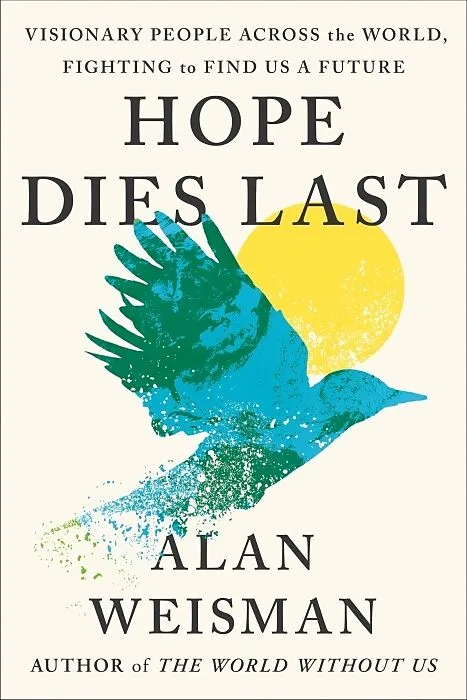
Hope Dies Last
Beschreibung
The award-winning environmental journalist’s extraordinary, long-awaited portrait of hope and resilience as we face a fractured and uncertain future In this profoundly human and moving narrative, the bestselling author of <The World Without Us <retur...Format auswählen
- Fester EinbandCHF 35.90

Wird oft zusammen gekauft
Andere Kunden kauften auch
Beschreibung
The award-winning environmental journalist’s extraordinary, long-awaited portrait of hope and resilience as we face a fractured and uncertain future
In this profoundly human and moving narrative, the bestselling author of <The World Without Us <returns with a book ten years in the making: a study of what it means to be a human on the front lines of our planet’s existential crisis. His new book, <Hope Dies Last<, is a literary evocation of our current predicament and the core resolve of our species against the most precarious odds we have ever faced.
To write this book, Weisman traveled the globe, witnessing climate upheaval and other devastations, and meeting the people striving to mitigate and undo our past transgressions. From the flooding Marshall Islands to revived wetlands in Iraq, from the Netherlands and Bangladesh to the Korean DMZ and to cities and coastlines in the U.S. and around the world, he has encountered the best of humanity battling heat, hunger, rising tides, and imperiled nature. He profiles the innovations of big thinkers—engineers, scientists, conservationists, economists, architects, and artists—as they conjure wildly creative, imaginative responses to an uncertain, ominous future. At this unprecedented point in history, as our collective exploits on this planet may lead to our own undoing and we could be among the species marching toward extinction, they refuse to accept defeat.
A remedy to climate anxiety by one of the most important voices on humanity’s relationship with the Earth, <Hope Dies Last< fills a crucial gap in the global conversation: Having reached a point of no return in our climate confrontation, how do we feel, behave, act, plan, and dream as we approach a future decidedly different from what we had expected?
Autorentext
Alan Weisman has reported from all seven continents and in more than sixty countries. His books include the New York Times bestseller The World Without Us, translated into thirty-four languages and a finalist for the National Book Critics Circle Award and winner of China’s Wenjin Book Prize; and Countdown, winner of the Los Angeles Times Book Prize. His work has appeared in Harper's, The New York Times Magazine, The Atlantic Monthly, The New York Review of Books, Vanity Fair, Orion, Mother Jones, Discover, and Salon, among others, and on NPR. A cofounder of the journalism collective Homelands Productions, he has also been laureate professor of international journalism at the University of Arizona. He and his wife, sculptor Beckie Kravetz, live in western Massachusetts.
Klappentext
"To write this book, Weisman [traveled] the globe witnessing the devastation of climate change and meeting the people striving to mitigate and undo our past transgressions. From the flooding Marshall Islands to wetlands renewal in Iraq, and from the Netherlands to the Korean DMZ to cities and coastlines in the U.S. and around the world, he has witnessed personally the best of humanity battling the heat, the hunger, and the rising tides. He profiles the work of big thinkers--engineers, scientists, economists, and psychiatrists--as they devise innovative and wildly creative responses to an uncertain and frightening future"--
Zusammenfassung
**One of Heatmap's 18 Climate Books to Read in 2025
The award-winning environmental journalist’s extraordinary, long-awaited portrait of hope and resilience as we face a fractured and uncertain future**
In this profoundly human and moving narrative, the bestselling author of The World Without Us returns with a book ten years in the making: a study of what it means to be a human on the front lines of our planet’s existential crisis. His new book, Hope Dies Last, is a literary evocation of our current predicament and the core resolve of our species against the most precarious odds we have ever faced.
To write this book, Weisman traveled the globe, witnessing climate upheaval and other devastations, and meeting the people striving to mitigate and undo our past transgressions. From the flooding Marshall Islands to revived wetlands in Iraq, from the Netherlands and Bangladesh to the Korean DMZ and to cities and coastlines in the U.S. and around the world, he has encountered the best of humanity battling heat, hunger, rising tides, and imperiled nature. He profiles the innovations of big thinkers—engineers, scientists, conservationists, economists, architects, and artists—as they conjure wildly creative, imaginative responses to an uncertain, ominous future. At this unprecedented point in history, as our collective exploits on this planet may lead to our own undoing and we could be among the species marching toward extinction, they refuse to accept defeat.
Hope Dies Last fills a crucial gap in the global conversation: Having reached a point of no return in our climate confrontation, how do we feel, behave, act, plan, and dream as we approach a future decidedly different from what we had expected?
Leseprobe
Chapter One
Cradle to Grave
i. Origin
How, Azzam Alwash wonders, is it possible that he's never been here before? Born in this cradle land to a family from Babylon, taught by his father how to fish for shad and barbel in marshes where people still lived like the ancients in reed houses on floating islands, he knows his country's storied waterways like his own veins and arteries. But now he is seeing something for the first time.
Strange, because except for his years in exile, all his life it's been so near, just downriver from the city of Basra, where he attended university-although needing a police escort to get here might explain why he didn't come earlier. It's a tense spot, Iraq's tiny, 36-mile wedge of coastline between its wealthier, powerful neighbors at the top of what the Kuwaitis call the Arabian Gulf and the Iranians call the Persian Gulf.
"We just call it the Gulf," he murmurs, unable to tear his gaze away.
Azzam, still trim in his mid-60s, clean-shaven with buzz-cut silver hair that narrows to a widow's peak, his blue hoodie unzipped to the breeze, is considered a national hero in Iraq-internationally as well: winner of the 2013 Goldman Environmental Prize, the "green Nobel," for miraculously resuscitating the Mesopotamian marshes of his boyhood, the biggest wetland in the Middle East. In 1993, that lush convergence of the Tigris and Euphrates floodplains, believed by many to be the biblical Eden, had shriveled to barren, dust-blown expanses after Iraqi dictator Saddam Hussein intentionally diverted the fabled rivers, draining thousands of verdant square miles in order to flush Shi'ite rebels out from hiding in the marshes' impenetrable reed and papyrus thickets.
The damage was irreversible, Azzam kept hearing from biologists, as he begged the US State Department for funds to reflood the marshes after US-led forces deposed Saddam in 2003. The roots and desiccated seed banks were over 10 years old, their chemistry irreparably changed, a CIA environmental contractor told him. "It's probably impossible to revive them."
Azzam was an engineer, not an ecologist, but navigating exile and building a career had taught him that impossible often masks a lack of imagination. If there was one lesson he'd learned, it was that nature is resilient: she's seen all of this before.
"How will we know unless we try?" he asked.
Today, with the fate of not just a wetland but his entire planet in play, Azzam Alwash’s stubborn persistence that proved experts wrong is needed everywhere, he believes. For our civilization to continue-if not our very existence-will demand vision that transcends conventional wisdom and boundaries.
Humanity's astonishing success as a species has resulted in a dangerously lopsided world. With most unfrozen land now d…