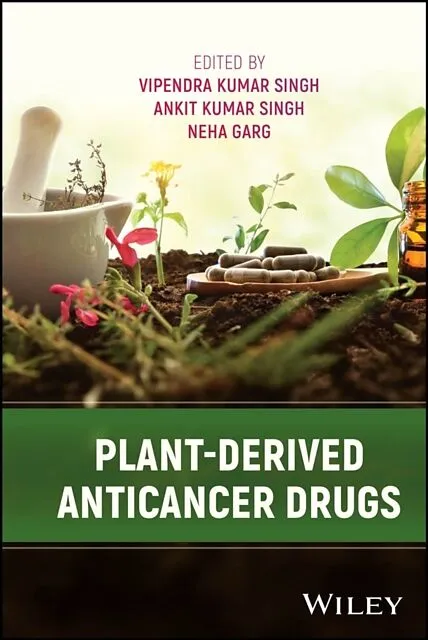
Plant-Derived Anticancer Drugs
Beschreibung
Informationen zum Autor Vipendra Kumar Singh, PhD is a senior postdoctoral fellow in the School of Biosciences and Bioengineering at the Indian Institute of Technology Mandi, Himachal Pradesh, India. Ankit Kumar Singh, PhD works as an Assistant Professor at th...Format auswählen
- Fester EinbandCHF 272.80

Wird oft zusammen gekauft
Andere Kunden kauften auch
Beschreibung
Informationen zum Autor Vipendra Kumar Singh, PhD is a senior postdoctoral fellow in the School of Biosciences and Bioengineering at the Indian Institute of Technology Mandi, Himachal Pradesh, India. Ankit Kumar Singh, PhD works as an Assistant Professor at the University Department of Botany Lalit Narayan Mithila University, Darbhanga, Bihar, India. Neha Garg, PhD is an Assistant Professor at the Institute of Medical Sciences, Department of Medicinal Chemistry, Banaras Hindu University in India. Klappentext Enhanced approaches for using plant-derived molecules as a more promising cancer treatment alternative, with lower costs and fewer side effects Plant-derived Anticancer Drugs discusses the current scenario of cancer, the limitations of synthetic drugs, and the potential of plant-derived molecules in cancer treatment, highlighting a variety of approaches, such as biodegradable nano and quantum dot-based materials, that enhance the therapeutic efficacy of plant-derived molecules to improve solubility, applicability, target-specific delivery, and overall efficacy. The book begins by discussing the preclinical and clinical utilization of synthetic drugs in cancer therapy, highlighting their mechanisms of action, therapeutic outcomes, limitations, and future perspectives. The book then provides a snapshot of the major drugs approved by the FDA which have historically served as the cornerstone of center treatment, and provides a clinical evidence-based analysis of their survival outcomes. Next, the current role, acceptance, advancements, and challenges of using plant-derived molecules in cancer therapy are reviewed. Contributed to by international experts in the field, Plant-derived Anticancer Drugs continues to cover sample topics including: Advancements in anti-cancer drug development due to genomics, biotechnology, and systems biologyIntegrative approaches which leverage the cytotoxic precision of synthetic drugs alongside the multitargeted and often less toxic nature of phytochemicalsOptimization of phytochemicals with high anticancer potential to reduce drug discovery timelines and associated costsIntegration of Artificial Intelligence (AI) and plant-derived bioactive compoundsAbility of plant-derived molecules and herbal formulations to target multiple pathways involved in cancer progression, such as cell proliferation, apoptosis, angiogenesis, and metastasis Plant-derived Anticancer Drugs is a completely comprehensive and up-to-date reference on the subject, ideal for natural products chemists, medicinal chemists, biochemists, and cancer researchers in academia and industry. The book is also valuable reading for graduates and undergraduates studying nanotechnology, phytochemistry, pharmacology, oncology, and toxicology. Inhaltsverzeichnis List of Contributors xvii Preface xxi 1 Utilization of Synthetic Drugs in Cancer: Preclinical and Clinical-based Evidence 1 Sandeep Vaidya, Avadh Biharee, Arpita Yadav, Arun Kumar Sharma, Akhlesh Kumar Jain, Suresh Thareja, and Mayank Kumar Singh 1.1 Introduction 1 1.1.1 Cancer Biology and Pathophysiology 2 1.1.2 Nanomedicine in Cancer Treatments 3 1.1.2.1 Applications of Nanomedicine in Cancer Treatment 5 1.1.3 Evolution of Synthetic Anticancer Drugs from Ancient Beliefs to Modern Medicine 6 1.2 Synthetic Pharmaceutical Anticancer Drugs 8 1.3 Challenges Faced in Early Drug Development 17 1.4 Conclusion 20 Acknowledgments 21 References 21 2 United States and European Union Regulations: Approved Treatment Modalities for Managing Cancer 29 Avadh Biharee, Khushi Gupta, Arpita Yadav, Shivam Kumar kori, Sudha Bhartiya, Kashif sheikh, Sandeep Vaidya, Sushil K. Kashaw, Suresh Thareja, and Mayank Kumar Singh 2.1 Introduction 29 2.2 FDA Strat...
Autorentext
Vipendra Kumar Singh, PhD is a senior postdoctoral fellow in the School of Biosciences and Bioengineering at the Indian Institute of Technology Mandi, Himachal Pradesh, India. Ankit Kumar Singh, PhD works as an Assistant Professor at the University Department of Botany Lalit Narayan Mithila University, Darbhanga, Bihar, India. Neha Garg, PhD is an Assistant Professor at the Institute of Medical Sciences, Department of Medicinal Chemistry, Banaras Hindu University in India.
Klappentext
Enhanced approaches for using plant-derived molecules as a more promising cancer treatment alternative, with lower costs and fewer side effects Plant-derived Anticancer Drugs discusses the current scenario of cancer, the limitations of synthetic drugs, and the potential of plant-derived molecules in cancer treatment, highlighting a variety of approaches, such as biodegradable nano and quantum dot-based materials, that enhance the therapeutic efficacy of plant-derived molecules to improve solubility, applicability, target-specific delivery, and overall efficacy. The book begins by discussing the preclinical and clinical utilization of synthetic drugs in cancer therapy, highlighting their mechanisms of action, therapeutic outcomes, limitations, and future perspectives. The book then provides a snapshot of the major drugs approved by the FDA which have historically served as the cornerstone of center treatment, and provides a clinical evidence-based analysis of their survival outcomes. Next, the current role, acceptance, advancements, and challenges of using plant-derived molecules in cancer therapy are reviewed. Contributed to by international experts in the field, Plant-derived Anticancer Drugs continues to cover sample topics including:
- Advancements in anti-cancer drug development due to genomics, biotechnology, and systems biology
- Integrative approaches which leverage the cytotoxic precision of synthetic drugs alongside the multitargeted and often less toxic nature of phytochemicals
- Optimization of phytochemicals with high anticancer potential to reduce drug discovery timelines and associated costs
- Integration of Artificial Intelligence (AI) and plant-derived bioactive compounds
- Ability of plant-derived molecules and herbal formulations to target multiple pathways involved in cancer progression, such as cell proliferation, apoptosis, angiogenesis, and metastasis Plant-derived Anticancer Drugs is a completely comprehensive and up-to-date reference on the subject, ideal for natural products chemists, medicinal chemists, biochemists, and cancer researchers in academia and industry. The book is also valuable reading for graduates and undergraduates studying nanotechnology, phytochemistry, pharmacology, oncology, and toxicology.
Inhalt
List of Contributors xvii
Preface xxi
1 Utilization of Synthetic Drugs in Cancer: Preclinical and Clinical-based Evidence 1
Sandeep Vaidya, Avadh Biharee, Arpita Yadav, Arun Kumar Sharma, Akhlesh Kumar Jain, Suresh Thareja, and Mayank Kumar Singh
1.1 Introduction 1
1.1.1 Cancer Biology and Pathophysiology 2
1.1.2 Nanomedicine in Cancer Treatments 3
1.1.2.1 Applications of Nanomedicine in Cancer Treatment 5
1.1.3 Evolution of Synthetic Anticancer Drugs from Ancient Beliefs to Modern Medicine 6
1.2 Synthetic Pharmaceutical Anticancer Drugs 8
1.3 Challenges Faced in Early Drug Development 17
1.4 Conclusion 20
Acknowledgments 21
References 21
2 United States and European Union Regulations: Approved Treatment Modalities for Managing Cancer 29
Avadh Biharee, Khushi Gupta, Arpita Yadav, Shivam Kumar kori, Sudha Bhartiya, Kashif sheikh, Sandeep Vaidya, Sushil K. Kashaw, Suresh Thareja, and Mayank Kumar Singh
2.1 Introduction 29
2.2 FDA Strategies for Drug Approval in the United States 31
2.2.1 Expedited Approval of Anticancer Drugs in the United States 32
2.3 EMA Approach for Drug Approval in the EU 35
2.3.1 Expedited Anticancer Drug Approval in EU 36
2.4 Approved Treatment Modalities for Cancer Care 38
2.4.1 Conventional Cancer Therapy 39
2.4.2 Innovative Cancer Treatments 40
2.4.3 Physical Therapy for Cancer Treatment …