Beschreibung
A new perspective on Edvard Munch One of the most famous painters of modernism The enigmatic and the everyday in his life and work Edvard Munch is one of the most famous painters of the early 20th century and a role model for many artists to this day. His lege...A new perspective on Edvard Munch One of the most famous painters of modernism The enigmatic and the everyday in his life and work
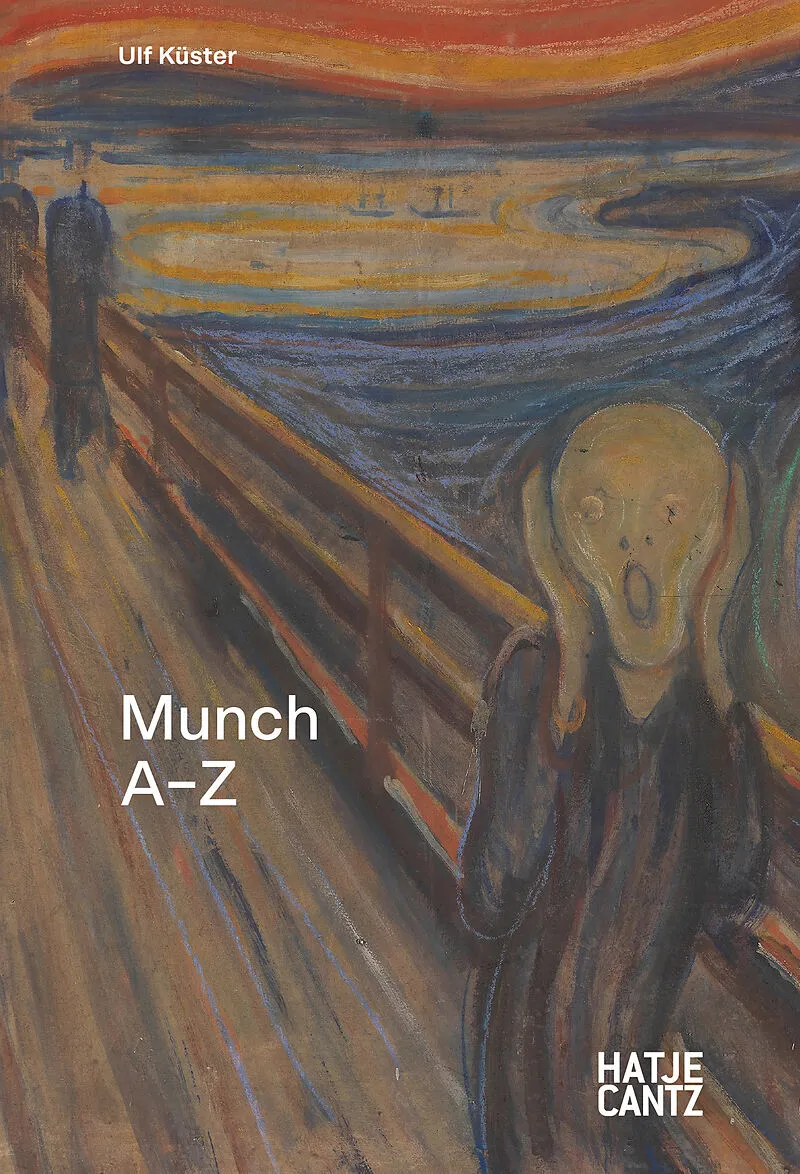
Edvard Munch is one of the most famous painters of the early 20th century and a role model for many artists to this day. His legendary painting Scream even inspired a popular emoji, something that no other artist has ever achieved. Munch had a unique way of placing himself as an individ- ual in the foreground of his art, making his psychological state the subject of his work. In doing so, he created a per- sonal and at the same time universal diary of the soul that still captivates us today, as international exhibitions of the Norwegian artist show. In twenty-six short chapters, from A for anxiety to G for ghosts, R for revolvers and Z for zoo, familiar but also surprising aspects of his art and life are presented in a compelling way.
Klappentext
Edvard Munch - A Master of Emotion and Existential Angst
Best known for The Scream, Munch's art captured the struggles of the human psyche in a way that resonates across generations. His works form a unique "soul diary," chronicling inner turmoil, fear, and profound melancholy.
In this volume of the Hatje Cantz A-Z series, Munch's life and work are explored through 26 concise and engaging themes, from "Anxiety" to "Ghosts" and "Revolver" to "Zoo." This book offers surprising insights into Munch's personal and universal artistic expressions, highlighting why his work remains as compelling today as ever.
Highlights:
Surprising themes: 26 fresh perspectives on Munch's life and work.
Hatje Cantz A-Z - Compact and Inspiring Art History
The Hatje Cantz A-Z series presents the great artists of art history in a compact and engaging format. From Lucas Cranach and Paul Cézanne to Piet Mondrian, Edvard Munch, and Niki de Saint Phalle - each volume offers biographical insights, surprising details, and fascinating perspectives on their work. With its clear structure and handy format, the series is the perfect companion for art enthusiasts, collectors, and curious minds alike.
In his painterly and graphic work Edvard Munch (1863-1944) made feelings and states of mind the subject of his work. In intense colors and expressive figuration, he created a highly individual artistic language that makes his oeuvre as enigmatic as it is appealing. Born in Norway, his travels took him to Paris and Berlin, where he cultivated contacts with important writers, artists, and intellectuals of the time. He spent the end of his life in seclusion in Oslo, where he died in 1944.
The art historian Ulf Küster (*1966, Stuttgart) has worked at the Fondation Beyeler in Riehen/Basel since 2004. He has curated internationally acclaimed exhibitions and written numerous publications. His books on Edward Hopper and Piet Mondrian (A-Z series) and Louise Bourgeois (Kunst zum Lesen series) have been published by Hatje Cantz.
Zusammenfassung
Edvard Munch A Master of Emotion and Existential Angst
Best known for The Scream, Munch's art captured the struggles of the human psyche in a way that resonates across generations. His works form a unique soul diary, chronicling inner turmoil, fear, and profound melancholy.
In this volume of the Hatje Cantz AZ series, Munch's life and work are explored through 26 concise and engaging themes, from Anxiety to Ghosts and Revolver to Zoo. This book offers surprising insights into Munch's personal and universal artistic expressions, highlighting why his work remains as compelling today as ever.
Highlights:
The Hatje Cantz AZ series presents the great artists of art history in a compact and engaging format. From Lucas Cranach and Paul Cézanne to Piet Mondrian, Edvard Munch, and Niki de Saint Phalle each volume offers biographical insights, surprising details, and fascinating perspectives on their work. With its clear structure and handy format, the series is the perfect companion for art enthusiasts, collectors, and curious minds alike.
In his painterly and graphic work Edvard Munch (18631944) made feelings and states of mind the subject of his work. In intense colors and expressive figuration, he created a highly individual artistic language that makes his oeuvre as enigmatic as it is appealing. Born in Norway, his travels took him to Paris and Berlin, where he cultivated contacts with important writers, artists, and intellectuals of the time. He spent the end of his life in seclusion in Oslo, where he died in 1944.
The art historian Ulf Küster (*1966, Stuttgart) has worked at the Fondation Beyeler in Riehen/Basel since 2004. He has curated internationally acclaimed exhibitions and written numerous publications. His books on Edward Hopper and Piet Mondrian (A-Z series) and Louise Bourgeois (Kunst zum Lesen series) have been published by Hatje Cantz.
Inhalt
Cover Halftitle Titlepage Contents Preface and Acknowledgments A Anxiety B Bohemia C Christian Munch D Dagny Juel E Ekely F Film, Photography G Ghosts H Houses I I, Edvard Munch J Jacobson K Count Harry Kessler L The Frieze of Life M The Munch Affair N Nature O Oslo P Puberty Q Quisling R Revolver S Scream T Tuberculosis U University V Vampire W Weimar X Xylography Y Yggdrasil Z Zoo Photo Credits Biography Colophon