Beschreibung
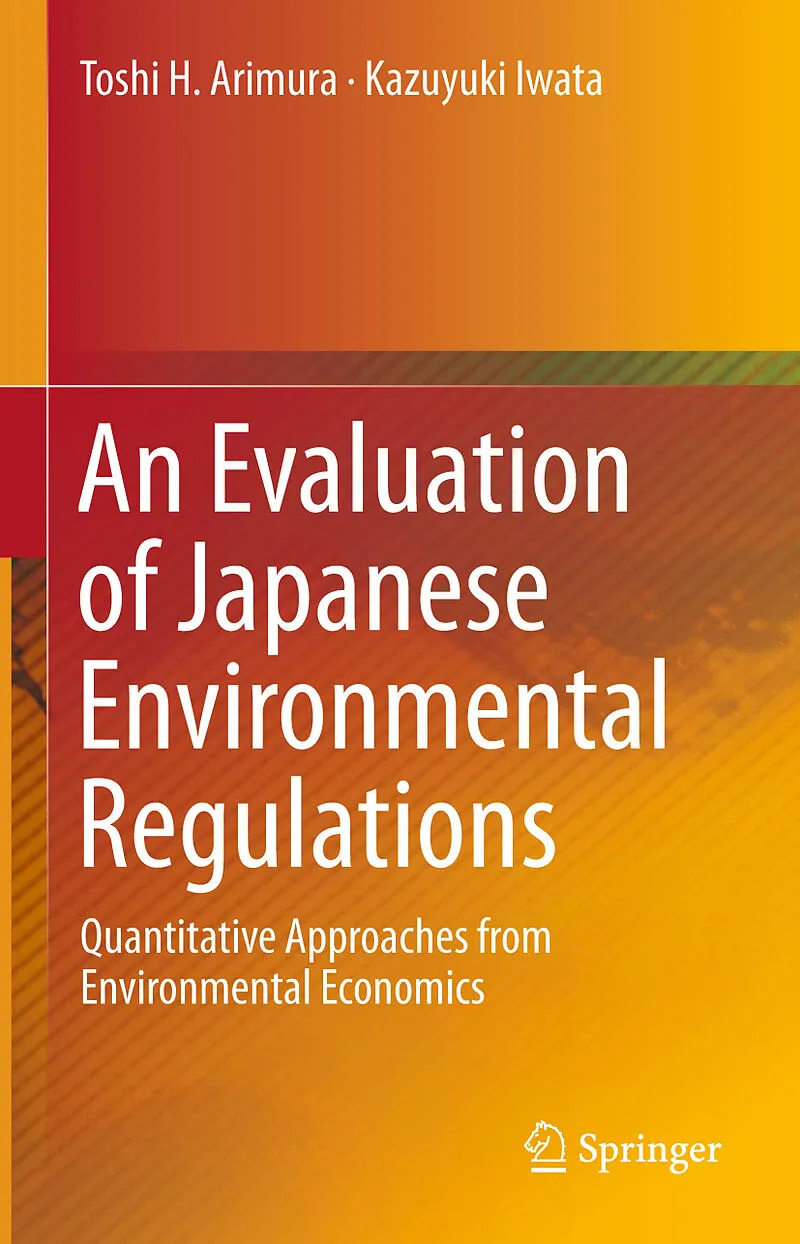
Focusing on air pollution, energy efficiency and climate change, this book provides an introduction to Japan's environmental policies and regulations, and offers economic analyses and RIAs (Regulatory Impact Analysis) of environmental regulations implemented o...Focusing on air pollution, energy efficiency and climate change, this book provides an introduction to Japan's environmental policies and regulations, and offers economic analyses and RIAs (Regulatory Impact Analysis) of environmental regulations implemented or planned by the national and local governments. The opening chapter reviews environmental economics and outlines the current status of RIAs in Japan. Chapter 2 analyzes the NOx-PM Act, which prohibits the use of old and polluting vehicles in metropolitan areas. Chapter 3 examines a Tokyo metropolitan government regulation which requires installation of pollution control equipment in older trucks that fail to meet emission standards. Chapter 4 traces the impact of the NOx-PM Act on the used car market and used vehicle exports. Chapter 5 presents an economic analysis of a highway toll reduction, revealing an unexpected negative social impact: it increased traffic congestion and associated environmental problems. The final three chapters address policies and regulations related to energy efficiency and climate change Chapter 6 evaluates the effectiveness of Japan's Energy Conservation Act, originally introduced in 1979 and amended numerous times to address climate change. Chapter 7 anticipates the impact of a proposed economy-wide carbon tax, using input-output analysis to assess short-term economic impacts in each sector. Also presented here is an examination of the effectiveness of a reduced carbon tax for energy-intensive industries, with a discussion of the impact of the proposal on households. The final chapter discusses the role and limitations of economic models for evaluating Japan's mid-term GHG (Greenhouse Gas) emission target during the post-Kyoto period. This is the first book to evaluate Japanese environmental policies from an economic perspective, using a variety of current quantitative approaches. Its findings and suggestions will benefit students, policy makers and government officialsin developing and developed countries where the public faces similar environmental problems.
The first book to offer quantitative policy evaluations of Japanese environmental regulations Covers air pollution, energy efficiency and climate change policies, taking an economic approach using a variety of evaluation methods Benefits students, researchers, policy makers and government officials, especially in developing countries
Autorentext
Dr. Toshi H. Arimura is a professor of Political Science and Economics and Director of the Research Institute for Environment Economics and Management at Waseda University in Tokyo. Prior to joining Waseda, he was a professor at Sophia University in Tokyo and was a visiting scholar with George Mason University and Resources for the Future as a recipient of the Abe Fellowship. His research interests include climate change, energy policies, air pollution regulations, and voluntary environmental actions. Dr. Arimura holds a Ph.D. in economics from the University of Minnesota, an M.Sc. in environmental sciences from the University of Tsukuba, and a B.A. in history of science from the University of Tokyo. He has served on a number of Japanese government committees on environmental issues including the committees on carbon pricing (2018) of the environmental council under Ministry of the Environment and on GX-ETS (2022) under Ministry of Economy Trade and Industry. He is currently a visiting Scholar to Paris School of Economics and Sciences Po. Dr. Akira Hibiki is a professor at Graduate School of Economics and Management and a director at Research Center for Policy Design at Tohoku University. He also serves as a head of a Research Group at National Institute for Environmental Studies and a consulting fellow at Research Institute of Economy, Trade, and Industry (RIETI). Prior to joining Tohoku University, he was a professor at Sophia University, a head of Environmental Economics Section at National Institute for Environmental Studies, and an associate professor at the Tokyo Institute of Technology in Japan. He also served as a president of Society for Environmental Economics and Policy Studies in Japan (2018-2020). His research centers on topics related to environmental and resource economics.
Inhalt