Haben Sie noch nichts passendes gefunden? Stöbern Sie durch unser komplettes Sortiment.
Oder melden Sie sich an bzw. registrieren Sie sich.


Beschreibung
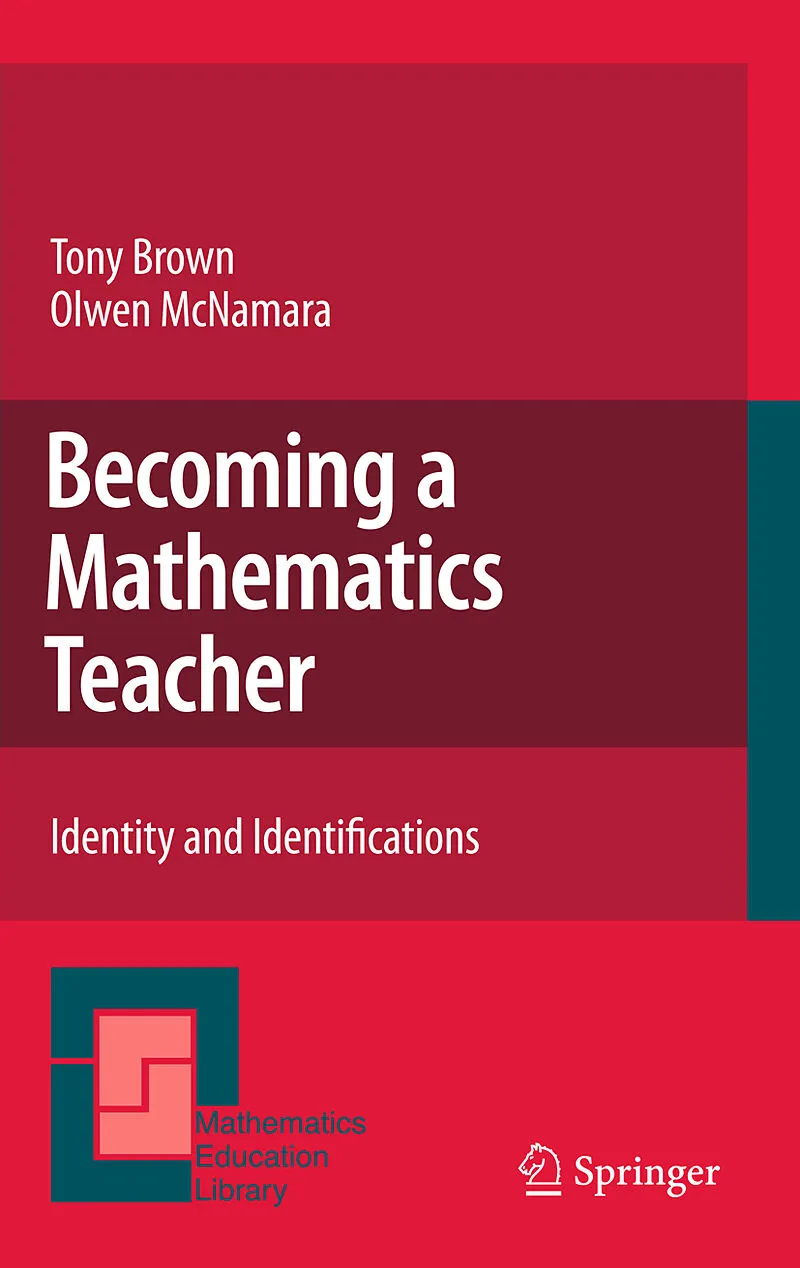
This book focuses on how major curriculum reform shapes mathematics in schools and the practice of mathematics teachers. It details in real time the complete life span of the implementation of a major government numeracy programme and its effect on teachers. T...This book focuses on how major curriculum reform shapes mathematics in schools and the practice of mathematics teachers. It details in real time the complete life span of the implementation of a major government numeracy programme and its effect on teachers.
The book is centered on how major curriculum reform shapes mathematics and the professional practices of teachers. This book documents in real time the implementation of a major government numeracy programme and its receipt by trainee and new teachers. It documents the complete life span of that initiative. The account is targeted at an international readership in terms of how curriculum reform more generally shapes mathematics in schools and the practices of teachers. A key dimension of the book is an alternative view of mathematics education research in which the task of teacher development is understood at policy level where large numbers of teachers were interviewed to assess how policies were being processed through individuals. The book provides an easy and accessible commentary utilising contemporary theory to describe how such teachers reconcile their personal aspirations with the external demands they encounter in negotiating their identities as professional teachers.
Offers a radically new approach to understanding and tackling teacher development in mathematics Focuses on two core themes: teacher professional identity and the social shaping of mathematics in school contexts Shows how recent advances in psychoanalytic and post-structuralist theory enable a fresh approach to analyzing teacher experience of, and response to, policy implementation
Autorentext
Originally from London, Tony Brown was educated in Canterbury and Exeter, before moving to Holland Park School in central London where he taught mathematics for three years. This was followed by three years as a mathematics teacher educator for Volunteer Services Overseas in Dominica in the Caribbean. In 1987 he completed his PhD at Southampton University. His doctoral research focused on language usage in mathematics classrooms, especially where the fluent use of English could not be assumed. After a spell as a mathematics coordinator in a middle school on the Isle of Wight, Tony moved to Manchester Metropolitan University in 1989. Tony has been the leader for doctoral studies in education as well as participating in a range of other courses and became Professor of Mathematics Education in 2000. Projects have included: Economic and Social Research Council funded studies examining teacher education; piloting a distance-teaching programme enabling British volunteers based in Africa to research their own teaching practice within a programme of professional development; and, a General Medical Council funded project on how senior doctors learn. Tony also spent two years on leave from Manchester at the University of Waikato where he became the first Professor of Mathematics Education in New Zealand. There he led a project funded by the New Zealand Council for Educational Research on the experiences of Pasifika teachers working in New Zealand schools. Tony has published two other books in the Mathematics Education Library series. Mathematics education and language outlines his interest in mathematics in schools. Becoming a mathematics teacher (with Olwen McNamara) considers the formation of practices of new primary school teachers. Meanwhile, Action research and postmodernism (with Liz Jones) provides a theoretical perspective on teachers carrying out practitioner research within higher degrees. Regulativediscourses in education (with Dennis Atkinson and Janice England) considers teacher practices through psychoanalytic theory. The psychology of mathematics education, edited by Tony, introduces psychoanalytic theory as an alternative to more cognitive understandings of psychology. Tony has also written extensively in journals such as Educational Studies in Mathematics, for the learning of mathematics and the British Educational Research Journal.
Klappentext
This book is about people preparing to teach mathematics to children in the first half of their schooling. It is also about what mathematics becomes in a school context responding to insistent demands to raise standards. The book asks how aspirant teachers begin to think of themselves as teachers, and about mathematics in particular, when they have many years of experience as pupils in school behind them, which did not always leave a positive image of mathematics. How do they change how they are, or even who they are, as they proceed through a teacher education programme into their first teaching post, where mathematics is just one of many subjects to be taught? They will encounter diverse and complex social demands that cannot necessarily be reconciled, since the work of schools is targeted at enabling pupils to participate in a rapidly changing world where consensus on educational objectives seems difficult to achieve. Conflicting priorities can result in teachers being pulled in many directions, where their personal aspirations confront an official story that portrays the journey into teaching as a sequence of criteria to be fulfilled. Centred on over 200 hours of interview data from government-funded studies directed by the authors the book documents teachers over a five-year period, from the outset of their training to the end of their first year of teaching in a school. These interviews coincided with a major national curriculum initiative that through prescriptive and detailed regulation set the characteristics of a good teacher and the content of mathematics to be taught. Aimed primarily at teacher educators the book will also appeal to researchers across the field of education for its unique theoretical perspective drawing on contemporary psychoanalytical theory in portraying the identities that teachers come to occupy, and the forms of mathematics with which they identify. It also presents avivid account of what educational policy implementation looks like through the voices of teachers building their practices.
Inhalt
About the authors.- Acknowledgements.- 1. Introduction.- 2. Mathematics Teaching and Identity.- 2.1 Introduction**.-** 2.2 Hermeneutics To Psychoanalysis.- 2.3 Personal Aspirations Meet External Demands.- 3. How Teachers Learn: a Review of Research.- 3.1 Introduction.- 3.2 The Transition From Scholar To Authority.- 3.3 Conclusion.- 4. Becoming a Teacher: an English Case Study.- 4.1 Introduction.- 4.2 The Initial Teacher Education Reform Agenda.- 4.3 The School Context: The Rise and Fall of the Strategies.- 4.4 The Empirical Study.- 4.5 Conclusion.- 5 Theorising Teacher Identity.- 5.1 Analytical Strategies.- 5.2 Technologies of the Self.- 5.3 Regulating Consensus.- 6 The Shaping of School Mathematics.- 6.1 Introduction.- 6.2 The Social Framing of School Mathematics.- 6.3 The Secret of the Forms of School Mathematics.- 6.4 Conclusion.- 7 Implications for Practice.- 7.1 Introduction.- 7.2 Implications for Teacher Development.- 7.3 The Future of School Mathematics.- 7.4 The Research and Policy Environment.-References.- Index.
Tief- preis