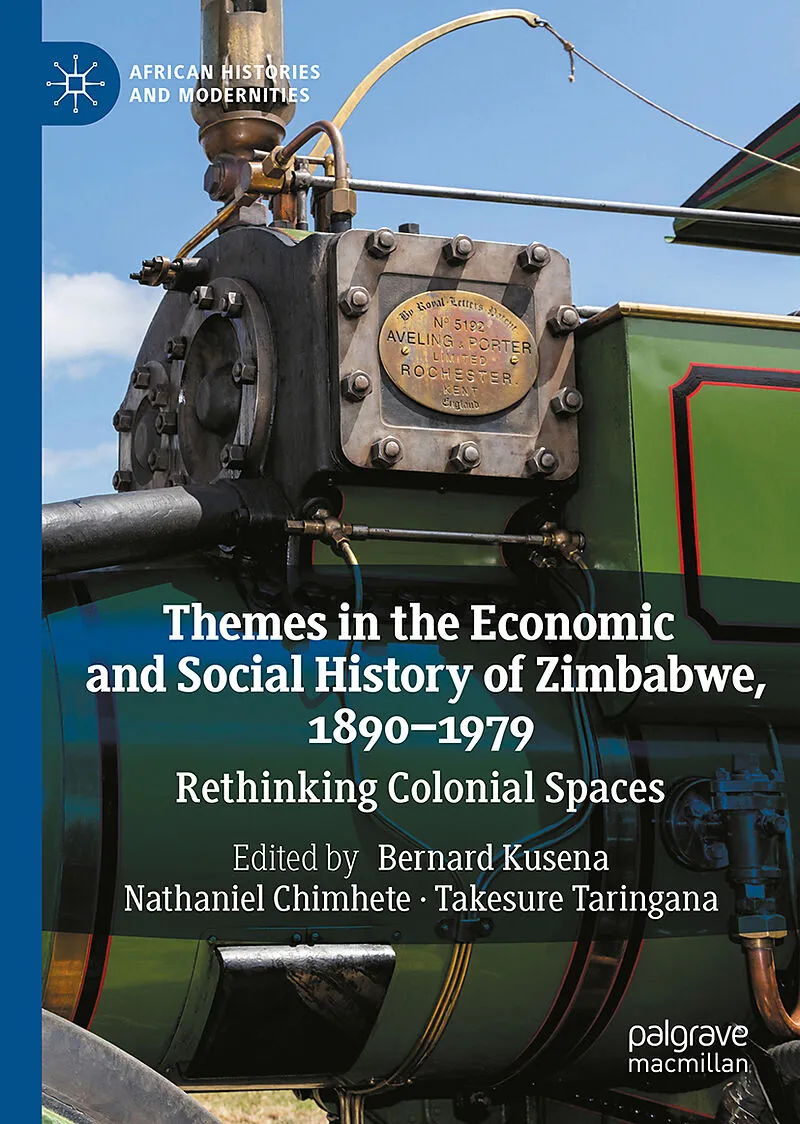
Themes in the Economic and Social History of Zimbabwe, 1890-1979
Beschreibung
This book captures Zimbabwe's economic and social history with a focus on the various colonial categories as they interacted and unfolded. It analyses the complex histories of colonialism by illustrating the points of intersection in and interaction of the va...
Format auswählen
- Fester EinbandCHF 156.40

Wird oft zusammen gekauft
Andere Kunden kauften auch
Beschreibung
This book captures Zimbabwe's economic and social history with a focus on the various colonial categories as they interacted and unfolded. It analyses the complex histories of colonialism by illustrating the points of intersection in and interaction of the various aspects of colonialism. Chapters within the book demonstrate how various aspects of colonial society environmental, ideological, and economic related to each other.
This book departs from earlier similar publications in how various themes or elements in society were interwoven. Existing titles in this area tend to isolate a single theme, such as environmental or women's history, from other categories. In reality, colonial spaces, however, did not exist in isolation. The social, economic, political, ideological and environmental factors, for instance, were intricately interconnected. The book includes topics such as health infrastructure and urbanization in Southern Rhodesia, encounters between plastic manufacturing industries and the Customs Union, the development and maintenance of Rhodesia's road infrastructure, livestock diseases, the conversion of indigenous lands into wildlife sanctuaries, and the brutalization of workers.
Presents a compelling analysis of Zimbabwe's social history Demonstrates various aspects of colonial society and how they related to one another Includes chapters written by leading experts in the topics presented
Autorentext
An economic historian of Africa and empire, Dr. Bernard Kusena is a Research Fellow with the University of the Free State, South Africa, in the Department of History. His research interests are in the areas of food security, rural development and the intersection of law with the broader fields of identity and belonging. He holds a PhD (History) (Rhodes), an MA (African Economic History), LLM (International Law), BA (Hons) (Economic History), LLB (Hons), Dip. Ed., and Certificate in Monitoring and Evaluation, all from the University of Zimbabwe).
Dr. Nathaniel Chimhete is a Senior Lecturer in Economic History in the Department of History Heritage and Knowledge Systems at the University of Zimbabwe. His area of specialty is mining, environmental, and urban history. He has published extensively in these areas. He holds a PhD (History) (IOWA, USA), MA (African Economic History) (University of Zimbabwe), BA (Hons) (University of Zimbabwe, and a Diploma in Education (University of Zimbabwe).
Dr. Takesure Taringana is an economic history and lecturer in the Department of History Heritage and Knowledge Systems at the University of Zimbabwe. Takesure has a sharp interest in conversations on agricultural commodities production and economic development in Africa as informed by an increasingly globalising world. In particular, he engages debates on peasant flexibilities, and the opportunities and risks offered by globalisation in African agrarian development trajectory. Among his publications is The Global Coffee Paradox and Coffee Marketing in Zimbabwe; 1980-2015.
Inhalt
Part 1: Agriculture, Mining, Manufacturing and Infrastructure Development.- Chapter 1. Public Health Infrastructure and Urbanisation: The Case of Bulawayo Memorial Hospital, Southern Rhodesia, 1895-1930 (Tinashe Tsara and Bernard Kusena).- Chapter 2. The Impact of Sanctions on Rhodesia's Coffee Industry, 1965-1980 (Takesure Taringana).- Chapter 3. Trade Conflicts: The Encounters between Plastic Manufacturing Industries and the Customs Union in Rhodesia, 1948-1954 (Simbai Mutimbanyoka and Eric Makombe).- Chapter 4. Turning indigenous lands into wildlife sanctuaries in colonial Zimbabwe: The case of the Gonarezhou Game Reserve of southern Zimbabwe, 1934 to 1980 (Baxter Tavuyanago).- Chapter 5. Livestock Diseases in Southern Rhodesia: Re-examining the Foot and Mouth Disease Outbreaks at Nuanetsi Ranch, 1933-34 (Wesley Mwatwara).- Chapter 6. Water development efforts in ecologically deprived African areas: The Gwaai Reserve during B. S. A. Co. Administration in Southern Rhodesia (Edmore Mufema and Pius Nyambar).- Chapter 7. Native Eating Houses-cum-shebeens and Shebeens that existed Inside Salisbury City Council's Liquor Outlets, 1920s-1980 (Nathaniel Chimhete).- Part 2: Land, Environment, Labour and Gender.- Chapter 8. The Development and Maintenance of Rhodesia's Road Infrastructure, 1965-1979 (Rumbidzai Sonia Muchenu and Bernard Kusena).- Chapter 9. Violence, Coercion and Systematic Impoverishment of an African Proletariat in the Charter District of Southern Rhodesia, 1890-1930 (Davidson Mabweazara Mugodzwa).- Chapter 10. Contested Urban Landscapes: Intra-Settler Conflicts and Planning Debates in 1940s Southern Rhodesia (Tawanda Valentine Chambwe and Eric Kushinga Makombe).- Chapter 11. Language and Colonial Society: A Critical Appraisal of the Historiography of Ndau Grammar and Language (Langton Mutonga and Takesure Taringana).- Chapter 12. The Salisbury Chamber of Commerce, 1894-1953: A History (Mazviita Lovert Makunike and Bernard Kusena).


