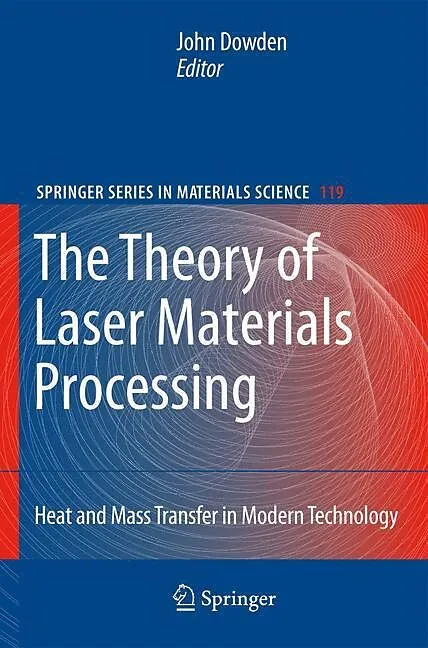
The Theory of Laser Materials Processing
Beschreibung
The purpose of this book is to show how general principles afford insight into laser processes. The principles may be from fundamental physical theory or from direct observation, but understanding of the general characteristics of a process is essential. Theus...Format auswählen
Wird oft zusammen gekauft
Andere Kunden kauften auch
Beschreibung
The purpose of this book is to show how general principles afford insight into laser processes. The principles may be from fundamental physical theory or from direct observation, but understanding of the general characteristics of a process is essential.
Theuseoflasersinmaterialsprocessinghasbecomewidespreadinrecent years,sothatanunderstandingofthenatureofheatandmasstransferin thisbranchofmoderntechnologyisofincreasingimportance. Theaimofthe authorsofthisbookistoconcentrateonthephysicalprocesses;thesecanbe developedfromamathematicalpointofview,orfromdirectexperimental- derivedobservation. Thetwoapproachesarecomplementary;eachcanprovide insightsandthesynthesisofthetwocanleadtoaverypowerfulunderstanding oftheprocessesinvolved. Mathematicalmodellingofphysicalprocesseshas hadanimportantroletoplayinthedevelopmentoftechnologyoverthe centuriesandparticularlysointhelastonehundredand?ftyyearsorso. Itcanbearguedthatitismoreimportanttodaythaneverbeforesincethe availabilityofhigh-speedcomputersallowsaccuratenumericalsimulationof industrialprocessesatafractionofthecostofthecorrespondingexperiments. Thisisoneaspectofmathematicalmodelling,highpro?leandmuchvalued, butitisnottheonlyone. Inthepastmathematicalmodellinghadtorelyonqualitativeinves- gation,veryspecialanalyticalsolutions,orinaccurateandtime-consuming calculationsperformedwithlittleinthewayoftabulatedormechanical assistance. Logtablesandsliderulesarestillrememberedbypeopleworking today,thoughtherearesurelyfewwhoregrettheirdisappearance. Thevalueanddistinctivefunctionofmethodsbasedontheanalytical approachisnowbecomingmuchclearer,nowthattheyarenolongerexpected toproducedetailedimitationsofwhathappensinrealexperimentsofind- trialprocesses,afunctionnowful?lledmostlybynumericalmethods,c- sideredbelow. Theemphasistodayisontheirabilitytocon?rmandextend ourunderstandingofthebasicphysicalmechanismsinvolvedintheprocesses of interest. These are essential for any intelligent use of numerical simulation. Theargumentaboutthevalueofteachingpeoplehowtodoarithmetic themselveswithouttheaidofacalculatorseemstobepassingintohistory, vi Preface butitisanimportantoneandprovidesasimpleanalogy. Ifsomeonedoes nothaveafeelingfornumbersandthewayarithmeticworks,theywillalltoo easilyfailtospotanerrorproducedbyamachine. Computersarenotinfallible andneitherarethosewhobuildorprogramthem. Computersarenow takingonlessmundanemathematicaltasksandthesamecontroversiesare appearinginconnectionwithalgebraicmanipulation. Equally,andwitheven greaterpenaltiesintermsofcostintheeventoferrors,thesameconsiderations applytonumericalsimulationofmajorindustrialprocesses. Awarenessofthe analyticalsolutionscanbeinvaluableindistinguishingtherightfromthe wrong,i. e. forthepractitionertounderstandthebasisofthework,andto haveanideaofthekindsofoutcomesthatareplausible andtorecognise thosewhicharenot. Thephrase mathematicalmodelling is,however,ambiguous,perhaps morenowthanithaseverbeen. Thereisanenormousamountofworkdone todayonsimulationbasedontheuseofverypowerfulcomputerprograms, anditisquitecorrectlyreferredtoasmathematicalmodelling. Theprograms aresometimesconstructedin-housebutareusuallycommercialpackages. This isanentirelyvalidapproachwithspeci?c(generallycommercial)objectives. Ingeneraltherearetwouses. Thedominantobjectiveisnumericalagreement withaparticularexperimentinthe?rstinstance,leadingtopredictivec- mercialuseinthesecondinstance. Thesecondobjectiveistheclari?cation ofphysicalmechanisms,aimedatthegenerationofunderstandingofcomplex interconnectedprocesses,ratherthantheexactreproductionofaparticular experiment. Itissometimesoverlookedthat,withsu?cientcare,anum- icalapproachisequallyvalidintheinvestigationofphysicalfundamentals. Numericalsimulationisnotacentraltopicofthisbook,butbecauseofits crucialimportancetoeachofthetwousestowhichnumericalmodellingcan beput,itisvitalthatthecomputationalbasisoftheworkshouldbec- pletelysound. Inaddition,thelevelofprocessdetailwhichcanbeconsidered bythenumericalapproachusuallyexceedswhatispossiblewiththeanaly- calapproachsigni?cantly,leavinglittlechoicebuttoreverttothenumerical treatmentwheninvestigatingtheinterconnectionsbetweenprocesses. Itis forthesereasonsthatthebookconcludeswithachapteroncomprehensive numericalsimulation. Inmanyways,theappr
Klappentext
The purpose of the book is to show how general principles can be used to obtain insight into laser processes. The principles used may come from fundamental physical theory or from direct observation of experimental results, but understanding of the general characteristics of the behaviour of a process is essential for intelligent investigation and implementation, whether the approach is experimental, observational, numerical or analytical. The last two have a special value since the associated costs can be relatively low and may be used as a starting point for more expensive techniques. The construction of simple models whose underlying principles are easy to see is therefore of special value, and an understanding of their strengths and limitations is essential. The applications considered in detail are cutting, keyhole welding, drilling, arc and hybrid laser-arc welding, hardening, cladding, forming and cutting, but the general principles have a very wide application; metallurgical aspects are considered, as are femtosecond interactions with metals. The book begins with a discussion of the mathematical formulation of some relevant classes of physical ideas, and ends with an introduction to comprehensive numerical simulation. Although all the examples considered have the common feature that the source of power is a laser, many of the principles and methods apply to thermal modelling in a variety of different fields and at many different levels of power.
Inhalt
Mathematics in Laser Processing.- Simulation of Laser Cutting.- Keyhole Welding: The Solid and Liquid Phases.- Laser Keyhole Welding: The Vapour Phase.- Basic Concepts of Laser Drilling.- Arc Welding and Hybrid Laser-Arc Welding.- Metallurgy of Welding and Hardening.- Laser Cladding.- Laser Forming.- Femtosecond Laser Pulse Interactions with Metals.- Comprehensive Numerical Simulation of Laser Materials Processing.