
IHR WARENKORB IST AKTUELL LEER.
Haben Sie noch nichts passendes gefunden? Stöbern Sie durch unser komplettes Sortiment.
Oder melden Sie sich an bzw. registrieren Sie sich.
- Kostenlose Lieferung
- Kauf auf Rechnung
- Ex Libris Tiefpreis
- Filiallieferung und 650+ Abholorte
- Rabatt-Bons als Club-Mitglied
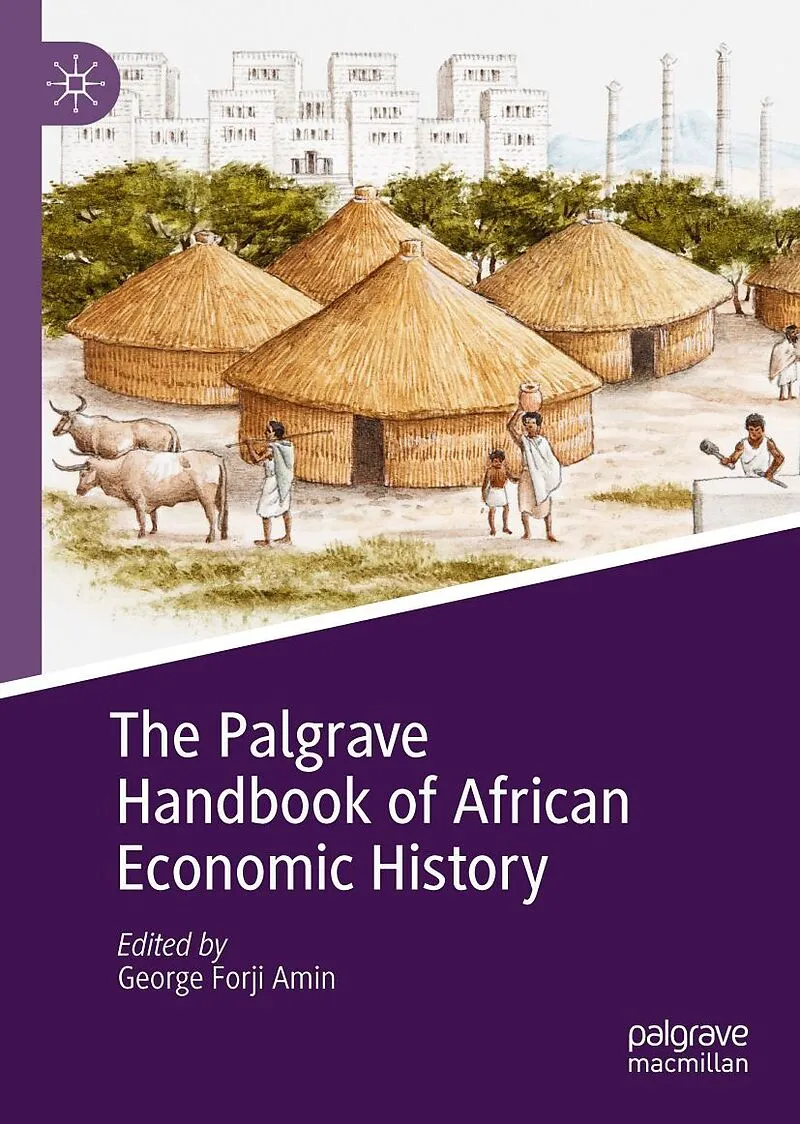
The Palgrave Handbook of African Economic History
Beschreibung
This handbook offers one of the most comprehensive examinations of African economic history to date, bringing together leading scholars on the subject from across the world to explore the continent's economic development from precolonial societies to the twen...
Format auswählen
- Fester EinbandCHF 257.60

Wird oft zusammen gekauft
Andere Kunden kauften auch
Beschreibung
This handbook offers one of the most comprehensive examinations of African economic history to date, bringing together leading scholars on the subject from across the world to explore the continent's economic development from precolonial societies to the twenty-first century. Spanning diverse historical periods, geographical regions, and methodological approaches, it provides an interdisciplinary analysis of the institutions, ideas, and historical processes that have shaped Africa's economic trajectories.
The volume examines the evolution of African economies from indigenous commercial systems and state formations through the transatlantic and Indian Ocean slave trades, colonialism, decolonisation, postcolonial development, and contemporary globalisation. It also explores themes including industrialisation, labour, urbanisation, ecology, migration, gender, natural resources, agriculture, informal sectors, finance, environmental change, technological innovation, and regional economic integration.
Addressing longstanding gaps within the literature, the Handbook challenges conventional narratives by foregrounding African agency, indigenous institutions, systems of resistance, and locally generated economic innovations. By situating African economic history within broader global historical processes, it offers an essential reference for scholars and students of economic history, African studies, development studies, international political economy, history, economics, and law.
Presents interdisciplinary contributions that bridge history, economics, law, and political science Strongly emphasizes African agency and perspectives in shaping economic trajectories Of timely relevance to contemporary debates on development, globalization, and economic justice in Africa
Autorentext
George Forji Amin is Senior Lecturer in Law and Course Lead at the School of Law, York St John University, United Kingdom. His research spans Public International Law, International Economic Law, African Economic History, Legal History, African Studies, Political Economy, Human Rights, Third World Approaches to International Law (TWAIL), and International Human Rights Law. His scholarship critically examines the historical foundations and contemporary evolution of international law and global economic governance, with particular emphasis on Africa's place within the international legal and economic order.
He obtained his PhD in Public International Law from the University of Helsinki, Finland, where he also earned an Mphil (Licentiate in Law (LL.Lic.)) **and a Master of Laws (LL.M.) in Public International Law. He additionally holds a Postgraduate Diploma in Law (Maîtrise en Droit) with specialisation in Common Law and a Bachelor of Laws (Licence en Droit) with Distinction from the University of Dschang, Cameroon.
He has held academic appointments at several universities in the United Kingdom and Finland, including York St John University, the University of Greater Manchester, the University of Manchester, Manchester Metropolitan University, Liverpool John Moores University, and the University of Helsinki.
He has published widely on international law, African legal history, international economic law, and global governance. He is the editor of The Palgrave Handbook of African Economic History and is currently leading several major international publishing projects on international economic law and Africa. Alongside his research, he is actively engaged in academic leadership, curriculum development, doctoral supervision, external examining, and the promotion of interdisciplinary scholarship on law, history, and development.
Inhalt
Part I. Theoretical Foundations and Historical Reframing.- Chapter 1. African Economic History: Contesting Myths, Confronting Realities, and Creating Futures (Forji Amin).- Chapter 2. Bantu Movements and Economic Transformations: Mobility, Settlement Patterns, and Resource Economies in African History (Esiobu).- Chapter 3. The Slave Trades out of Africa: Economic Implications for the Continent (Rönnbäck).- Chapter 4. Ecology, Landscape and Slave Economies in Nineteenth and Twentieth-Century Tabora (Nyanto).- Chapter 5. From Precolonial to Colonial Nigeria: Igbo Economic Successes and Challenges in Chinua Achebe's The African Trilogy (Ngulube).- Chapter 6. Idleness as Resistance: Africans Countering the Western Economic Vision in Albert Cossery's Mendiants et orgueilleux (Chouiten).- Part II. Colonial Encounters and Economic Restructuring.- Chapter 7. The African Resistance and the Drive to Preserve Autonomy: Douala, Bangwa, Bafut, Bali and Bakweri Responses to German Colonial Exploitation in Cameroon (18841918) (Nde).- Chapter 8. Control over Care: Colonial Administration's Response to Malaria in Gokwe, North-Western Zimbabwe, 1950s to 1960s (Mudzimu and Nyambara).- Chapter 9. Environmental Injustice: The Role of Industrialised Nations in Exploiting the Global South's Economy, Ecology, and Culture and the Path to Resilient and Inclusive Development (Noor-Us-Saiyem Khan).- Chapter 10. Decolonisation and Economic Transition: The Shift from Colonial to Independent Economic Systems (Macarthy and Alozie).- Chapter 11. A Past Futures Analysis of Nkrumah's Development Plans in Ghana 19511966 (Kwazema).- Chapter 12. From Rwanda to Uganda: Gender, Migration, and Economic Competition amongst Empires (Brunner).- Part III. Indigenous Systems, Informality, and Gendered Economies.- Chapter 13. Wealth without Currency: Indigenous Economic Systems, Social Capital and Post-Genocide Reconstruction in Rwanda (Irechukwu).- Chapter 14. Reimagining Indigenous Enterprise: Agripreneurship, Modernity, and the Igbo Apprenticeship Tradition in South-Eastern Nigeria (Ugochukwu Nzeh).- Chapter 15. The Informal Sector in Nigeria: Historical Continuities, Institutional Adaptations, and Theoretical Perspectives (Uzokwe).- Chapter 16. Narratives from Kenya-Maasai Women on Grassroots Microfinance Activities and Collaborative Learning (Takayanagi).- Chapter 17. Liberia and Sierra Leone: Unique Histories and Economies in African Economic Development (Mara).- Chapter 18. Resource Extraction, Climate Vulnerability, and Economic Development in Africa: A Critical Analysis of International Legal Frameworks (Addaney).- Part IV. Resources, Industry, and Global Economic Order.- Chapter 19. Natural Resources and Development in Africa: Navigating Blessings, Curses, and Governance Challenges (Aniodoh).- Chapter 20. Natural Resources: Blessing or Curse? A Critical Appraisal of the Niger Delta State of Affairs (Onireti).- Chapter 21. The Political Economy of Oil in Nigeria: Colonial Legacies, Structural Adjustment, and the Sino-Nigeria Oil-for-Infrastructure Model (Nwoko).- Chapter 22. Histories of Industrialisation in Africa (Damestoy).- Chapter 23. From Automation to Collaboration: Africa's Digital Journey through Industry 4.0 to 5.0 Technologies (Shonubi).- Chapter 24. Monsoon Commerce: Indian Ocean Trade and the Swahili City-States (Copeland).- PART V: Pan-Africanism, Dependency, and New Directions.- Chapter 25. Contested Visions in Post-Independence Africa: Neocolonial Influence and Pan-African Aspirations within the OAU/AU (Martial).- Chapter 26. La Francafrique and the Political Economy of Resource Dependence in Francophone West Africa (Martial).- Chapter 27. Economic Sovereignty and Solidarity: The New International Economic Order, its Contradictions, and Zaire (Vale).- Chapter 28. China-Africa Economic Relations: History, Opportunities, and Threats (Isah).- Chapter 29. Navigating a Blueprint to Achieving an African Economic Community: Has the Decolonial Legal Approach Succeeded? (Protas, Zundel and Sitati).- Chapter 30. Conflict and the Reshaping of Economic Structures in Mali (Hlasny).- Chapter 31. Revisiting Structural Adjustment Programs: Legacies, Debt Crises, and Economic Sovereignty in Africa (Bechem).- Part VI. Conclusion.- Chapter…