
IHR WARENKORB IST AKTUELL LEER.
Haben Sie noch nichts passendes gefunden? Stöbern Sie durch unser komplettes Sortiment.
Oder melden Sie sich an bzw. registrieren Sie sich.
- Kostenlose Lieferung
- Kauf auf Rechnung
- Ex Libris Tiefpreis
- Filiallieferung und 650+ Abholorte
- Rabatt-Bons als Club-Mitglied
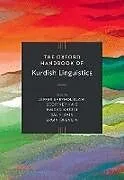
The Oxford Handbook of Kurdish Linguistics
Beschreibung
Autorentext Jaffer Sheyholislami is a Professor in the School of Linguistics and Language Studies at Carleton University, Canada. His research spans applied linguistics, discourse studies, sociolinguistics, and language policy and planning, with a focus on Kur...Format auswählen
- Fester EinbandCHF 211.10

Wird oft zusammen gekauft
Andere Kunden kauften auch
Beschreibung
Autorentext
Jaffer Sheyholislami is a Professor in the School of Linguistics and Language Studies at Carleton University, Canada. His research spans applied linguistics, discourse studies, sociolinguistics, and language policy and planning, with a focus on Kurdish contexts. He authored Kurdish Identity, Discourse, and New Media (2011) and co-edited the first English-language volume on Kurdish sociolinguistics, International Journal of the Sociology of Language, no. 217 (2012). His work appears in leading journals and handbooks, and has been translated into Arabic, Kurdish varieties, Persian, and Turkish. He is a regular contributor to Kurdish publications and conferences. Geoffrey Haig was Professor of Linguistics at the Institute for Oriental Studies, University of Bamberg, until his retirement in 2024. His research combines a regional focus on the languages of Middle East, in particular Kurdish, with theoretical interests in historical linguistics, areal linguistics, language documentation, and spoken-language based approaches to language typology. He has authored and co-edited ten books and numerous articles as well as co-compiling major online-accessible digital resources for language typology. Haidar Khezri is Associate Professor in the Department of Modern Languages & Literatures and an Affiliated Faculty Member of the School of Politics, Security & International Affairs' Kurdish Political Studies Program at the University of Central Florida in Orlando. His research and critical inquiry centre on Middle Eastern comparative literature and postcolonial studies, with a particular emphasis on the Kurdish context. He is the author of Central Kurdish: An Elementary Textbook (2023); It Is Only Sound That Remains (2016); and Comparative Literature in Iran and the Arab World, 1903-2012 (2013). Salih Akin is a Professor of Linguistics at the University of Rouen-Normandy and Deputy Director of the Dylis Research Center. Former Head of the Department of Linguistics (2013-2016), he also serves as Editor-in-Chief of the journal Études kurdes. His research focuses on sociolinguistics, discourse analysis, and onomastics, with particular attention to the Kurdish language and its evolution, standardization, and its linguistic vitality in contexts of language contact both in the diaspora and in Kurdistan. He is the author of Noms et re-noms : la dénomination des personnes, des populations, des langues et des territoires (1999); Lêkolînên Zimannasiya Kurdî (2013), Introduction à la linguistique kurde (2023). He also co-edited Linguistic and Cultural Diversity in Central Anatolia (2024). Ergin Öpengin is an Affiliated Researcher at the Department of Middle Eastern Studies of the University of Cambridge and a Senior Lecturer at the English Language Department of the University of Kurdistan-Hewlêr. He specializes in the structural and sociolinguistic study of Kurdish and the edition of historical Kurdish texts. He co-established the International Conference on Kurdish Linguistics (2012) and served as Associate Editor of the Kurdish Studies Journal (2015-2025). He has authored The Mukri Variety of Central Kurdish (2016), co-edited three volumes, and published a number of articles on various aspects of Kurdish and Iranian languages.
Klappentext
This is an open access title available under the terms of a CC BY-NC-ND 4.0 International license. It is free to read on the Oxford Academic platform and offered as a free PDF download from OUP and selected open access locations. With over 35 million speakers across Kurdistan and in diasporic communities, Kurdish constitutes a significant group within the Iranic languages, and figures in multiple minority-language contexts. The Oxford Handbook of Kurdish Linguistics is the first comprehensive English reference dedicated to the Kurdish language and its scholarly study. It contains twenty-seven chapters written by more than forty experts worldwide, covering major Kurdish dialects, their structural features, and the social, political, and cultural contexts that influence their use and study. The Handbook includes information on the geographic distribution, updated speaker statistics, and revised maps showing Northern (Kurmanji), Central (Sorani), Southern, Laki, Gorani/Hawrami, and Zazaki varieties. The book is organized into five main sections and combines detailed descriptive research, including phonology, morphology, syntax, and historical change, with studies on language contact, standardization, policy, teaching, lexicography, corpus development, mapping, and heritage language preservation. A vital resource for scholars and advanced students in linguistics, Kurdish studies, and Middle Eastern studies, the Handbook serves as both a classroom guide and a reference for researchers, policymakers, and cultural practitioners seeking a comprehensive, current overview of Kurdish language research.
Inhalt
- Chapter 1: Introduction: Kurdish and its representation in this volume
- Jaffer Sheyholislami, Geoffrey Haig, Haidar Khezri, Salih Akin, and Ergin Öpengin
- Part I: VARIETIES OF KURDISH
- Chapter 2: Northern Kurdish
- Ergin Öpengin and Geoffrey Haig
- Chapter 3: Central Kurdish
- Ergin Öpengin
- Chapter 4: Southern Kurdish
- Masoud Mohammadirad and Gholamhossein Karimi-Doostan
- Chapter 5: Gorani
- Parvin Mahmoudveysi and Denise Bailey
- Chapter 6: Zazaki
- Mahir Dogan and Ludwig Paul
- Chapter 7: Laki
- Sara Belelli
- Part II: COMPARATIVE KURDISH PHONOLOGY AND MORPHO-SYNTAX
- Chapter 8: Phonology of Kurdish: Comparative overview and theoretical issues
- Erik Anonby and Ergin Öpengin
- Chapter 9: Bound argument ordering across Central Kurdish and the Gorani substrate
- Masoud Mohammadirad
- Chapter 10: The so-called absolute prepositions in Central Kurdish
- Shuan Osman Karim
- Chapter 11: A formal introduction to verbal morphology of Central Kurdish
- Sina Ahmadi and Geoffrey Haig
- Chapter 12: Historical Kurdish phonology and morphology
- Ludwig Paul
- Chapter 13: Complex predicates in Kurdish revisited
- Songül Gündogdu
- Chapter 14: Language contact in Kurdish
- Yaron Matras
- Part III: SOCIOLINGUISTICS
- Chapter 15: Mapping Kurdish
- Erik Anonby and Jaffer Sheyholislami
- Chapter 16: Standardisation of Northern Kurdish
- Salih Akin
- Chapter 17: Dynamics of standardization and variation in Kurdistan Region-Iraq
- Michiel Leezenberg
- Chapter 18: Kurdish language policy and Language Rights in Kurdistan
- Jaffer Sheyholislami and Salih Akin
- Chapter 19: Articulating Kurdish identity through Kurdish: Roots, outcomes, and possibilities for unification
- Anne Schluter
- Part IV: APPLIED LINGUISTICS
- Chapter 20: Teaching and learning Kurdish in Kurdistan: Achievements and Challenges
- Sehmus Kurt, Hewa Salam Khalid, Rahim Surkhi, Yasin Duman, Adel Mohammedi, and Elizabeth Sabbagh
- Chapter 21: Lexicography in Kurdish
- Behrooz Chamanara, Michael L. Chyet, and Zaniar Naghshbandi
- Chapter 22: Corpus linguistics of Kurdish
- Hossein Hassani
- Chapter 23: Kurdish as a Heritage Language: Challenges and Achievements
- Amir Sharifi, Nubin Ciziri, Birgul Yilmaz, M. Serif Derince, Zuzan Barwari, Haidar Khezri, and Jaffer Sheyholislami
- Chapter 24: The acquisition of Kurdish in multilingual contexts
- Katharina Brizic, M. Serif Derince, Kateryna Iefremenko, Yasar Kirgiz, Yazgül Simsek, and Christoph Schroeder
- Part V: Kurdish in Arts and Literature
- Chapter 25: The influence of written prose on Kurdish
- Haidar Khezri
- Chapter 26: Kurdish oral tradition: Transmission, endangerment, and survival
- Christine Robins
- Chapter 27: Kurdish Language and music
- Estelle Amy de la Bretèque