Beschreibung
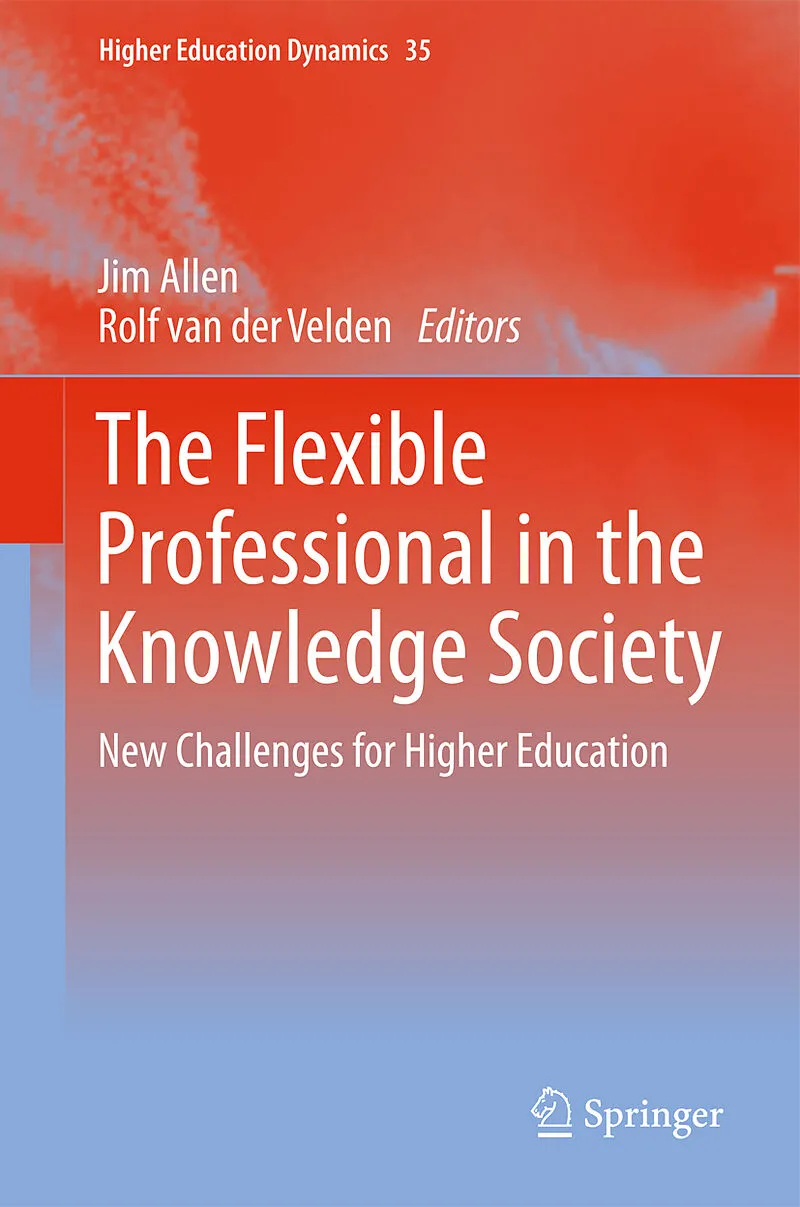
Presenting the results and policy implications of a huge research project that consulted 70,000 European graduates of higher education, this report on the REFLEX project assesses how suited today's graduates are to the imperatives of a 'knowledge&apo...Presenting the results and policy implications of a huge research project that consulted 70,000 European graduates of higher education, this report on the REFLEX project assesses how suited today's graduates are to the imperatives of a 'knowledge' economy.
Higher education policy has increasingly gained a European dimension, with its own distinct influence over national education policies. Against this background, a major project was launched, the REFLEX project, which aims to make a contribution to assessing the demands that the modern knowledge society places on higher education graduates, and the degree to which higher education institutions in Europe are up to the task of equipping graduates with the competencies needed to meet these demands. The project also looks at how the demands, and graduates' ability to realise them, is influenced by the way in which work is organised in firms and organisations. The REFLEX project has been carried out in sixteen different countries and consisted of a large scale survey among some 70.000 graduates. This report presents the major findings and draws important policy implications.
More actual information on higher education and work than any other data set at present Indispensable for policy makers who want to learn how higher education should prepare for the knowledge society Helps graduates prepare for the world of tomorrow
Klappentext
This volume presents in detail the results, and policy implications, of a crucial project that aims to help shape the future for millions of Europeans. Higher education policy has increasingly gained a supranational dimension in Europe, with a federalist perspective boasting growing influence over national education policies. Given the vital links between the framework of higher education and the economy, this comes as no surprise in a Europe of coalescing financial interests. Against this background a large-scale research project was launched to assess the demands made by a modern 'knowledge' society on graduates of higher education. Called the REFLEX Project, it also aimed to establish the degree to which Europe's higher education institutions are up to the task of equipping graduates with the skills to meet these demands. Rather than focus solely on tertiary education institutions, the REFLEX Project also sought to analyze how the requirements of the wider economyas well as graduates' ability to fulfil themare in turn influenced by the way in which the process of work is organized in institutions of employment.
It was a huge project undertaken across 16 nations, featuring a survey of Europe-wide proportionswith some 70,000 graduate respondees. In addition to setting out the findings of the survey, whose content constitutes the largest data set of any comparable undertaking, this in-depth report uses these results to infer vital matters of policy that will need to be assimilated by those individuals and social institutions which help fashion tomorrow's education paradigmincluding graduates and prospective undergraduates. Whether consulted as a source of raw data or read as an influential intervention in the debate over education, this report deserves the widestpossible readership.
Inhalt
Acknowledgements.- Editors.- Contributors.- Management summary.- 1. Introduction; Jim Allen and Rolf van der Velden 1.1 The policy context 1.2 The REFLEX project 1.3 Trends and demands 1.4 Methods and data 1.5 Structure of the report References Appendix 1.1 First and second level programmes per country. 2. The Flexible Professional in the Knowledge Society; Rolf van der Velden and Jim Allen 2.1 Introduction 2.2 The demands from the world of work 2.3 On the role of higher education in preparing graduates for the labour market 2.4 The effects of programme characteristics on competences 2.5 Does higher education provide a good basis to enter the labour market? 2.6 ConclusionsReferences.- 3. The Professional Work of Graduates; Harald Schomburg 3.1 What makes a profession? 3.2 Who is working as a professional? 3.3 The role of professional knowledge 3.4 Professional role and professional identity 3.5 Professions and power 3.6 Discussion of results References Appendix 3.1 Mapping of 3-digit ISCO occupational codes to typology of professions.- 4. Being Flexible: Graduates Facing Changes in Their Work Environment; Julien Calmand, Michela Frontini and Michele Rostan_ 4.1 The changing work environment of European graduates 4.2 Outline of the chapter 4.3 Changes in graduates' work and employment situation 4.4 Employment mobility in graduates' early career 4.5 The impact of employment mobility on graduates' competences 4.6 Employment mobility as a way to get a good job 4.7 Graduates facing temporary work 4.8 Functional flexibility in graduate employment and work 4.9 Functional flexibility, competences, and higher education 4.10 Conclusions: two different ways of being flexible References.- 5. The Graduates in the Knowledge and Innovation Society; Jean-Jacques Paul_ 5.1 Introduction 5.2 Some conceptual elements about innovation 5.3 What organisations are likely to be moreinnovative? 5.4 The place and the role of graduates regarding innovation 5.5 Are graduates equipped for innovation? 5.6 Innovation, occupations and rewards 5.7 ConclusionsReferencesAppendix 5.1 To what extent innovative activities are related to a specific working environment?.- 6. Mobilization of Human Resources; Jim Allen 6.1 Clarifying concepts 6.2 Mobilization of human resources during higher education 6.3 Higher education as producer of mobilization competences 6.4 Mobilization of human resources after higher education 6.5 Determinants of utilization of own capacities 6.6 Determinants of mobilization of others' capacities 6.7 ConclusionsReferences.- 7. International Dimensions of Higher Education and Graduate Employment; Ulrich Teichler 7.1 The growing relevance of international dimensions 7.2 International mobility 7.3 The impact of international mobility on employment and work 7.4 Foreign language proficiency 7.5 Internationally mobile careers compared to home careers 7.6 Concluding observations References.- 8. Winners and Losers; Liv Anne Støren and Clara Åse Arnesen 8.1 Introduction 8.2 Labour market situation match or mismatch 8.3 Wages 8.4 Work orientations 8.5 Job satisfaction8.6 Summary and conclusions References Appendix 8.1 Definition of mismatch Appendix 8.2 The effect on wages of gender, grades, level of education, field of study, mismatch and type of job contract Appendix 8.3 Definition of winners and losers according to the graduates' response to the questions on work values and job characteristics (realization of work values).- 9. Conclusions and policy implications; *Rolf van der Velden and Jim Allen* 9.1 General conclusions_ 9.2 Policy implications.- Index.
Tief- preis