Beschreibung
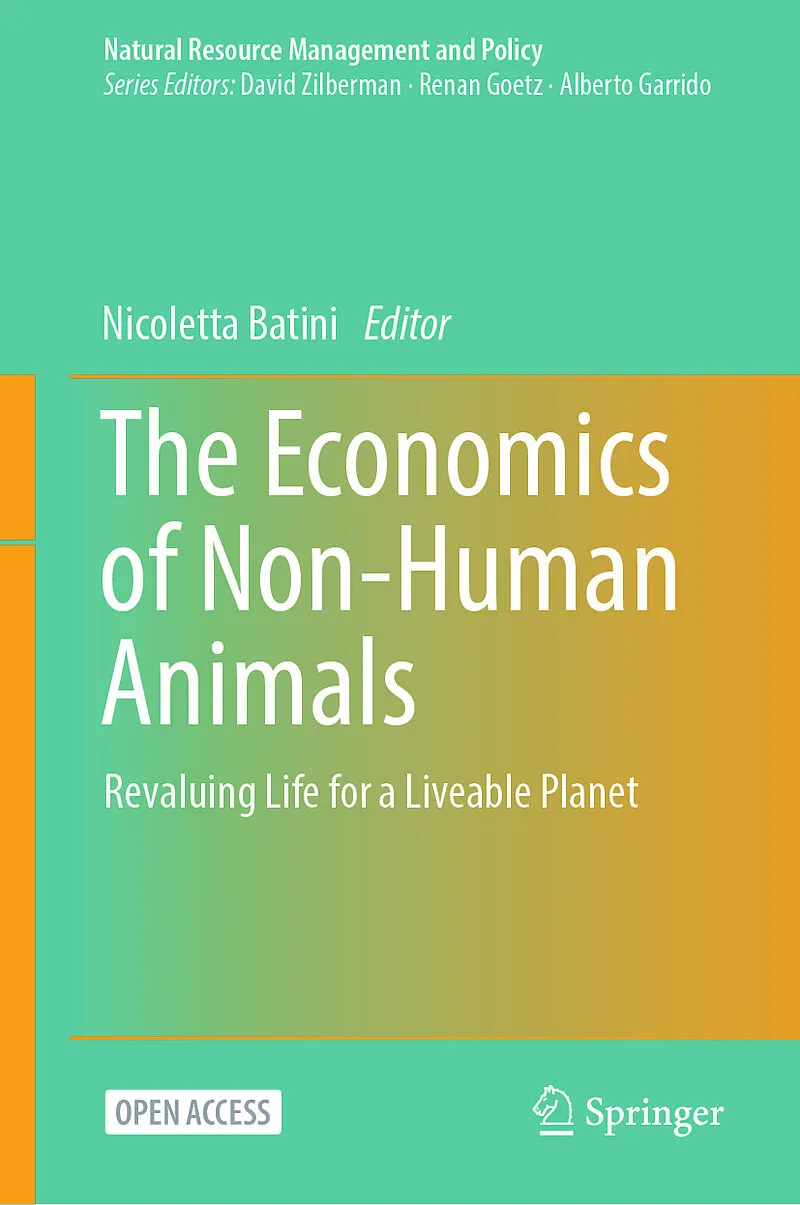
This Open Access volume sheds light on the economic role and true value of non-human animals' in the global economy. Animals have been a pillar of human prosperity since the dawn of civilization. From early hunting and domestication to their roles in agricult...
This Open Access volume sheds light on the economic role and true value of non-human animals' in the global economy. Animals have been a pillar of human prosperity since the dawn of civilization. From early hunting and domestication to their roles in agriculture, science, transportation, wars, and entertainment, animals have shaped our world. Today, their contributions span from providing food and energy to supporting ecosystem services like pollination and pest control.
But animals are more than commoditiesthey are indispensable economic agents whose labor and agency have shaped the very foundations of our economic systems. This book honors their lives and contributions, and calls for a reassessment of their full worth: economically, ecologically, and ethically. Documenting how animals remain overlooked in economic studies, this book addresses this gap, by exploring their contributions in today's economies, reassessing their true economic value, and proposing innovative ways to reflect this in economic decision-making. Covering all sectors of human-animal economic interaction, this comprehensive volume connects economics with other disciplines, applying frontier research on the valuation of nature to non-human animals.
The book also explores economic policy and regulatory solutions to help recognize animal agency and ecological interdependence, presenting examples of how more humane, animal-free systems can reduce inefficiencies, spark innovation, and enhance both ecological and economic resilience. Essential for understanding our past and future, this book highlights the indispensable role of animals in a sustainable economy. It will appeal to scholars, students, and researchers of economics and across other disciplines, as well as to policy-makers interested in a better understanding of the role of natural capital in economies and, specifically, the value and contributions of non-human animals to economic growth and stability.
This book is open access, which means that you have free and unlimited access Reassesses the true economic value of non-human animals in human societies and economic systems Bridges the gap between economics and other fields to enhance understanding of human-non-human animal interactions Presents innovative policy solutions to maximize animal welfare and sustainability in economic planning
Autorentext
Nicoletta Batini is an Italian economist known for her work on innovative monetary and fiscal policies. She has been with the IMF since 2003 and served as a Research Advisor to the Bank of England (1997-2003) and Professor at the University of Surrey, UK (2007-2012). She was Director at Italy’s Treasury (2013-2015), representing Italy at the G-20 and OECD, and Senior Adviser to Sveriges Riksbank (2023-2025). Currently, she is the Lead Evaluator of the Independent Evaluation Office at the IMF and. Batini holds Ph.D.s from Scuola Superiore S. Anna, Italy, and Oxford University, UK. She has edited and in part co-authored "The Economics of Sustainable Food: Smart Policies for Health and Planet" and has been advisor of the IUCN between 2020-2022. Her expertise includes monetary policy, public finance, and environmental economics.
Inhalt
Part I: Our Economic Symbiosis With Other Animal Species.- Chapter 1. Human and Non-Human Animals: A Complex Relationship.- Chapter 2. Economic Speciesism.- Chapter 3. The Impact of Thriving Animal Populations on Today's Economies.- Chapter 4. Animal Welfare Is Human Economic Welfare.- Chapter 5. The Value of Non-Human Animals' Life.- Part II: Predatory Interactions.- Chapter 6. Animals as Food.- Chapter 7. Animals for Recreational Hunting.- Chapter 8. Animals for Recreational Fishing.- Chapter 9. Animals for Trophy Angling.- Chapter 10. Animals for Trophy Hunting.- Chapter 11. Animals as Fashion.- Chapter 12. Animals for Medical Experiments.- Chapter 13. Animals as Vehicles of Gene Drives.- Part III: Parasitic Interactions.- Chapter 14. Animals in Sports.- Chapter 15. Animals in Entertainment.- Chapter 16. Animals for Assistance to Humans.- Chapter 17. Animals for Traction and Transport.- Part IV: Commensalistic and Mutualistic Interactions.- Chapter 18. Animals and Tourism.- Chapter 19. Animals and Ecosystem Services.- Chapter 20. Animals as Pets.- Chapter 21. Reimagining Economics With Non-Human Animals at the Center.