
IHR WARENKORB IST AKTUELL LEER.
Haben Sie noch nichts passendes gefunden? Stöbern Sie durch unser komplettes Sortiment.
Oder melden Sie sich an bzw. registrieren Sie sich.
- Kostenlose Lieferung
- Kauf auf Rechnung
- Ex Libris Tiefpreis
- Filiallieferung und 650+ Abholorte
- Rabatt-Bons als Club-Mitglied
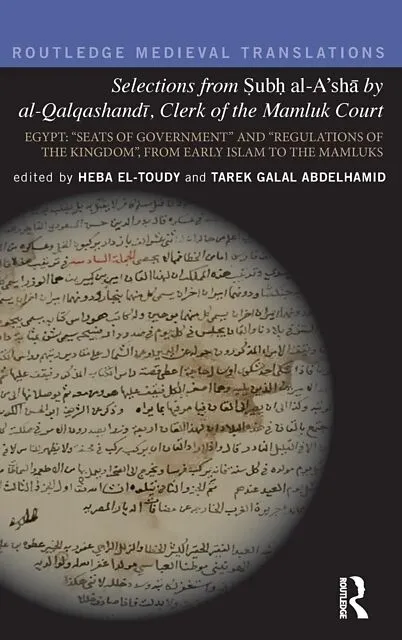
Selections from Subh al-A'sha by al-Qalqashandi, Clerk of the Mamluk Court
Beschreibung
Zusatztext "This work represents a major addition to the existing translated texts covering Egypt in the medieval period. The astonishing depth and chronological coverage of this source guarantees its usefulness to scholars concerned either with Egypt or with ...Format auswählen
- Fester EinbandCHF 236.00

Wird oft zusammen gekauft
Andere Kunden kauften auch
Beschreibung
Zusatztext "This work represents a major addition to the existing translated texts covering Egypt in the medieval period. The astonishing depth and chronological coverage of this source guarantees its usefulness to scholars concerned either with Egypt or with the broader history of the Eastern Mediterranean! while the supplementary materials provided by the editors only increase its value."- Nicholas Morton! Nottingham Trent University Informationen zum Autor Heba El-Toudy is an independent researcher and translator. Tarek Galal Abdelhamid is an assistant professor of architecture at MSA University, Egypt. His previous publications include The Mamluk Army (2013), War In the Mamluk Period (2013), A Concise History of North Syria in the Mamluk Period (2013) and Lectures on Computer Applications in Archaeology (2014, 2015). Klappentext Subh al-A'sha by al-Qalqashandi is a chancery clerk manual and a vital source of information on Fatimid and Mamluk Egypt which, for the first time, has been translated into English. The text provides valuable insight into the Mamluk and earlier Muslim eras. The selections presented in this volume describe Cairo, Fustat and the Citadel and gives a detailed picture of the Fatimid, Ayyubid and Mamluk court customs, rituals and protocol, and depicts how the Mamluk Sultanate was ruled. The introduction contextualises the translation, while detailed notes elaborate on the content of the source material. This translation will be a valuable resource students of medieval Islamic history. Zusammenfassung oSuboh al-A'shaa by al-Qalqashandi is a chancery clerk manual completed in 1412! and a vital source of information on Fatimid and Mamluk Egypt which! for the first time! has been translated into English. Inhaltsverzeichnis Table of Contents List of Maps Introduction Part I - The Seats of Government A - The First Seat of Government Fustat The Neighbourhoods of Fustat The Houses of Fustat The House of the Amir (Dar al-Imara) The Expansion an Decline of Fustat Al-Raw?a Island The Establishment of al-Mahrani (Munsha'at al-Mahrani) Al-?abash Pond (Birkat al-?abash) The Mosques of Fustat The Madrasas of Fustat The Khanqas and Ribats of Fustat The Hospital B- The Second Seat of Government Cairo The Fatimid Palaces The Gates and Walls of Cairo The Neighbourhoods of Cairo The Mosques of Cairo The Madrasas of Cairo The Khanqas and Ribats of Cairo The Five-prayer Mosques The Hospital Construction and Description of Cairo C- The Third Seat of Government The Citadel D- Al-Qarafa (The Cemetery) Part II - The Regulation of the Kingdom A- The First Status Rulers Appointed by the Caliphate B- The Second Status The Fatimids The First Clause Royal Instruments The Second Clause The Caliph's Warehouses The Third Clause The Armies The Fourth Clause The Holders of Offices Holders of Offices in the Caliph's presence. Holders of the Offices outside of the Caliph's presence. The Fifth Clause The Appearance of the Caliph Sitting in Audience during Processions Riding Processions The Caliph's Appearance The Sixth Clause The Fleets, Ruling Subjects, and Persuading Opposers The Seventh Clause...
Autorentext
Heba El-Toudy is an independent researcher and translator.
Tarek Galal Abdelhamid is an assistant professor of architecture at MSA University, Egypt. His previous publications include The Mamluk Army (2013), War In the Mamluk Period (2013), A Concise History of North Syria in the Mamluk Period (2013) and Lectures on Computer Applications in Archaeology (2014, 2015).
Klappentext
Subh al-A'sha by al-Qalqashandi is a chancery clerk manual and a vital source of information on Fatimid and Mamluk Egypt which, for the first time, has been translated into English. The text provides valuable insight into the Mamluk and earlier Muslim eras. The selections presented in this volume describe Cairo, Fustat and the Citadel and gives a detailed picture of the Fatimid, Ayyubid and Mamluk court customs, rituals and protocol, and depicts how the Mamluk Sultanate was ruled. The introduction contextualises the translation, while detailed notes elaborate on the content of the source material. This translation will be a valuable resource students of medieval Islamic history.
Zusammenfassung
ub al-A'sh *by al-Qalqashand is a manual for chancery clerks completed in 1412 and a vital source of information on Fatimid and Mamluk Egypt which, for the first time, has been translated into English. The text provides valuable insight into the Mamluk and earlier Muslim eras. The selections presented in this volume describe Cairo, Fustat and the Cairo Citadel and give a detailed picture of the Fatimid (AD 9691172), Ayyubid (AD 1172-1250) and Mamluk (AD 12501412) court customs, rituals and protocols, and depict how the Mamluk Sultanate was ruled. It also contains a wealth of details covering the geography, history and state administration systems of medieval Egypt. An introduction preceding the translation contextualizes al-Qalqashand's role and manuscript, as well as introducing the man himself, while detailed notes accompany the translation to explain and elaborate on the content of the material. The volume concludes with an extensive glossary of terms which forms a mini-encyclopaedia of the Fatimid and Mamluk periods.
This translation will be a valuable resource for any student of medieval Islamic history.
Inhalt
Table of Contents
List of Maps
Introduction
Part I - The Seats of Government
A - The First Seat of Government Fustat
The Neighbourhoods of Fustat
The Houses of Fustat
The House of the Amir (Dr al-Imra)
The Expansion an Decline of Fustat
Al-Rawa Island
The Establishment of al-Mahrn (Munsha'at al-Mahrn)
Al-abash Pond (Birkat al-abash)
The Mosques of Fustat
The Madrasas of Fustat
The Khanqas and Ribats of Fustat
The Hospital **** B- The Second Seat of Government Cairo
The Fatimid Palaces
The Gates and Walls of Cairo
The Neighbourhoods of Cairo
The Mosques of Cairo
The Madrasas of Cairo
The Khanqas and Ribats of Cairo
The Five-prayer Mosques
The Hospital
Construction and Description of Cairo
C- The Third Seat of Government The Citadel
D- Al-Qarfa (The Cemetery)
Part II - The Regulation of the Kingdom
A- The First Status Rulers Appointed by the Caliphate
B- The Second Status The Fatimids
The First Clause Royal Instruments
The Second Clause The Caliph's Warehouses
The Third Clause The Armies
The Fourth Clause The Holders of Offices
Holders of Offices in the Caliph's presence.
Holders of the Offices outside of the Caliph's presence.
The Fifth Clause The Appearance of the Caliph
Sitting in Audience during Processions
Riding Processions
The Caliph's Appearance
The Sixth Clause The Fleets, Ruling Subjects, and Persuading Opposers
The Seventh Clause The Running Salaries, Grants and Banquettes
The Eighth End The Vizier's Audiences
C- The Third Status The Ayyubids and Mamluks
The First Purpose The Protocols and Instruments of Royalty
The Second Purpose The Sultan's Warehouses
The Third Purpose The Kingdom's Dignitaries and Holders of Posts
Men of the Sword
Men of the Pen
The Fourth Purpose The Attire of the Kingdom's Dignitaries
The Fifth Purpose The Sultan's Appearance in Royal Protocol
The Sixth Purpose The Running Salaries
The Seventh Purpose The Special Territories
The Eighth Purpose How News Reaches the Sultan
The Ninth Purpose The Appearance and Regulation of Emirate
The Tenth Purpose The Governors
Index
Bibliography