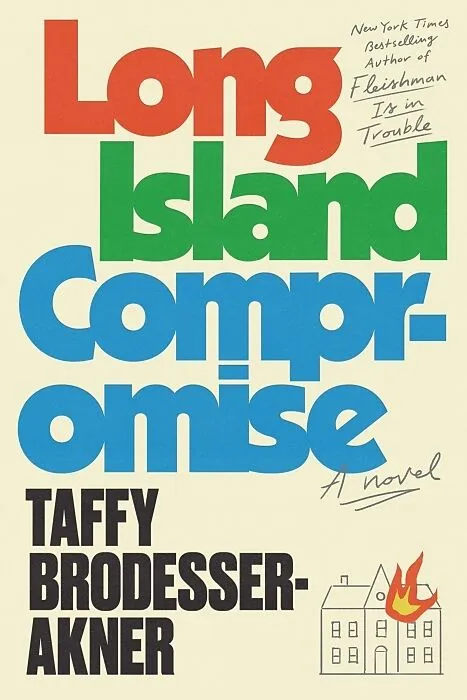
Long Island Compromise
Beschreibung
An exhilarating novel about one American family, the dark moment that shatters their suburban paradise, and the wild legacy of trauma and inheritance, from the In 1983, a wealthy businessman named Carl Fletcher is kidnapped from his driveway in a cloistered to...Format auswählen
- Fester EinbandCHF 33.20
Wird oft zusammen gekauft
Andere Kunden kauften auch
Beschreibung
An exhilarating novel about one American family, the dark moment that shatters their suburban paradise, and the wild legacy of trauma and inheritance, from the In 1983, a wealthy businessman named Carl Fletcher is kidnapped from his driveway in a cloistered town on the nicest part of Long Island, brutalized, and held for ransom. He is returned to his wife and kids less than a week later, only slightly the worse, and the family begins the hard work of moving on with their lives, resuming their prized places in the saga of the American dream, comforted in the realization that though their money may have been what endangered them, it is also what assured them their safety, too. But nearly forty years later, when Carl’s mother dies and the family comes home to mourn her, it becomes clear that perhaps nobody ever got over anything, after all. Carl has spent the ensuing years secretly seeking closure to the matter of his kidnapping, while his wife, Ruth, has spent her potential protecting her husband’s emotional health. And their three grown children are each a mess, as well: Nathan’s chronic fear won’t allow him to advance at his law firm; Beamer, a Hollywood screenwriter, will consume anything--substance, foodstuff, women--in order to numb his own perpetual terror; and Abigail has spent her life so bent on proving that she’s not a product of her family’s pathology that she has come to define it. As they hover at the delicate precipice of another kind of survival, they learn that the family fortune has dwindled to just about nothing, and they must face desperate questions about how much their wealth has played a part in both their successes and their failures. <Long Island Compromise< spans the entirety of one family’s history, winding through decades and generations, all the way to the outrageous present, confronting the mainstays of American Jewish life: tradition, the pursuit of success, the terror of history, fear of the future, old wives’ tales, evil eyes, ambition, achievement, boredom, orgies, dybbuks, inheritance, pyramid schemes, right-wing capitalists, beta-blockers, and the mostly unspoken love and shared experience that unite a family forever....
Autorentext
Taffy Brodesser-Akner is a staff writer for The New York Times Magazine and the New York Times bestselling author of Fleishman Is in Trouble, which has been translated into more than a dozen languages. She is also the creator and executive producer of its Emmy-nominated limited series adaptation for FX. Long Island Compromise is her second novel.
Zusammenfassung
NATIONAL BESTSELLER • An exhilarating novel about one American family and the dark moment that shatters their suburban paradise, from the New York Times bestselling author of Fleishman Is in Trouble
**New York Times Book Review Editors’ Choice • New York Magazine’s Beach Read Book Club Pick • Belletrist Book Club Pick
A BEST BOOK OF THE YEAR: The New York Times Book Review, Oprah Daily, The New Yorker, Time, The Washington Post, NPR, *Vogue, Town & Country, New York Post, Harper’s Bazaar, Elle, Parade, Kirkus Reviews
-
“Joins the pantheon of great American novels.”—Los Angeles Times
“Exuberant and absorbing . . . a big old-fashioned social novel.”—The Atlantic
**
“Were we gangsters? No. But did we know how to start a fire?”In 1980, a wealthy businessman named Carl Fletcher is kidnapped from his driveway, brutalized, and held for ransom. He is returned to his wife and kids less than a week later, only slightly the worse, and the family moves on with their lives, resuming their prized places in the saga of the American dream, comforted in the realization that though their money may have been what endangered them, it is also what assured them their safety.
But now, nearly forty years later, it’s clear that perhaps nobody ever got over anything, after all. Carl has spent the ensuing years secretly seeking closure to the matter of his kidnapping, while his wife, Ruth, has spent her potential protecting her husband’s emotional health. Their three grown children aren’t doing much better: Nathan’s chronic fear won’t allow him to advance at his law firm; Beamer, a Hollywood screenwriter, will consume anything—substance, foodstuff, women—in order to numb his own perpetual terror; and Jenny has spent her life so bent on proving that she’s not a product of her family’s pathology that she has come to define it. As they hover at the delicate precipice of a different kind of survival, they learn that the family fortune has dwindled to just about nothing, and they must face desperate questions about how much their wealth has played a part in both their lives’ successes and failures.
Long Island Compromise spans the entirety of one family’s history, winding through decades and generations, all the way to the outrageous present, and confronting the mainstays of American Jewish life: tradition, the pursuit of success, the terror of history, fear of the future, old wives’ tales, evil eyes, ambition, achievement, boredom, dybbuks, inheritance, pyramid schemes, right-wing capitalists, beta-blockers, psychics, and the mostly unspoken love and shared experience that unite a family forever.
Leseprobe
A Dybbuk in the WorksDo you want to hear a story with a terrible ending?
On Wednesday, March 12, 1980, Carl Fletcher, one of the richest men in the Long Island suburb where we grew up, was kidnapped from his driveway on his way to work.
It had been an unremarkable morning. Carl had awoken and showered and dressed and gone downstairs to kiss his wife, Ruth, goodbye, same as always. Ruth had already presented their two sons, Nathan and Bernard, with their bowls of Product 19 when Carl patted them on the head and left the kitchen and headed out the door into the bright sunlight. The weather was still generally straightforward back then, and spring peeked through the slush of a latest-winter storm that was taking its time to melt. The reflection blinded him a little; his vision was still pocked with dark spots when he inserted the keys into the door of the Cadillac Fleetwood Brougham he’d purchased the previous year.
His brain hadn’t yet registered the sound of someone else’s footsteps through the slush before a man leapt from behind onto Carl’s back and hooded him in one fast, balletic move, turning Carl’s world instantly to black. Inside the hood were the amplified sounds of Carl’s own suddenly fast breathing and grunting. Someone else—there were two men—pulled the keys from the lock and settled himself into the driver’s seat while the first man struggled with Carl. Now, Carl was a tall man. The two men seemed significantly smaller. It was only the shock of the attack that allowed them to successfully wrest Carl into the footwell of his car.
The Brougham drove away, down and out the C-shaped driveway, away from the giant waterfront Tudor on St. James Drive where the Fletchers lived. It drove through the township of Middle Rock, making a right onto Ocean Vista Road, passing the Fletchers’ neighbors’ own colossal homes, then over the bridge, then gliding right by, at the 1.8-mile mark, the sixteen-acre estate where Carl had grown up and where his mother was sitting at a Queen Anne desk right at that very moment, writing checks to the electric company and to the synagogue. Then, past the library, past the butcher, past Duplo’s Ski and Skate Shop, where Carl’s mother had bought him roller skates as a child and where he himself had just recently bought a first tennis racquet for his older son; past the turnoff to the synagogue where Carl had been bar mitzvah…