
IHR WARENKORB IST AKTUELL LEER.
Haben Sie noch nichts passendes gefunden? Stöbern Sie durch unser komplettes Sortiment.
Oder melden Sie sich an bzw. registrieren Sie sich.
- Kostenlose Lieferung
- Kauf auf Rechnung
- Ex Libris Tiefpreis
- Filiallieferung und 650+ Abholorte
- Rabatt-Bons als Club-Mitglied
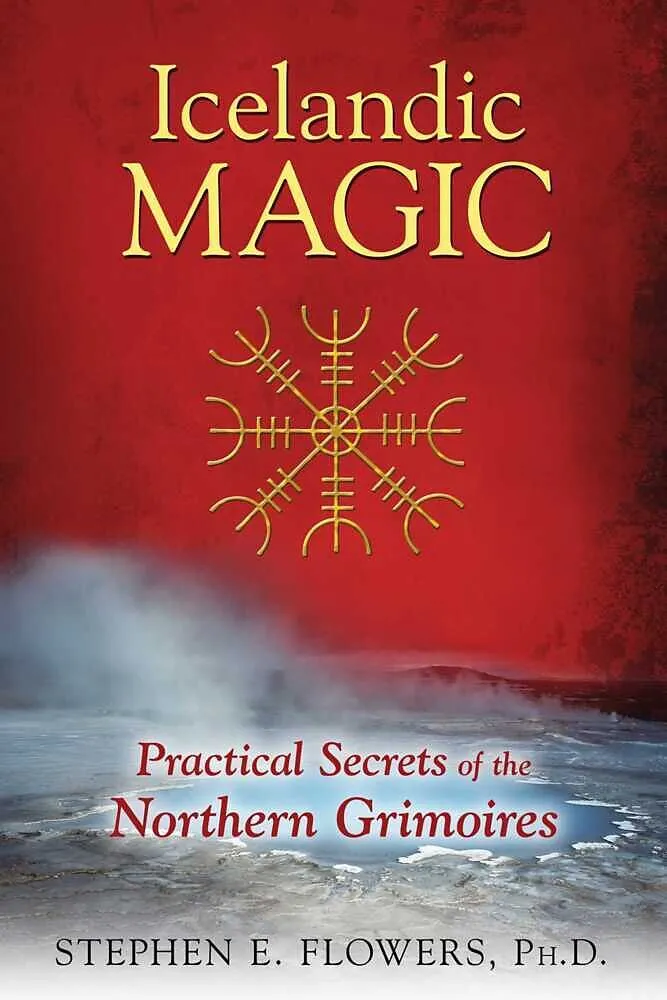
Icelandic Magic
Beschreibung
Zusatztext "Those unfamiliar with Flowers' work will be glad to know he has a wonderfully breathable writing style! easily drawing one into the meat of the text without bogging them down with unnecessary digressions or superfluous language. Don't let the slend...Format auswählen
- Kartonierter EinbandCHF 20.30

Wird oft zusammen gekauft
Andere Kunden kauften auch
Beschreibung
Zusatztext "Those unfamiliar with Flowers' work will be glad to know he has a wonderfully breathable writing style! easily drawing one into the meat of the text without bogging them down with unnecessary digressions or superfluous language. Don't let the slenderness of this volume deter you. Like in most of his works! Flowers packs each page with scholarly tidbits! simultaneously teaching both history and occultism with clarity and ease. A must-have for any fan of Norse spiritual traditions! occult history or sigil magic." Informationen zum Autor Stephen E. Flowers, Ph.D., received his doctorate in Germanic languages and medieval studies from the University of Texas at Austin and studied the history of occultism at the University of Göttingen, Germany. The author of more than 24 books, including Lords of the Left-Hand Path , he is the director of the Woodharrow Institute for Germanic and Runic Studies. He lives near Austin, Texas. Klappentext A practical guide to the magical systems of pre-Christian Iceland • Reveals spells and workings drawn directly from surviving magical books from the 16th to 20th century preserved at the National Library in Reykjavík • Explores the history of magic in Iceland through original translations of Icelandic folktales about famous magicians and about legendary grimoires, such as the Galdrabók, the oldest and most complete book of its kind • Explains how to personalize the spells through the creation of unique signs and symbols based on the mythic names of Odin and Icelandic magical alphabets During the Christianization of Europe in the Middle Ages, many books of magic were lost as the ancient pagan traditions were suppressed. But in Iceland the practice of recording magical spells in books continued in secret for centuries, on a scale not seen elsewhere. Now housed in the National Library in Reykjavík, these surviving grimoires, which represent only a hundredth of what was lost, reveal a rich magical tradition that continued to evolve into the 20th century. Drawing directly from the actual surviving Icelandic books of magic, Stephen Flowers presents a complete system of magic based on Icelandic lore and magical practices from the 16th century onward. He explores the history of magic in Iceland in pagan and early Christian times and reveals specific practical techniques and ritual templates that readers can adapt to their unique purposes. Illustrating traditional Icelandic magical practices and the Icelanders' attitudes toward them, he shares original translations of Icelandic folktales about famous magicians, such as the legend of Gray-Skin, and about legendary grimoires, such as the Galdrabók, the oldest and most complete book of its kind. After initiating the reader into the grammar and symbols of Icelandic magic through history and lore, Flowers then presents an extensive catalog of actual spells and magical workings from the historical Icelandic books of magic. These examples provide ready-made forms for practical experimentation as well as an exemplary guide on how to create signs and symbols for more personalized magical work. The author also includes guidance on creating unique magical signs from the 100 mythic names of Odin, which he translates and interprets magically, and from Icelandic magical alphabets, symbols that connect Icelandic magic to the ancient runic tradition. Part Two Gray-Skin Introduction to the Workings What follows is the Gray-Skin proper. The first part of this book was an introduction to the history, theory, and practical principles of Icelandic galdor-stave magic. The second part is a unique book of magic in the traditional Icelandic form. By its very nature, Icelandic-style galdor-sign magic is very pragmatic and outwardly simple. Inwardly it is more complex and difficult. It does not require the memorization of long texts, the acquisition of many rare ingre...
"Those unfamiliar with Flowers’ work will be glad to know he has a wonderfully breathable writing style, easily drawing one into the meat of the text without bogging them down with unnecessary digressions or superfluous language. Don’t let the slenderness of this volume deter you. Like in most of his works, Flowers packs each page with scholarly tidbits, simultaneously teaching both history and occultism with clarity and ease. A must-have for any fan of Norse spiritual traditions, occult history or sigil magic."
Autorentext
Stephen E. Flowers, Ph.D., received his doctorate in Germanic languages and medieval studies from the University of Texas at Austin and studied the history of occultism at the University of Göttingen, Germany. The author of more than 24 books, including Lords of the Left-Hand Path, he is the director of the Woodharrow Institute for Germanic and Runic Studies. He lives near Austin, Texas.
Klappentext
A practical guide to the magical systems of pre-Christian Iceland
• Reveals spells and workings drawn directly from surviving magical books from the 16th to 20th century preserved at the National Library in Reykjavík
• Explores the history of magic in Iceland through original translations of Icelandic folktales about famous magicians and about legendary grimoires, such as the Galdrabók, the oldest and most complete book of its kind
• Explains how to personalize the spells through the creation of unique signs and symbols based on the mythic names of Odin and Icelandic magical alphabets
During the Christianization of Europe in the Middle Ages, many books of magic were lost as the ancient pagan traditions were suppressed. But in Iceland the practice of recording magical spells in books continued in secret for centuries, on a scale not seen elsewhere. Now housed in the National Library in Reykjavík, these surviving grimoires, which represent only a hundredth of what was lost, reveal a rich magical tradition that continued to evolve into the 20th century.
Drawing directly from the actual surviving Icelandic books of magic, Stephen Flowers presents a complete system of magic based on Icelandic lore and magical practices from the 16th century onward. He explores the history of magic in Iceland in pagan and early Christian times and reveals specific practical techniques and ritual templates that readers can adapt to their unique purposes. Illustrating traditional Icelandic magical practices and the Icelanders’ attitudes toward them, he shares original translations of Icelandic folktales about famous magicians, such as the legend of Gray-Skin, and about legendary grimoires, such as the Galdrabók, the oldest and most complete book of its kind.
After initiating the reader into the grammar and symbols of Icelandic magic through history and lore, Flowers then presents an extensive catalog of actual spells and magical workings from the historical Icelandic books of magic. These examples provide ready-made forms for practical experimentation as well as an exemplary guide on how to create signs and symbols for more personalized magical work. The author also includes guidance on creating unique magical signs from the 100 mythic names of Odin, which he translates and interprets magically, and from Icelandic magical alphabets, symbols that connect Icelandic magic to the ancient runic tradition.
Zusammenfassung
A practical guide to the magical systems of pre-Christian Iceland.
Leseprobe
**Part Two
Gray-Skin
Introduction to the Workings**
What follows is the Gray-Skin proper. The first part of this book was an introduction to the history, theory, and practical principles of Icelandic galdor-stave magic. The second part is a unique book of magic in the traditional Icelandic form.
By its very nature, Icelandic-style galdor-sign magic is very pragmatic and outwardly simple. Inwardly it is more complex and difficult. It does not require t…