Beschreibung
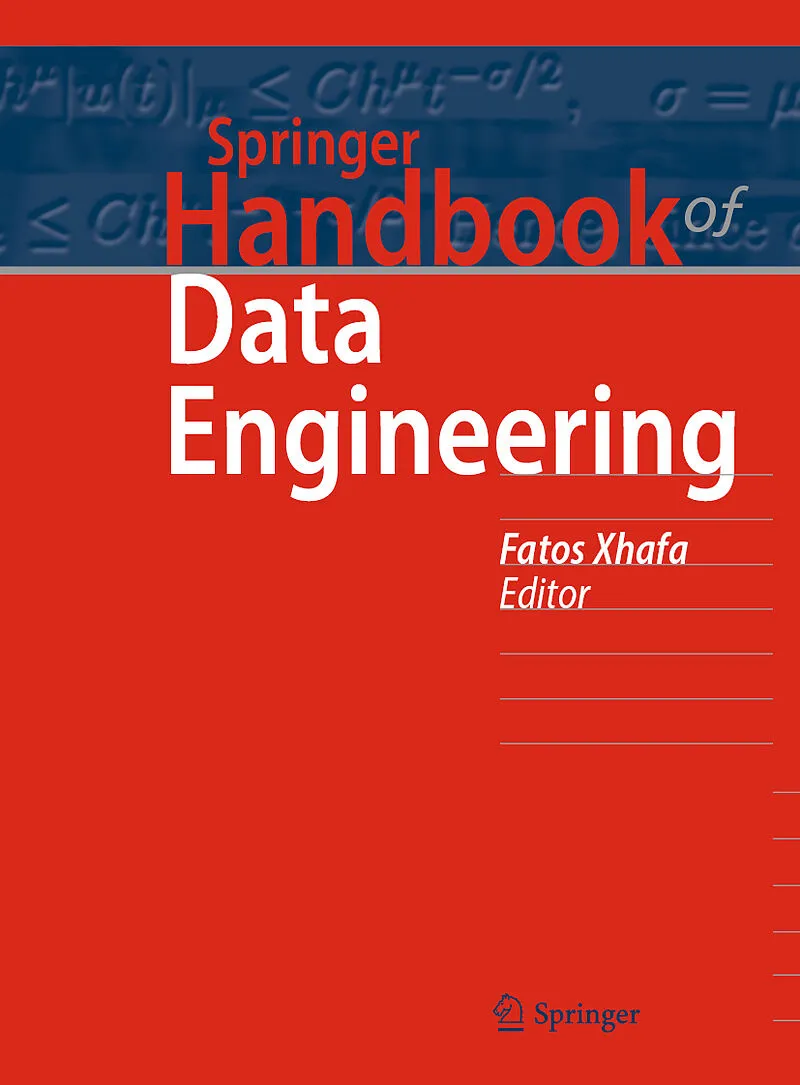
The Springer Handbook of Data Engineering is a comprehensive reference on the principles, technologies, and practices for designing, building, and deploying modern data infrastructures. It addresses the engineering foundations required to transform massive, h...The Springer Handbook of Data Engineering is a comprehensive reference on the principles, technologies, and practices for designing, building, and deploying modern data infrastructures. It addresses the engineering foundations required to transform massive, heterogeneous data into actionable knowledge for intelligent systems and data-driven decision-making.
This handbook explores the full spectrum of data engineering challenges, from distributed architectures and cloud-based processing to security, governance, and emerging applications. Thus, the handbook supports the creation and operationalization of modern AI tools, which depend on high-quality, secure, and scalable data pipelines. By integrating diverse aspects of modern data ecosystems into a single comprehensive volume, this handbook establishes itself as a unique reference in the field of data engineering.
The content is organized into eleven parts, covering networking data and the foundations of distributed systems, advanced data analytics techniques, and high-performance computing for big data processing in cloud environments. It examines specialized domains such as health data and finance data, and addresses critical topics including quality of service, smart contracts, and blockchain technologies. Further sections explore sustainable land management through data-driven approaches, as well as issues of data piracy, integration, architectures, and services. Security is treated in depth, alongside emerging concepts such as digital twins and virtual reality. Finally, the handbook provides comprehensive coverage of data quality, lineage, and governance to ensure integrity and compliance in complex data ecosystems.
With contributions from leading experts, it combines theoretical depth with practical insights, making it an indispensable resource for academics, researchers, and professionals.
Provides comprehensive coverage of core theories, technologies, and real-world applications in data engineering Unifies analytics, AI, cybersecurity, digital twins and sustainable data systems in one engineering framework Key reference for researchers, practitioners and developers in one of science and tech's fastest-evolving fields
Autorentext
Prof. Dr. Fatos Xhafa is Full Professor (Catedràtic d'Universitat) at the Dept. of Computer Science, Universitat Politècnica de Catalunya, Barcelona, Spain. He received his PhD in Computer Science from the Dept. of CS at BarcelonaTech in 1998. He has held various academic positions at BarcelonaTech and short term positions abroad including Visiting Professorship at University of Surrey and at the University of London, UK and a Research Associate at Drexel University, USA. He is a member of the IMP-Information Modelling Processing Research Group of UPC.
Klappentext
The Springer Handbook of Data Engineering is a comprehensive reference on the principles, technologies, and practices for designing, building, and deploying modern data infrastructures. It addresses the engineering foundations required to transform massive, heterogeneous data into actionable knowledge for intelligent systems and data-driven decision-making. This handbook explores the full spectrum of data engineering challenges, from distributed architectures and cloud-based processing to security, governance, and emerging applications. Thus, the handbook supports the creation and operationalization of modern AI tools, which depend on high-quality, secure, and scalable data pipelines. By integrating diverse aspects of modern data ecosystems into a single comprehensive volume, this handbook establishes itself as a unique reference in the field of data engineering. The content is organized into eleven parts, covering networking data and the foundations of distributed systems, advanced data analytics techniques, and high-performance computing for big data processing in cloud environments. It examines specialized domains such as health data and finance data, and addresses critical topics including quality of service, smart contracts, and blockchain technologies. Further sections explore sustainable land management through data-driven approaches, as well as issues of data piracy, integration, architectures, and services. Security is treated in depth, alongside emerging concepts such as digital twins and virtual reality. Finally, the handbook provides comprehensive coverage of data quality, lineage, and governance to ensure integrity and compliance in complex data ecosystems. With contributions from leading experts, it combines theoretical depth with practical insights, making it an indispensable resource for academics, researchers, and professionals.
Inhalt
PART I: Networking Data.- Part II: Data Analytics.- Part III: HPC Big Data Processing in Cloud Environments..- Part IV: Health Data.- Part V: Finance Data.- Part VI: Quality of Service, Smart Contracts and Blockchain.- Part VII: Sustainable Land Management.- Part VIII: Data Piracy, Data Integreation, Architectures and Services.- Part IX: Data Security.- Part X: Digital Twins and Virtual Reality.- Part XI: Data Quality, Data Lineage/Data Governance.