Beschreibung
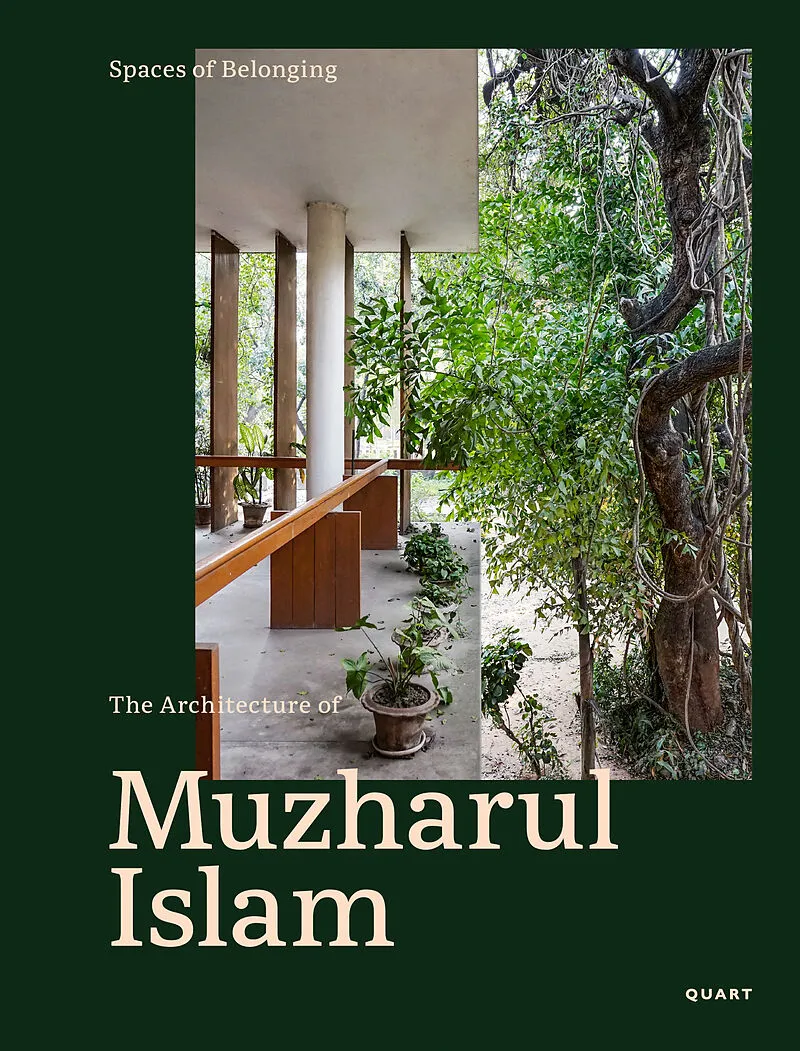
Muzharul Islam (1923-2012) hat in Bangladesch ein herausragendes architektonischen Werk hinterlassen, das weit über seinen zeitlichen und geografischen Entstehungshorizont Relevanz besitzt. Trotz dessen Bedeutung und Einmaligkeit ist es jedoch noch immer verhä...Muzharul Islam (1923-2012) hat in Bangladesch ein herausragendes architektonischen Werk hinterlassen, das weit über seinen zeitlichen und geografischen Entstehungshorizont Relevanz besitzt. Trotz dessen Bedeutung und Einmaligkeit ist es jedoch noch immer verhältnismässig wenig bekannt. Durch zahlreiche Photographien und Reproduktionen detailreicher Originalzeichnungen stellt diese Monografie einen Reigen von stupenden Bauwerken, die inklusive Denkweise und die kulturübergreifende Dialogfähigkeit des Bengalischen Architekten einem internationalen Publikum vor. Textbeiträge von Architekturschaffenden aus verschiedenen Kontinenten eröffnen facettenreiche Sichtweisen auf Islams Werk und ordnen es in den geschichtlichen Kontext und in aktuelle Zusammenhänge ein. Brennende Themen, die die globale Architekturdebatte gerade aktuell besonders prägen, sind im pionierhaften Oeuvre von Muzharul Islam zukunftsweisend angelegt: Klimasensitives und suffizientes Bauen, soziale Engagement und die Überwindung kolonialer Denkweisen sind Felder, die der Architekt und Aktivist seit Beginn seiner Karriere ab den 1950er-Jahren unablässig verfolgt hat. Muzharul Islams Werk offenbart, dass Architektur mit nichts anderem als ihren Kernwerkzeugen wie Raum, Struktur und Konstruktion wirkungsvolle Hebel zur Unterstützung positiver Veränderungen in der Hand hat. Durch eine subtile Ausgewogenheit von Pragmatik und Poetik schuf der Architekt damit Identität stiftende Räume der Zugehörigkeit. Muzharul Islam (19232012) has left behind an outstanding architectural legacy in Bangladesh, with a significance reaching far beyond the temporal and geographical horizons of its creation. Yet until now, his work has remained relatively unknown despite its relevance and singularity. This monograph presents numerous photographs and reproductions of detailed original drawings to introduce a series of unique buildings to an international audience, highlighting the Bengali architect's way of thinking and actions, as well as his engagement in cross-cultural dialogue. Contributions by practising architects from different continents present multifaceted perspectives on Islam's work, placing him within a historical context and global interconnections. Muzharul Islam's pioneering and timeless works address burning issues that are currently shaping the global architectural debate: climate-sensitive and self-sufficient construction, social engagement and overcoming colonial mindsets are all fields that the architect pursued relentlessly since the beginning of his career in the 1950s. The oeuvre of Muzharul Islam manifests that architecture, with nothing more than its core tools of space, structure and tectonics, has effective levers at its disposal to support positive change. Through a subtle balance of pragmatism and poetics, the architect managed to create inclusive spaces of belonging.
Autorentext
Klappentext
Muzharul Islam (1923–2012) has left behind an outstanding architectural legacy in Bangladesh. Yet until now, his work has remained relatively unknown despite its relevance and singularity. This monograph presents numerous photographs and reproductions of detailed original drawings to introduce a series of unique buildings to an international audience.
Muzharul Islam (1923–2012) has left behind an outstanding architectural legacy in Bangladesh, with a significance reaching far beyond the temporal and geographical horizons of its creation. Yet until now, his work has remained relatively unknown despite its relevance and singularity. This monograph presents numerous photographs and reproductions of detailed original drawings to introduce a series of unique buildings to an international audience, highlighting the Bengali architect’s way of thinking and actions, as well as his engagement in cross-cultural dialogue. Contributions by practising architects from different continents present multifaceted perspectives on Islam’s work, placing him within a historical context and global interconnections. Muzharul Islam’s pioneering and timeless works address burning issues that are currently shaping the global architectural debate: climate-sensitive and self-sufficient construction, social engagement and overcoming colonial mindsets are all fields that the architect pursued relentlessly since the beginning of his career in the 1950s.
His ideas are no less relevant today than those of Balkrishna Vithaldas Doshi and Charles Correa, translating the often abstract conceptual construct of Modern building into a sensorial, approachable and contextual architecture that naturally integrates its users’ way of life.
Islam, who studied in the USA and England in the 1950s and 1960s, called for Modern architecture that was compatible with the local climate and culture, without lapsing into provincialism or unthinking internationalism. In keeping with his ideal of intercultural dialogue, he managed to attract international protagonists such as his teacher Paul Rudolph, his fellow student Stanley Tigerman and ultimately Louis I. Kahn to carry out important building tasks in his homeland.
Numerous contemporary photographs, plans and reproductions of Islam’s masterful original drawings take the readership on a voyage of discovery. Essays by former companions and the editors present multifaceted perspectives on Islam’s work, placing him within a historical context and current global interconnections.